Iron Throne Location Guide Red Keep Throne Room, Succession Wars & Symbolic Power
Red Keep · Throne Room · Succession · Royal Claims · Symbolic Power
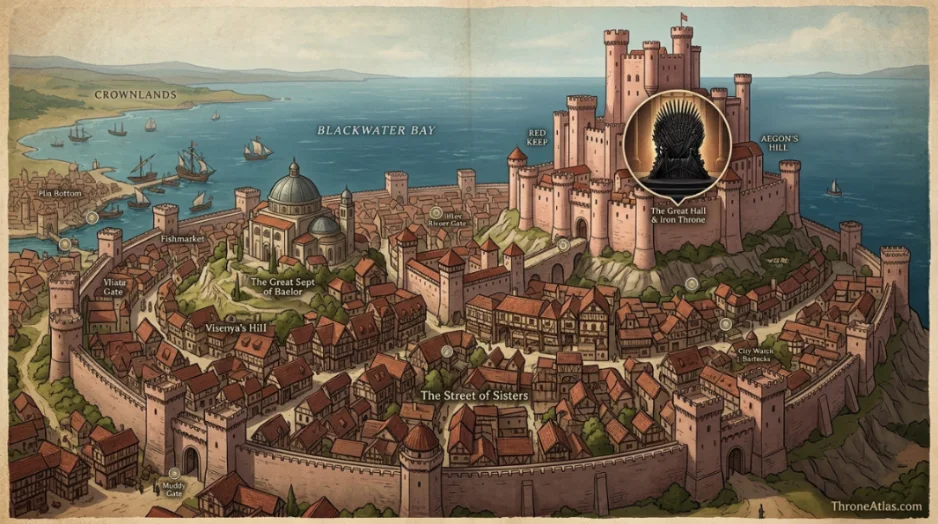
Iron Throne Location — The Iron Throne is located in the throne room of the Red Keep in King’s Landing. On the map, it is not simply a chair; it is the symbolic endpoint of every royal road, marriage pact, rebellion, dragon flight, siege route and succession claim in Westeros.
The Iron Throne is located in the throne room of the Red Keep in King’s Landing. On the map, it is not simply a chair; it is the symbolic endpoint of every royal road, marriage pact, rebellion, dragon flight, siege route and succession claim in Westeros.
What This Iron Throne Location Guide Shows
Use these cards as the two-minute orientation before opening the route map or reading the full atlas guide.
Key takeaways for featured snippets
- The Iron Throne sits inside the Red Keep, not in a separate royal temple or city square.
- Its map role is symbolic: every major Westerosi power route points toward it.
- Winning the throne room does not guarantee stable rule; the city and realm must accept the claim.
- The throne is a location, a legal argument and a propaganda object at the same time.
Explore the Main Locations and Pressure Points
Tap a location to see its role, route connection and why it matters inside the wider ThroneAtlas network.
Throne Room
The chamber converts military success into public rule, making it the most symbolically loaded location in Westeros.
Iron Throne Location Guide: Complete Location Guide
A strong Iron Throne Location should do more than name the famous place. It should explain why red keep creates pressure, how legitimacy is projected across nearby roads or waters, and why the story keeps returning to succession whenever claims, sieges, envoys or betrayals begin to move. That is the purpose of this ThroneAtlas version: the page is built as a map-reading guide first, then as a lore guide, so readers can understand the location in seconds and still have enough depth for a full atlas article.
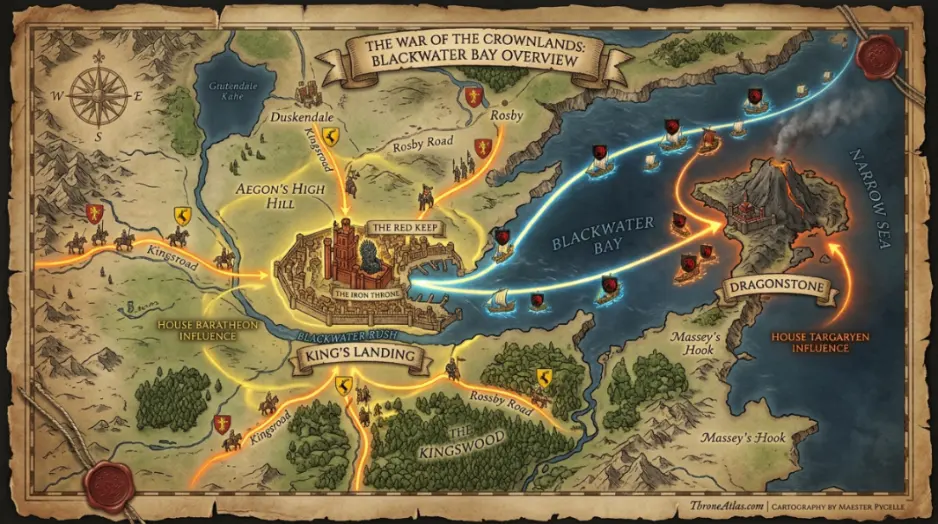
The most useful way to read this map is to follow the route sequence: Dragonstone or Great House Seat → Road or Sea Corridor → City Gates or Bay → Red Keep → Throne Room. This order turns the page from a simple location description into a cause-and-effect chain. A castle, city, river, road or bay does not matter only because it appears on screen; it matters because it controls who can arrive, who can escape, which house can enforce a claim, and where a private decision becomes a public crisis.
For searchers comparing pages across the ThroneAtlas network, the location cluster starts with Throne Room, Red Keep, King’s Landing, Blackwater Bay. These points are not filler labels. They are the core anchors that make the map easy to use for readers who want fast answers, visual context, internal links and story geography in one place.
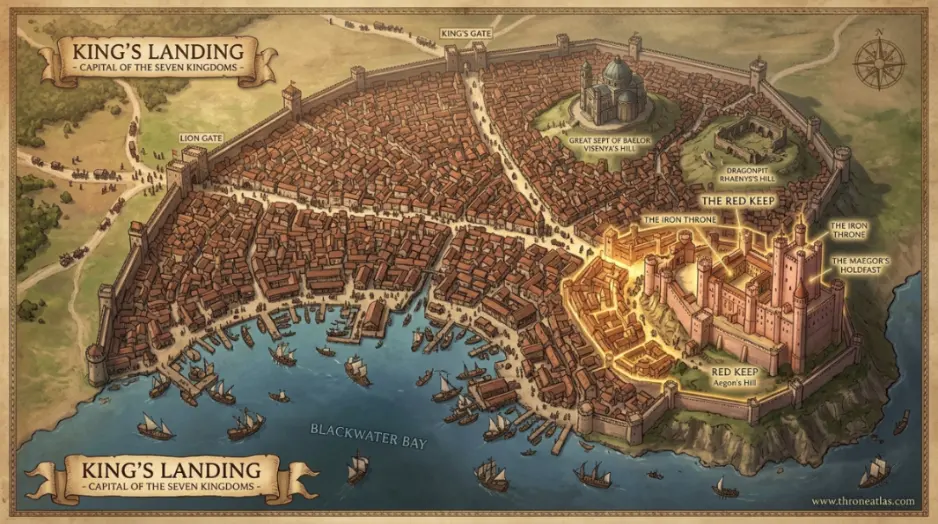
How Geography Creates Story Pressure
The first layer is physical. Roads, rivers, walls, cliffs, gates, harbors, forests, deserts or ruins decide who can reach the location and how costly that movement becomes. On this page, the pressure point is Succession. That phrase is not just a label; it is the part of the map that forces characters to choose between speed, safety, loyalty and ambition.
The second layer is political. Legitimacy gives the location its strategic value. If a house controls the local route, it gains leverage. If a claimant controls the symbolic center, the claim looks stronger. If an enemy controls the access point, even a powerful castle can become isolated. That is why map-reading often explains a scene before dialogue does.
Physical Layer
Red Keep shapes movement, supply, visibility and danger. This is the layer casual viewers often miss when they only remember the famous room or castle name.
Political Layer
Legitimacy turns the location into leverage. Whoever understands this layer can turn geography into bargaining power.
Main Locations on the Iron Throne Location Guide
The best map pages do not treat every label equally. The six points below are the practical reading order for this atlas guide. Together they explain the location’s defenses, weaknesses, symbolic meaning and route value.
Throne Room
Final claim point: The chamber converts military success into public rule, making it the most symbolically loaded location in Westeros.
Red Keep
Castle shell: The throne’s castle surrounds it with guards, chambers and rival access points.
King’s Landing
Capital city: The throne depends on the city around it; riots and sieges can reach the ruler indirectly.
Blackwater Bay
Sea approach: The bay defines whether the capital can be supplied, besieged or invaded.
Dragonstone Route
Targaryen claim path: For Targaryens, the route from Dragonstone to the throne is both geographic and dynastic.
Great Council Memory
Legal precedent: The throne’s location is physical, but the right to sit it is argued through precedent and power.
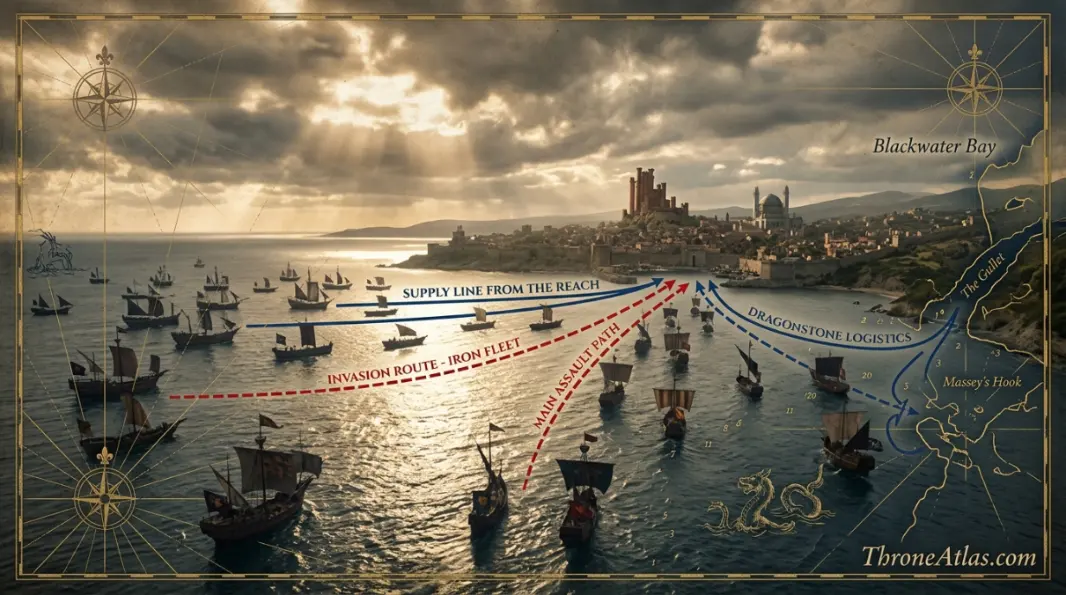
Route Logic: How to Read the Page Like a Maester
Follow the route table below instead of scanning randomly. It turns the page into a story sequence. Each point represents a decision zone: someone arrives, blocks a crossing, opens a gate, controls a chamber, survives terrain, or uses the location’s reputation to change the balance of power.
Book, Show and Atlas Context
This page is designed to work for different types of readers. Some visitors arrive from the HBO shows and want to know where a scene belongs. Others come from the books and want a clearer mental map of houses, roads and regions. The safest approach is to separate confirmed geography from adaptation emphasis. A location may become more important on screen because a conversation happens there, but its deeper map value usually comes from older roads, older houses and older conflicts.
For House of the Dragon, the same principle matters even more. The Dance of the Dragons is not only a family war. It is a map war: island seats, river crossings, castles, old capitals, dragon routes and marriage alliances all decide where power can actually travel. A page like this helps readers understand why an envoy is sent, why a castle is courted, why a fleet matters, and why a symbolic room can become more dangerous than a battlefield.
Common Map Mistakes to Avoid
One mistake is treating the location as if it floats alone. Every castle or city belongs to a wider network. The correct reading starts with the nearby roads, water, regional houses and political loyalties. Another mistake is judging map importance only by size. Some smaller places matter because they control a bridge, pass, gate, harbor or council chamber. Finally, do not confuse visual beauty with strategic safety. A beautiful place can be vulnerable, and a ruined place can still decide a war.
For this specific guide, the clearest shortcut is to ask three questions: what does the location control, who needs that control, and what happens if control changes? Those questions keep the map useful for SEO searchers, lore readers and casual fans who only remember the big scenes.
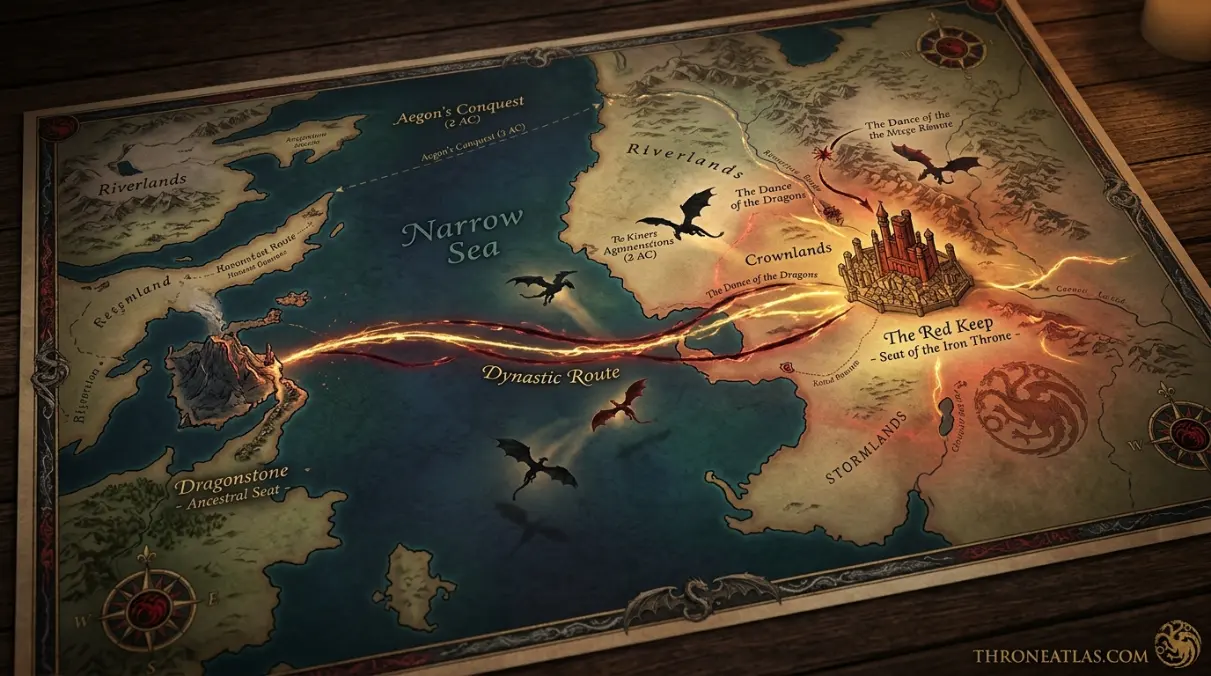
Why This Page Is Built for SERP-Level Usefulness
The page is intentionally structured for fast answers and long reading. The hero gives the topic, the quick-answer box targets featured snippets, the fact cards summarize the map, the interactive lens makes the location scannable, and the route table turns the guide into a practical walkthrough. The goal is not to produce a thin fan wiki clone. The goal is to make a page that answers location, route, faction, symbolism, book/show context, and related-page discovery in one clean layout.
That structure also supports internal linking. A reader who enters through this page can move naturally to Red Keep Map, then to the wider Westeros map, house pages, battle pages or character journey pages. This is how ThroneAtlas builds topical authority: each page stands alone, but every map also strengthens the atlas around it.
Reader Paths: How Different Fans Should Use This Map
For quick-search readers: start with the quick answer and the four fast facts. That gives the location, the power axis, the main pressure point and the best related page without forcing you through a long lore essay. This is especially useful when you only need to remember where Iron Throne Location Guide fits inside the wider Westeros map before watching an episode, writing a recap, or checking a character route.
For book and lore readers: spend more time with the route table and the location cards. The deeper value of this page is not merely that it names Throne Room, Red Keep and King’s Landing. The value is that it explains how those points interact. George R. R. Martin’s world often turns small geographic details into major political consequences, so roads, rivers, gates, harbors, ruins and audience chambers can matter as much as armies.
For atlas builders and internal linking: use this page as a hub inside the ThroneAtlas topical cluster. It should connect naturally toward Red Keep Map, wider regional maps, house guides, battle maps and character journey maps. That network gives readers more than a single answer; it lets them move from location to region, from region to house, and from house to conflict.
Location-by-Location Reading Notes
The six map anchors below create the strongest topical footprint for this page. Each one should be understood as a search-friendly subtopic, an internal-link opportunity and a visual section anchor. Together they help the page compete not only for the main keyword, but also for long-tail searches around routes, power centers, surrounding regions and story events.
Throne Room
Throne Room should be treated as the first orientation point because it carries the clearest connection to Legitimacy. When readers remember only one label from this map, this is usually the one that explains why the page exists.
Red Keep
Red Keep adds movement logic. It shows how a route, chamber, river, road or coastline changes the cost of entry and the risk of leaving. This is where geography starts shaping decisions.
King’s Landing
King’s Landing gives the map its human pressure. Whether the point represents smallfolk, bannermen, envoys, heirs, rangers, maesters or soldiers, it reminds readers that locations matter because people must live inside their consequences.
Blackwater Bay
Blackwater Bay is the supporting anchor that makes the page feel complete. It widens the map beyond the most famous label and helps the guide avoid the thin, one-location style common on weaker SERP pages.
Featured-Snippet Answer Bank
What is the simplest explanation? The Iron Throne is located in the throne room of the Red Keep in King’s Landing. On the map, it is not simply a chair; it is the symbolic endpoint of every royal road, marriage pact, rebellion, dragon flight, siege route and succession claim in Westeros.
What controls the map? The controlling idea is Legitimacy. Whoever can influence that axis can affect travel, legitimacy, military timing or public perception around Iron Throne Location Guide.
What creates danger? The danger point is Succession. In practical map terms, this is the pressure that forces characters into bargains, delays, sieges, ambushes, ceremonies, escapes or public decisions.
What should readers study next? The best next step is Red Keep Map, because it expands this page into the surrounding region and helps readers understand why the location matters beyond a single scene.
Practical Atlas Use Cases
Use this map when you are trying to place a scene, follow a character journey, compare a house seat with a battlefield, or understand why a council decision creates consequences far away from the room where it is made. A strong atlas page should answer both “where is it?” and “why does it change the story?” That second question is what separates a thin location note from a page that deserves to rank.
For publishing, this section also gives the page more topical depth without drifting away from the focus keyword. It reinforces the main map entity, nearby sub-entities, route words, regional terms, and reader intent in natural language. The result is a page that can serve casual fans, lore researchers, image search, AI answer engines and internal-link crawlers at the same time.
Most importantly, the page keeps the reader on a clear path. It opens with a direct answer, then adds evidence through geography, then gives visual anchors, then sends the reader toward related atlas pages. That flow is stronger than a scattered lore dump because it respects both search intent and real fan curiosity.
Final Map Reading Summary
Use this Iron Throne Location as a layered atlas: begin with the quick answer, confirm the main theater, identify the pressure point, follow the route table, then explore the related pages. Once you read the location this way, the story becomes easier to follow because geography stops being background decoration and becomes the engine behind every claim, siege, alliance and betrayal.
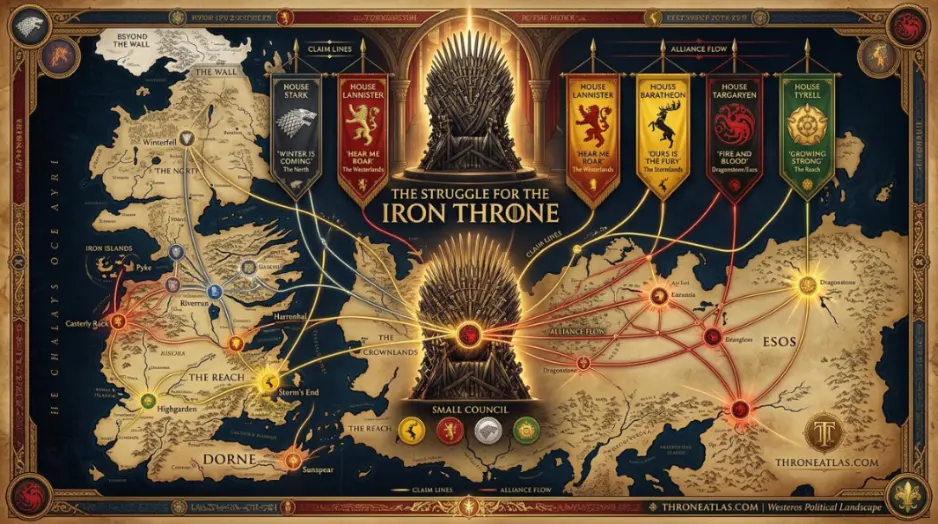
Iron Throne Location Guide Questions
Short answers for readers, search snippets and AI overview style queries.
The Iron Throne is located in the throne room of the Red Keep in King’s Landing. On the map, it is not simply a chair; it is the symbolic endpoint of every royal road, marriage pact, rebellion, dragon flight, siege route and succession claim in Westeros.
Iron Throne Location Guide matters because it brings together red keep, legitimacy, and the pressure of succession. On the map, this creates a location where travel, war, court politics, family loyalty and symbolism overlap.
Start with Throne Room, then follow the route toward Throne Room. That path shows how the location functions in story terms rather than just where it sits on the continent.
Yes. The guide is written for both series contexts where relevant. It keeps the map logic clear without relying on unaired speculation, while still connecting the location to House of the Dragon, Game of Thrones and the wider A Song of Ice and Fire geography.
Read Red Keep Map next, then follow the related links at the bottom for the wider network around red keep.
Related ThroneAtlas Pages
Use these links to keep the topical cluster connected and help readers move through the wider map network.