Game of Thrones Locations Castles, Cities, Regions & Landmarks
Winterfell · King’s Landing · Dragonstone · The Wall · Braavos · Meereen
Explore every major Game of Thrones location across Westeros, Essos, and the Known World. This atlas connects castles, cities, regions, islands, roads, seas, ruins, and landmarks to the houses, characters, battles, and lore that give them meaning.
The most important Game of Thrones locations are Winterfell (House Stark’s seat in the North), King’s Landing (capital city and home of the Iron Throne), Dragonstone (the Targaryen island fortress in the Narrow Sea), The Wall (the 700-foot ice barrier in the Far North), Castle Black (Night’s Watch headquarters), Harrenhal (the ruined Riverlands crossroads castle), Braavos (home of the Iron Bank and Faceless Men), Meereen (Daenerys’s seat of rule in Slaver’s Bay), Sunspear (Dorne’s Martell capital), and Driftmark (the Velaryon island seat central to House of the Dragon).
Game of Thrones Locations at a Glance
The fastest way to read the map is to sort locations by their story function: power centers, noble seats, borders, route hubs, ports, and ruins. Each one exerts a different kind of pressure on the characters who pass through it.
Explore Game of Thrones Locations by Type
Search or filter the ThroneAtlas location pages by category — castles, cities, regions, Essos, or House of the Dragon. Every card links to a full guide.
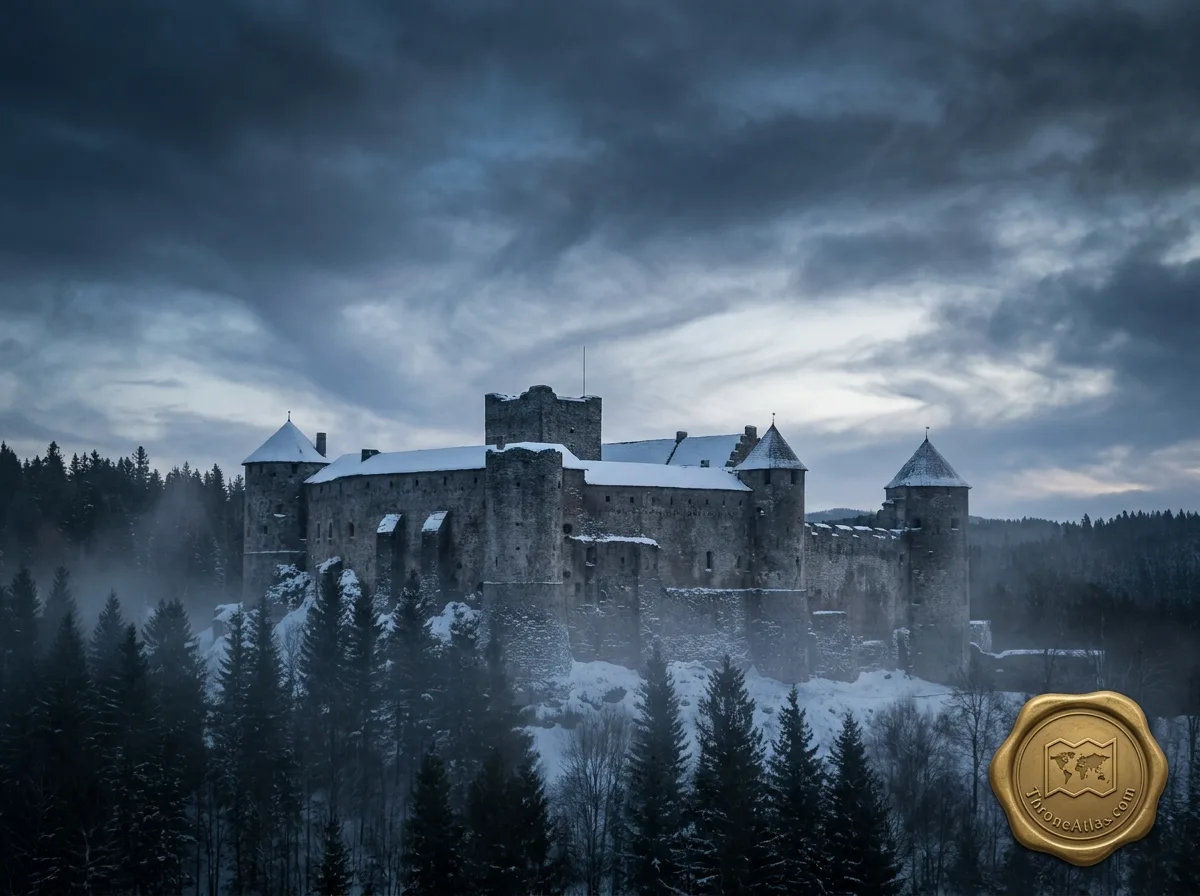
Winterfell
The Stark seat and emotional anchor of the North, tied to old gods, family memory, loyalty, and the long survival of a people shaped by winter.
Open Location Guide →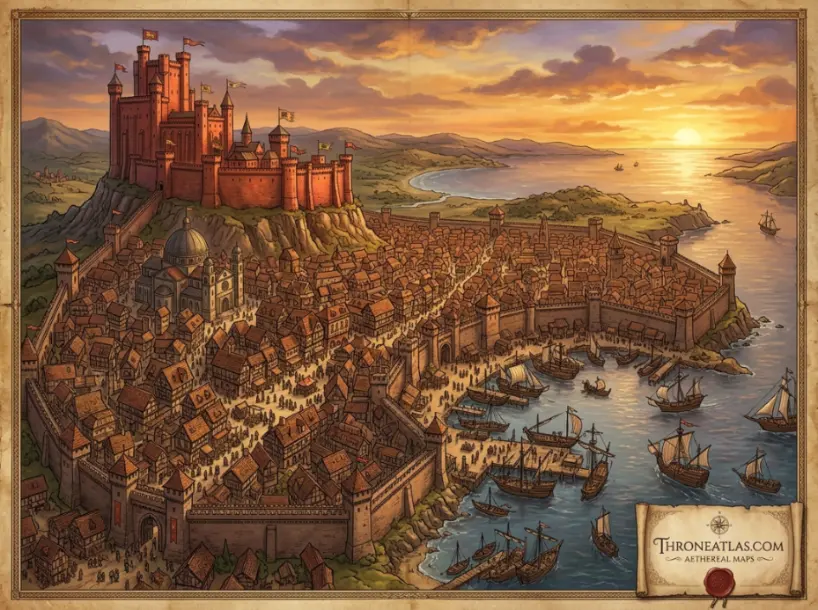
King’s Landing
The capital of the Seven Kingdoms — home of the Iron Throne, Red Keep, and the Small Council. Every political betrayal in the show eventually passes through here.
Open Location Guide →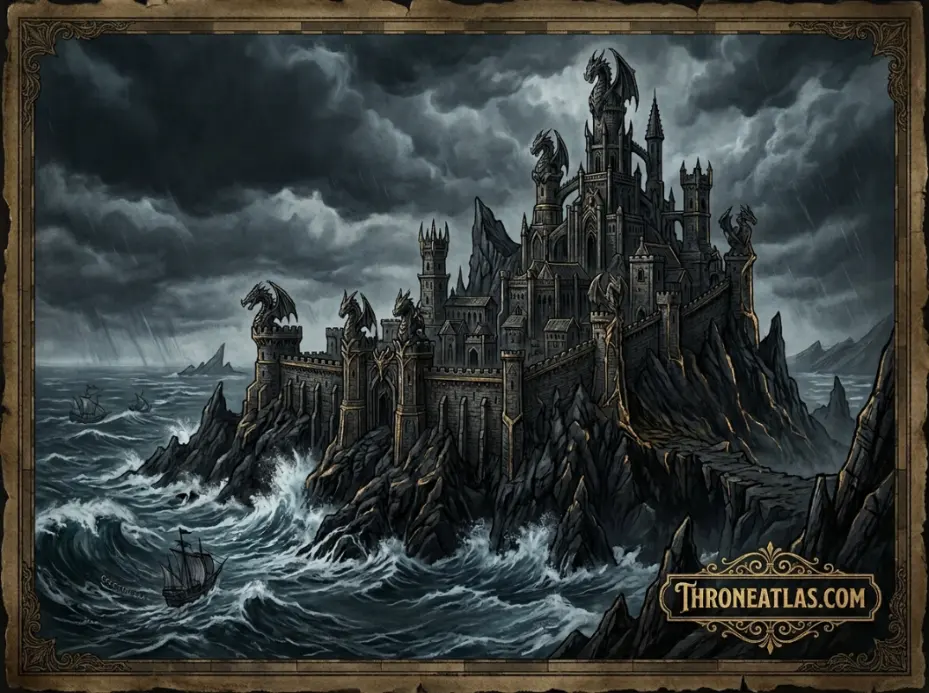
Dragonstone
The volcanic Targaryen island fortress where conquest began, prophecy lives, and the Dance of the Dragons was ignited. Central to both GOT and House of the Dragon.
Open Location Guide →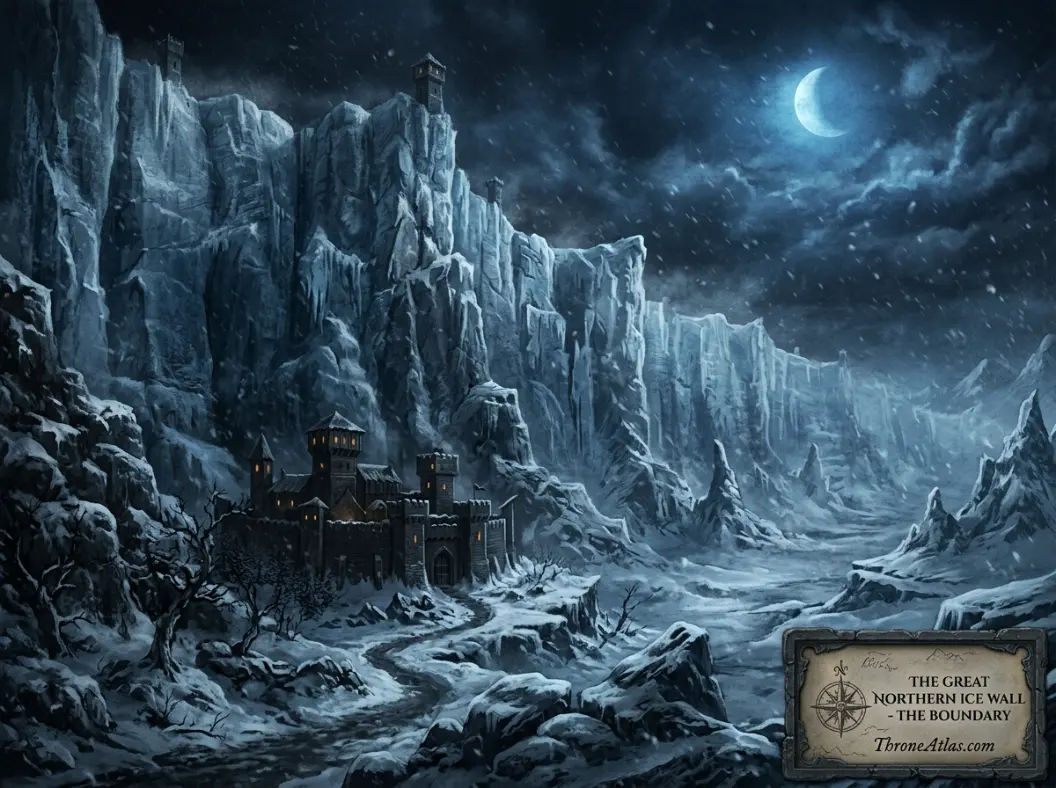
The Wall & Castle Black
The 700-foot ice barrier separating civilization from the oldest threat. Castle Black is the Night’s Watch headquarters and Jon Snow’s defining location.
Open Location Guide →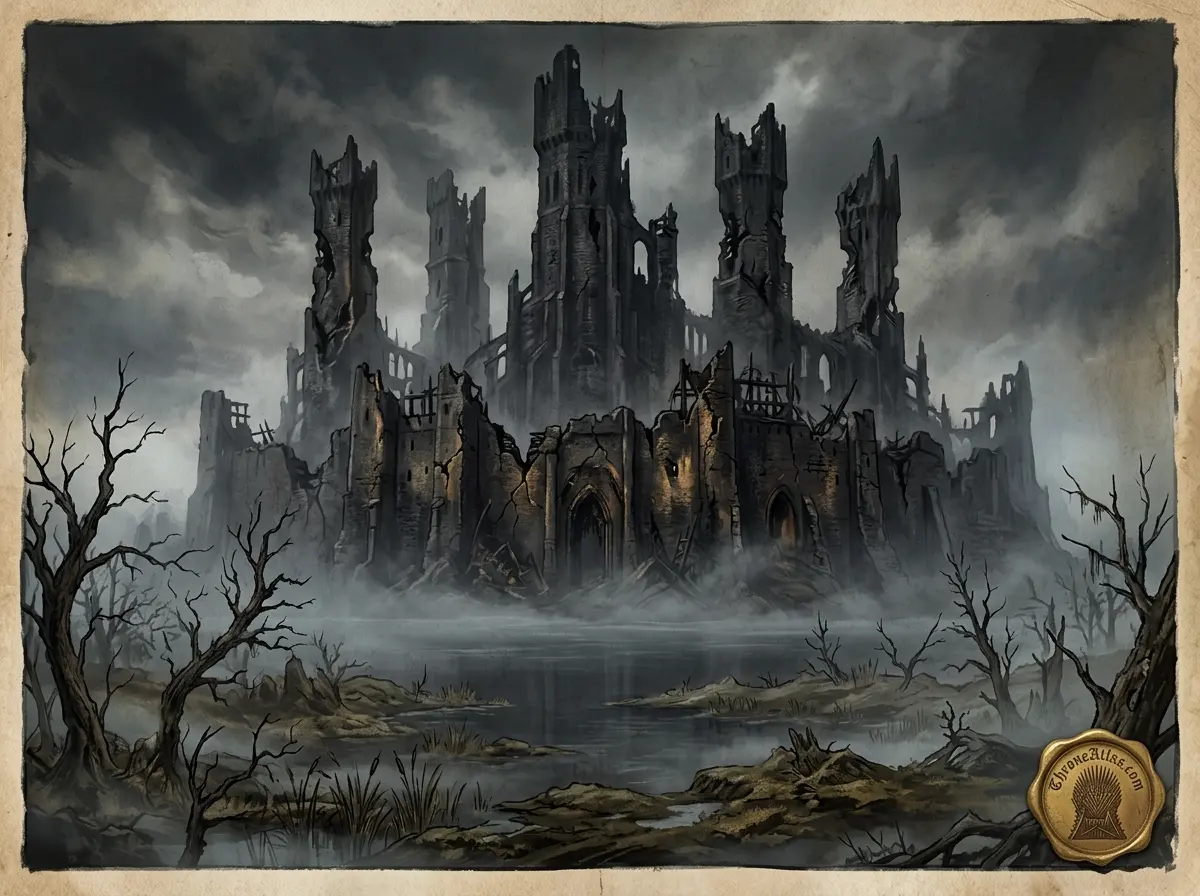
Harrenhal
A gigantic Riverlands ruin where ambition, dragonfire, central roads, and cursed memory converge. Important in both GOT and House of the Dragon.
Open Location Guide →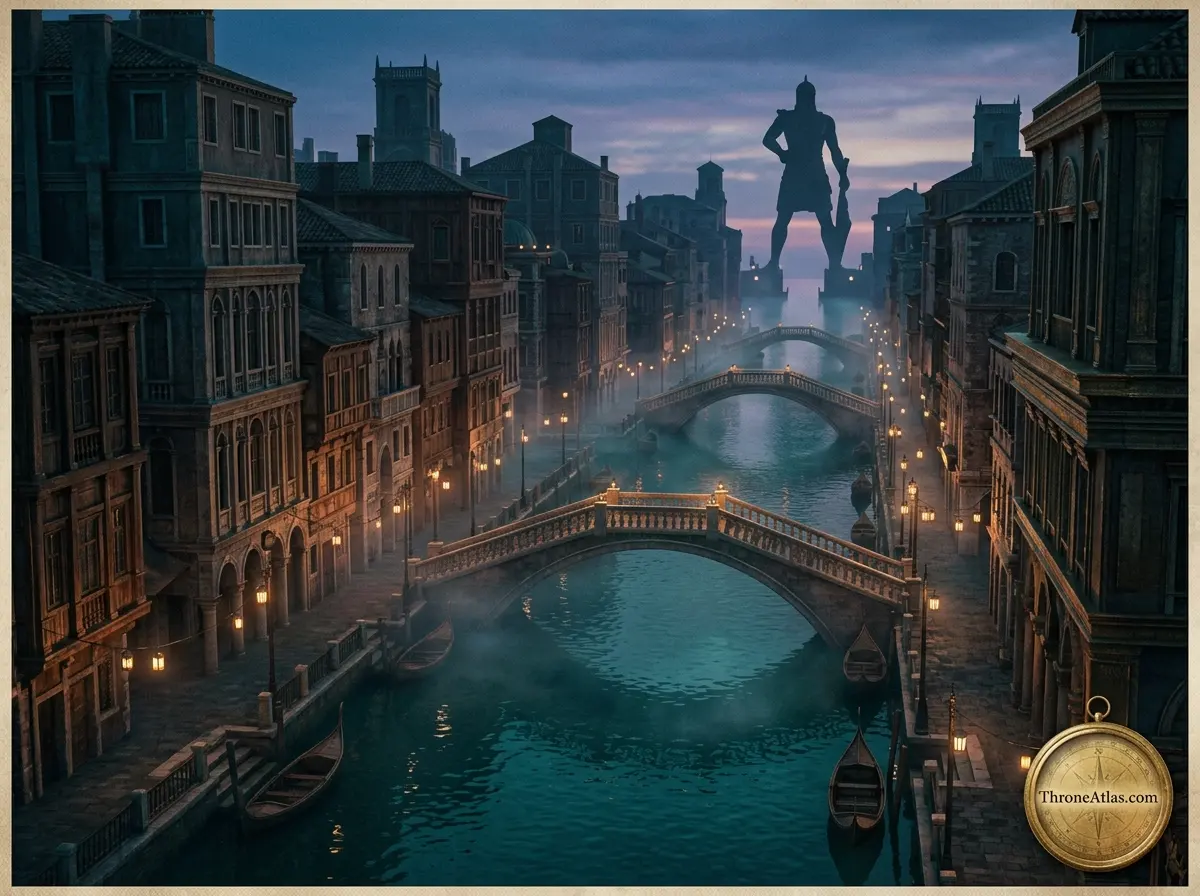
Braavos
The canal city of the Iron Bank and Faceless Men, central to Arya’s identity arc and the most powerful non-Westerosi city in the known world.
Open Location Guide →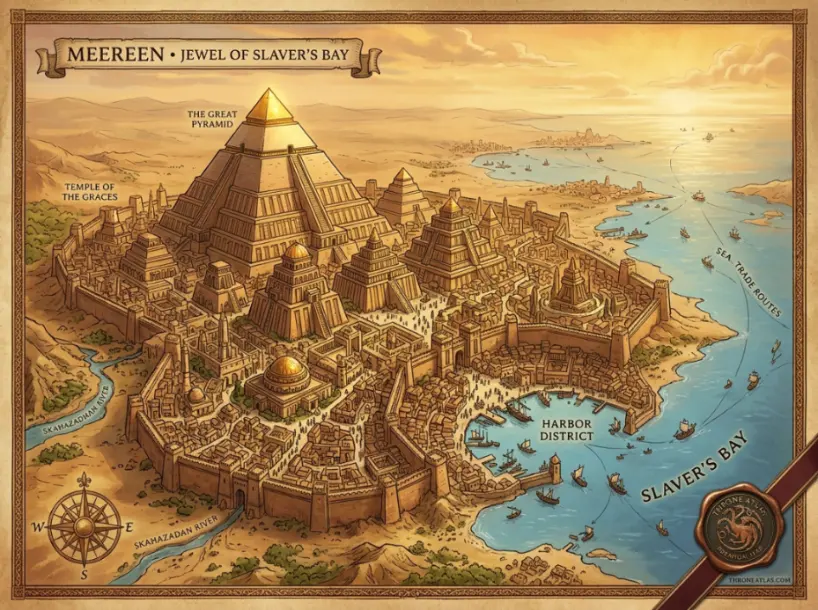
Meereen
The largest city of Slaver’s Bay — where Daenerys stops conquering and starts ruling, learning the difference between liberation and lasting governance.
Open Location Guide →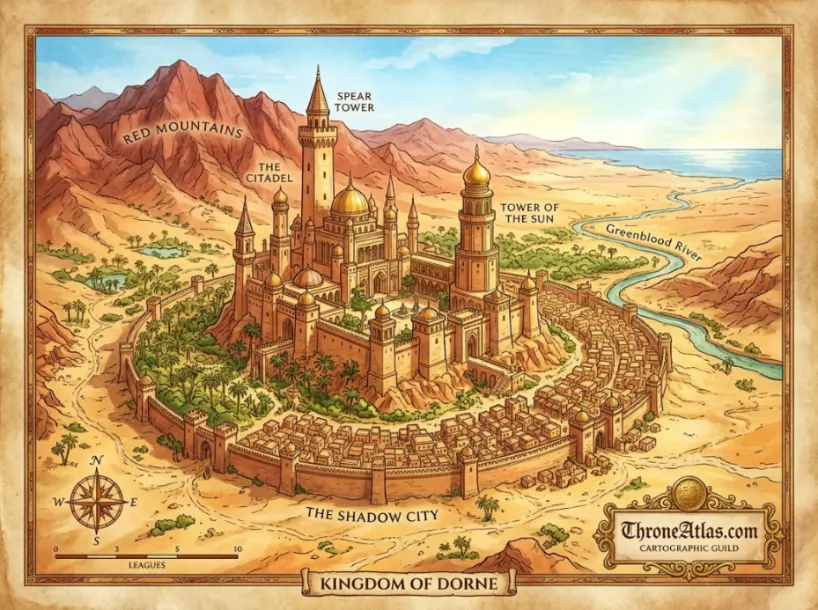
Dorne & Sunspear
The southern region and Martell seat, shaped by heat, mountain barriers, desert distance, and a fierce political independence from the Iron Throne.
Open Location Guide →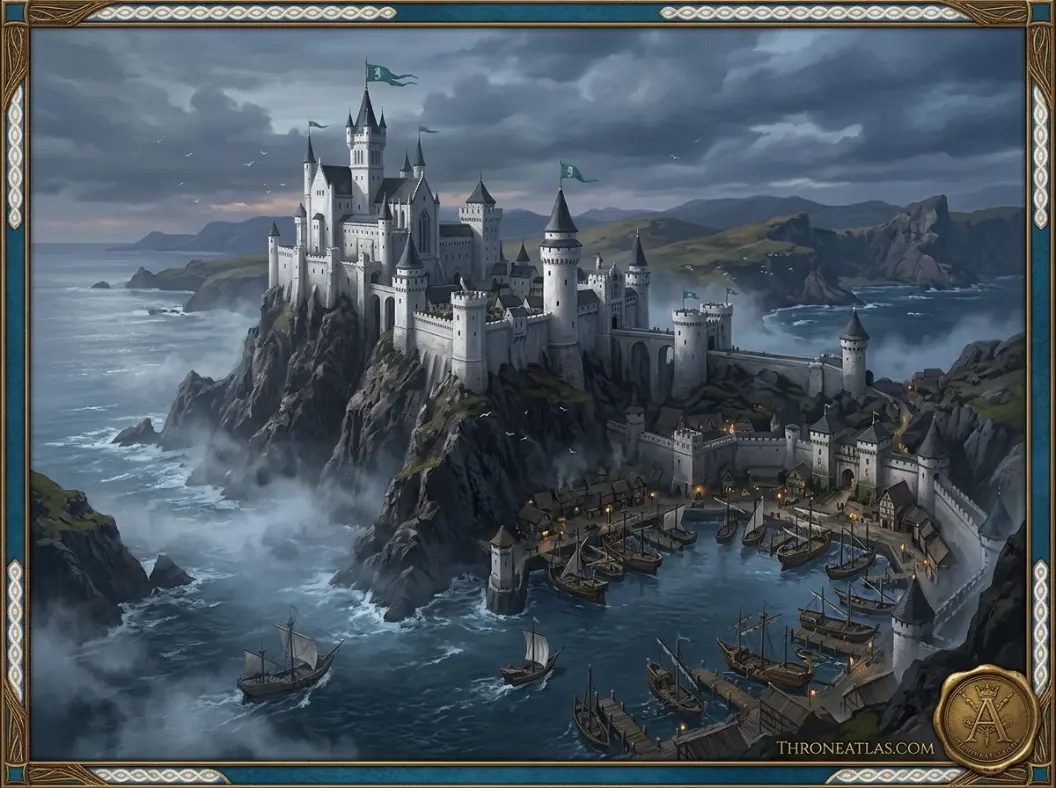
Driftmark
The Velaryon island seat in the Narrow Sea, essential to House of the Dragon’s naval power. Corlys Velaryon (the Sea Snake) commands the world’s greatest fleet from here.
Open Location Guide →Major Game of Thrones Locations Across the Known World
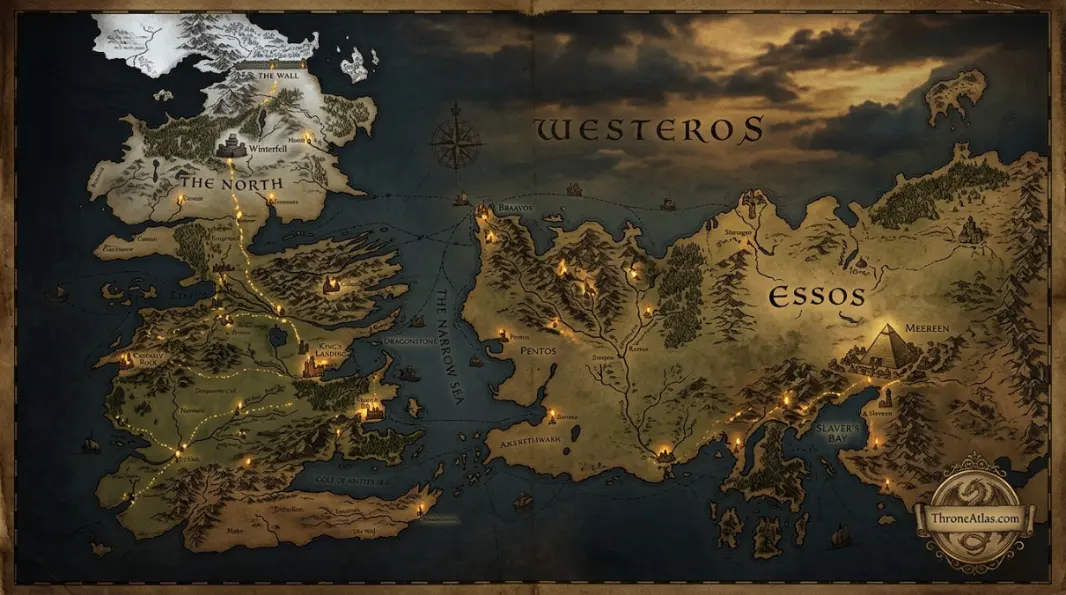
A stylized overview showing how the central location cluster stretches from Winterfell and the Wall in the north to King’s Landing, Dragonstone, Braavos, Meereen, and Dorne.
Why Game of Thrones Locations Aren’t Just Scenery
In Game of Thrones, every location is a pressure system. Winterfell makes the Starks feel ancient and hard to move. King’s Landing turns ambition into public theater. Dragonstone preserves the memory of conquest. The Wall makes the North more than a region — it makes it a shield. Braavos proves Essos has powers more subtle than armies. Meereen teaches that conquest isn’t the same as rule.
That’s why ThroneAtlas treats locations as core entities, not just settings. A castle, city, island, or road shapes what characters can do, how armies move, which alliances are possible, and how far consequences travel. Once you understand the geography, the story stops feeling like random movement and starts reading like a map of pressure, memory, and power. That shift is what this hub is built to create.
The 9 Great House Seats: Locations at a Glance
Each of Westeros’s nine Great Houses controls a castle seat that reflects its culture, geography, and political identity. Here’s how each seat differs by location, climate, and strategic value:
| Castle Seat | Great House | Region | Strategic Role |
|---|---|---|---|
| Winterfell | House Stark | The North | Northern anchor; Warden authority; emotional center |
| Casterly Rock | House Lannister | The Westerlands | Gold mines; western power; economic dominance |
| Dragonstone | House Targaryen | Narrow Sea (Crownlands) | Dragon heritage; eastern naval control; Conquest launchpad |
| Storm’s End | House Baratheon | The Stormlands | Southern coastal fortress; Baratheon legitimacy seat |
| Riverrun | House Tully | The Riverlands | River confluence control; Riverlands political center |
| The Eyrie | House Arryn | The Vale of Arryn | Mountain impenetrability; Vale isolation; Arryn legacy |
| Highgarden | House Tyrell | The Reach | Agricultural wealth; southern bread basket; soft power |
| Pyke | House Greyjoy | The Iron Islands | Naval raiding base; Iron Islands culture; Ironborn identity |
| Sunspear | House Martell | Dorne | Desert distance; cultural independence; Dornish law |
Winterfell: Why the North’s Seat Matters Most
Winterfell is the ancestral seat of House Stark and the emotional starting point of Game of Thrones. It’s not the wealthiest castle or the most politically intricate court in Westeros. Its power is quieter and older — rooted in continuity, family memory, the old gods, and northern survival.
On the map, Winterfell anchors the largest region in Westeros. The North is huge, cold, and nearly impossible to control from the south. Winterfell is the point where that vast distance becomes governable. It’s also the home the Stark children lose and spend the series trying — sometimes consciously, sometimes unconsciously — to reclaim.
What Winterfell Represents Geographically
Winterfell sits roughly in the center of the North, south of the Gift and north of the Neck. Its position gives the Starks control over both directions: they can monitor the Wall and respond to southern threats. The castle also has natural hot springs running beneath it — a geographical detail that keeps parts of the castle warm even in deep winter, making it more livable than almost anything else this far north.
The filming location for Winterfell was Castle Ward in County Down, Northern Ireland. Several sets were also built at Titanic Studios in Belfast. Both locations gave the show a physical language for northern stone that felt genuinely old and weathered.
King’s Landing: The Capital as Political Trap
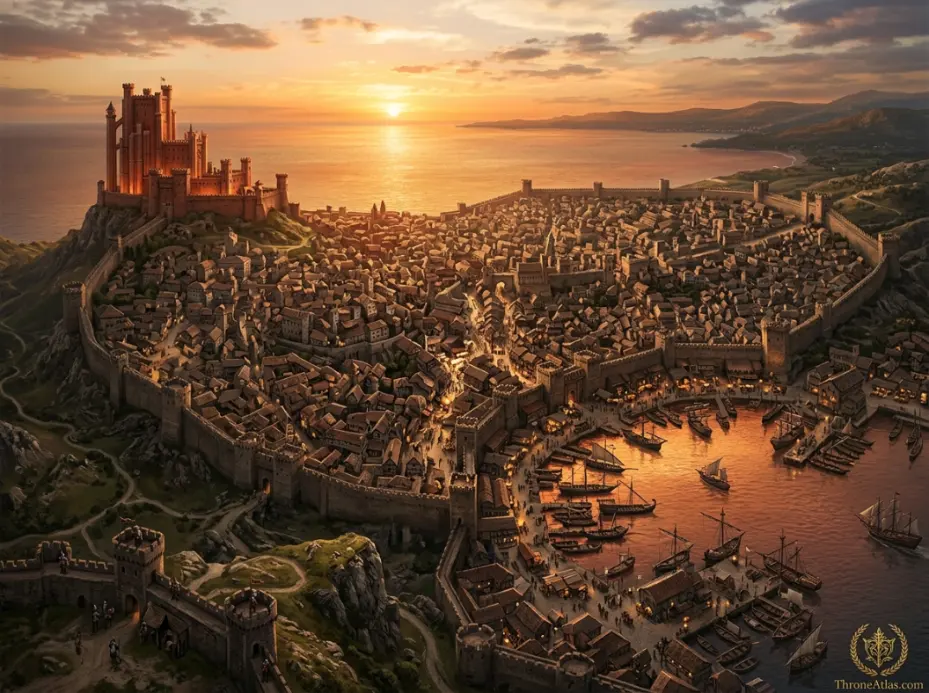
King’s Landing is the capital of the Seven Kingdoms and the location of the Iron Throne. It’s where Westerosi power becomes theater. The Red Keep, Small Council, royal court, harbor, and densely packed streets all create danger in different ways — and each character who enters the city is changed by it differently.
The city is especially important because it concentrates symbols. Whoever controls King’s Landing can claim to control the realm, even when the realm is already fracturing. Ned Stark doesn’t understand it quickly enough. Tyrion survives it through intelligence and dark humor. Cersei tries to master it through fear. Sansa learns painfully. Arya escapes — but never forgets what it teaches.
Where King’s Landing Was Filmed
Most exterior King’s Landing scenes were filmed in Dubrovnik, Croatia. The old city’s medieval walls, stone streets, and harbor provided a perfect physical template. Fort Lovrijenac served as the Red Keep exterior in early seasons. This is why Game of Thrones tourism in Croatia focused so heavily on Dubrovnik — real walls that audiences could walk through and recognize.
Dragonstone: The Targaryen Island That Remembers Everything
Dragonstone is the ancient Targaryen island fortress in the Narrow Sea. It predates King’s Landing as the Targaryen seat on the continent — built long before Aegon the Conqueror launched his campaign to unite Westeros. The castle is carved with dragon imagery, built from volcanic Valyrian stone, and sits on an island that made it defensively separate from the mainland.
In Game of Thrones, Stannis Baratheon holds Dragonstone as his seat of grim legitimacy. When Daenerys Targaryen returns to it in Season 7, the moment carries real geographic weight: this is the place her dynasty originally came from, not King’s Landing. Dragonstone predates the Iron Throne by a generation.
In House of the Dragon, Dragonstone is the Black seat — where Rhaenyra Targaryen and her faction hold their claim during the Dance of the Dragons. The castle’s significance doubles across both shows because it remains a symbol of legitimate Targaryen power even after the family loses King’s Landing.
The Wall and Castle Black: Where the Political Story Meets the Ancient One
The Wall is a 700-foot-tall structure of ancient ice stretching across the northern border of Westeros, built thousands of years before the events of Game of Thrones. It was constructed after the Long Night to keep the White Walkers and other threats from returning south. The Night’s Watch — an ancient order sworn to hold it — has maintained it ever since, though by the time the show begins, almost no one in Westeros still believes the threats north of it are real.
Castle Black is the largest and most active Night’s Watch stronghold along the Wall’s southern face. Jon Snow’s entire arc is shaped by what he learns there: that his identity as a Stark bastard matters less than his responsibility to the border. He becomes Lord Commander of the Night’s Watch — and eventually realizes that the Wall itself isn’t enough.
What the Wall Teaches About the Map
Here’s the most interesting geographical lesson the Wall provides: a line on a map can only protect you if the people south of it believe the danger north of it is real. Once that belief erodes, the line becomes theater. That’s exactly what happens over eight seasons.
Wall scenes were filmed in Iceland — specifically in locations like Vatnajökull glacier. The ice landscapes gave Castle Black and Beyond the Wall an alien, genuinely hostile atmosphere that no studio set could have replicated.
Harrenhal: The Ruin That Refuses to Be Forgotten
Harrenhal is the largest castle ever built in Westeros, constructed by Harren the Black, Lord of the Iron Islands, and destroyed by Aegon the Conqueror’s dragon Balerion on the first day of the War of Conquest. Its towers melted and buckled under dragonflame. Since then, no lord who held Harrenhal has prospered — a pattern consistent enough that characters in the story treat it as genuinely cursed.
The castle matters because its location in the Riverlands is strategically important. It sits near the Gods Eye lake, close to the confluence of Westeros’s major road systems. In a war, controlling Harrenhal means controlling movement. In Game of Thrones, Arya Stark experiences the castle from below — as a captive doing kitchen work while powerful men argue over its ownership. That inversion is one of the show’s best uses of location as a storytelling device.
Braavos: Finance, Faces, and a Different Kind of Power
Braavos is one of the nine Free Cities of Essos, located in a lagoon on the northwestern coast of the continent. It was founded by escaped slaves from the Valyrian Freehold and has maintained a strict anti-slavery identity ever since. It’s home to the Iron Bank of Braavos — the most powerful financial institution in the known world — and the Faceless Men, a guild of assassins who serve the Many-Faced God.
For Arya Stark, Braavos is the place where she attempts to become no one. The Faceless Men’s training demands that she surrender her Stark identity entirely — and the show’s most interesting Braavos question is whether she actually succeeds, or whether she carries Winterfell with her even when she thinks she’s left it behind.
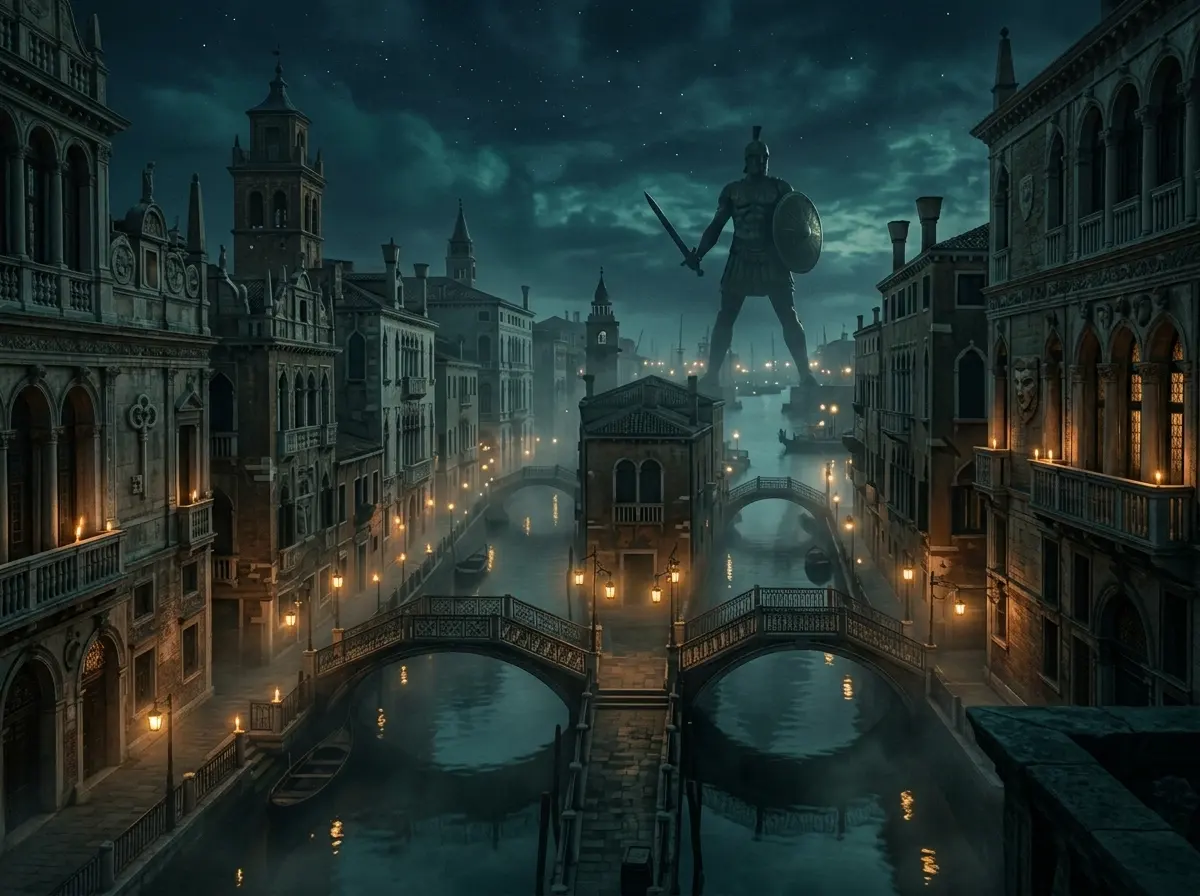
Why Braavos Matters for the Wider Map
Braavos proves that power doesn’t always sit on a throne. The Iron Bank doesn’t have an army, but it can fund or defund kings. The Faceless Men don’t hold territory, but they can reach anyone. Braavos expands the story’s definition of power beyond military force — and that expansion is important for readers trying to understand why the Free Cities matter even when the camera is focused on Westeros.
Meereen: The Hardest Question in Daenerys’s Arc
Meereen is the largest city of Slaver’s Bay in Essos and the primary location of Daenerys Targaryen’s storyline in Seasons 4 through 6. It’s where she stops moving — stops acquiring armies and freeing slaves as she travels — and sits down to actually govern. That shift is the point of Meereen. Astapor gives her an army. Yunkai reveals organized resistance. Meereen forces her to answer the hardest question in her arc: what happens after liberation when the people you’ve freed didn’t all want to be governed the way you want to govern them?
Meereen scenes were filmed primarily in Dubrovnik and in Klis Fortress near Split, Croatia, as well as locations in Morocco. The architectural mix gave Meereen a distinct visual identity — more Arabic-influenced and warm-toned than the grey stone of Westeros.
Dorne and Sunspear: When Distance Is the Defense
Dorne is the southernmost region of Westeros, separated from the rest of the continent by the Red Mountains and the Sea of Dorne. Its capital, Sunspear, is the seat of House Martell. Dorne was the last of the Seven Kingdoms to join the realm — and it did so through marriage, not conquest, after successfully resisting Aegon the Conqueror’s dragons. That history shapes everything about Dornish identity.
Dorne’s filming locations were in Spain — primarily the Alcázar of Seville and the Plaza de España in Seville. The visual contrast with the grey stones of Winterfell and King’s Landing was immediate and intentional: Dorne is supposed to feel separate, sun-drenched, and governed by different rules.
How to Navigate the ThroneAtlas Location Hub
The location hub is built for two kinds of readers. The first wants to look up a specific place quickly — where is it, who controls it, what happened there. The second wants to follow a thread: a character’s route, a house’s territorial claims, a battle’s geography. Both readers should find what they need here.
Each individual location page answers the same core questions: where it sits on the map, who controls it and when, which characters go there, what major events happen there, how the book version differs from the show version, and which pages to read next. That consistent structure turns every page into a node in the wider atlas — not a dead-end article.
- Winterfell — Stark seat, northern identity, Jon and Arya’s origin
- King’s Landing — capital, Iron Throne, Red Keep, political betrayal
- Dragonstone — Targaryen legacy, conquest memory, House of the Dragon
- The Wall — ancient barrier, Night’s Watch, wildlings, Long Night
- Braavos — Iron Bank, Faceless Men, Arya’s arc, Free Cities
- Harrenhal — Riverlands crossroads, dragonfire ruins, House of the Dragon
- Dorne — Martell seat, Dornish law, desert independence
- Meereen — Slaver’s Bay, Daenerys’s governance test
How to Read Game of Thrones Locations in Order
This sequence gives you the strongest foundation: each step connects to more character routes, house pages, and battle guides than any other reading order.
How Locations Connect the Whole ThroneAtlas
Location pages aren’t isolated articles. Every castle, city, or region connects outward to character routes, house maps, battle sites, and lore guides — making the locations hub the structural spine of the entire atlas.
Character Routes
Winterfell ties to Jon, Arya, Sansa, Bran, and Robb. Braavos ties exclusively to Arya. Meereen ties to Daenerys. King’s Landing touches nearly every political character. Each location page links outward to its core character route guide.
Noble House Maps
Each major castle strengthens a house page: Winterfell to Stark, Dragonstone to Targaryen, Casterly Rock to Lannister, Sunspear to Martell, Driftmark to Velaryon. Readers can move naturally between place and family.
Lore & Battle Events
Old Valyria, the Wall, Dragonstone, Harrenhal, and King’s Landing all connect to conquest, prophecy, dragonfire, royal succession crises, and the ancient threats that give the world its mythological weight.
Game of Thrones Location Questions Answered
The most common questions readers ask about GOT locations — answered directly, with detail and without padding.
The most important Game of Thrones locations are Winterfell, King’s Landing, Dragonstone, The Wall, Castle Black, Harrenhal, Braavos, Meereen, Dorne and Sunspear, Storm’s End, Casterly Rock, Highgarden, Pyke, the Eyrie, Riverrun, and Old Valyria. Among these, Winterfell, King’s Landing, and Dragonstone receive the most screen time and have the deepest connections to character arcs, political events, and lore history.
King’s Landing is the capital of the Seven Kingdoms in Game of Thrones. It sits at the mouth of the Blackwater Rush on the eastern coast of Westeros. The city contains the Red Keep (the royal castle), the Iron Throne, the Small Council chamber, the Great Sept of Baelor (destroyed in Season 6), and the city watch known as the Gold Cloaks. King’s Landing was founded by Aegon the Conqueror after his victory in the War of Conquest and has served as the political center of Westeros ever since.
Winterfell is important because it is the ancestral seat of House Stark and the emotional center of the story’s beginning. It anchors the North — the largest region in Westeros — and gives the Stark family an identity rooted in place, memory, and the old gods. Jon Snow, Arya Stark, Sansa Stark, Bran Stark, and Robb Stark all begin at Winterfell. When they leave it, the castle becomes the home they’re all trying — in different ways — to return to or rebuild. Its loss and recapture in Seasons 6 and 7 is one of the show’s most powerful uses of location as emotional stakes.
Dragonstone is in Westeros — specifically in the Crownlands region, on an island in the Narrow Sea close to the eastern coast of the continent. It is not part of Essos. The island was the Targaryen outpost in the west long before Aegon the Conqueror began the War of Conquest. Dragonstone was the Targaryen seat before King’s Landing was built. In Game of Thrones, Stannis Baratheon holds it, then Daenerys Targaryen returns to it in Season 7. In House of the Dragon, it’s the Black faction’s seat during the Dance of the Dragons.
The most prominent Essos locations in Game of Thrones include: Braavos (Iron Bank, Faceless Men, Arya’s storyline in Seasons 5–6), Pentos (Daenerys’s exile starting point in Season 1), Vaes Dothrak (the Dothraki sacred city, Seasons 1 and 6), Qarth (the ancient city of merchant princes, Season 2), Astapor (where Daenerys acquires the Unsullied, Season 3), Yunkai (slave city freed by Daenerys, Season 3), and Meereen (Daenerys’s seat of rule, Seasons 4–6). Old Valyria, Yi Ti, and Asshai are referenced in lore but not shown on screen.
Harrenhal is located in the Riverlands, on the northern shore of the Gods Eye lake, in the approximate geographic center of Westeros. Its central position makes it strategically valuable — controlling it gives access to the major road systems connecting the North, the Vale, the Westerlands, and the Reach. The castle was built by Harren the Black and destroyed by Aegon’s dragon Balerion in 2 BC (Before the Conquest calendar). In House of the Dragon, Harrenhal becomes especially important as Daemon Targaryen claims it and Aemond later uses it as a staging ground during the Dance of the Dragons.
Game of Thrones was filmed across multiple real-world countries. Northern Ireland (Castle Ward, Titanic Studios Belfast, Dark Hedges, Tollymore Forest) was used for Winterfell and the North. Croatia (Dubrovnik’s old city, Fort Lovrijenac, Klis Fortress) served as King’s Landing and Meereen. Iceland (Vatnajökull glacier, Mývatn lake area) was used for The Wall and Beyond the Wall. Spain (Alcázar of Seville, Plaza de España) served as Dorne. Malta (Azure Window, Mdina) was used in early seasons for Pentos and the Red Waste. Morocco (Essaouira, Ouarzazate) provided Astapor and Essos desert locations.
The Iron Bank of Braavos is the most powerful financial institution in the known world in Game of Thrones. It funds wars, topples kings, and recovers debts with ruthless patience — the Iron Bank’s motto, as Tywin Lannister acknowledges, is that it always gets its money back. When the Iron Throne falls behind on its debts to the Iron Bank, Stannis Baratheon uses the opportunity to secure Iron Bank funding for his campaign. The Iron Bank matters geographically because it proves that Braavos — a city outside Westeros, without an army or a throne — can exert more leverage over Westerosi politics than most castle lords can.
Related Locations, Maps, Houses, and Character Routes
Top Locations
Essential Maps
Connected Houses
Character Routes
ThroneAtlas is an independent fan-made map and lore reference. Not affiliated with, endorsed by, or connected to HBO, Warner Bros., George R.R. Martin, or any official Game of Thrones, House of the Dragon, or A Song of Ice and Fire property. All names, trademarks, and intellectual property belong to their respective owners.