Game of Thrones Lore Wars, Dragons, Prophecies & Ancient Mysteries Explained
Aegon’s Conquest · Doom of Valyria · Long Night · Dance of the Dragons · Azor Ahai · Robert’s Rebellion
The complete Game of Thrones lore guide covering every war, prophecy, dragon, and ancient mystery in Westeros and Essos — from the Doom of Valyria and Aegon’s Conquest to the Long Night, the Dance of the Dragons, Azor Ahai, the Children of the Forest, Valyrian steel, greenseers, and the far-eastern shadow of Asshai.
Game of Thrones lore is the deeper mythology, history, and ancient magic behind the story. It encompasses Aegon’s Conquest, the Doom of Valyria, the Long Night, the Dance of the Dragons, Robert’s Rebellion, the War of the Five Kings, Azor Ahai, the Children of the Forest, Valyrian steel, dragonglass, greenseers, the old gods, and the ancient mysteries of Asshai — all organized here by wars, events, magic, prophecy, houses, and map connections.
The Game of Thrones Lore System at a Glance
Before exploring individual guides, understand the eight foundational lore pillars that underpin every map, house, character, route, and war on ThroneAtlas.
The dragonlord Freehold behind Targaryen blood, Valyrian steel, dragon eggs, and the catastrophic Doom that shaped Essos.
Aegon’s Conquest created the Iron Throne, King’s Landing, and a unified Westeros from six separate kingdoms under dragon power.
The pre-history darkness tied to the Wall, the White Walkers, the Night’s Watch, and every northern warning about the dead.
The Targaryen succession war that drove House of the Dragon and burned through nearly all of the dragons that survived Valyria.
The promised hero of fire and sacrifice, tied to Lightbringer, the Long Night, and debated by Melisandre, Jon Snow, and Daenerys.
Powers connecting weirwood trees, the Children of the Forest, skinchangers, Bran Stark, and a non-linear understanding of time and memory.
Blades forged with lost Valyrian craft — one of only two materials confirmed to kill White Walkers, alongside dragonglass.
The shadowbound city at the edge of the Known World — source of prophecy, dark sorcery, and knowledge too dangerous for the rest of the world.
Explore Game of Thrones Lore by Topic
Search or filter the full ThroneAtlas lore library. Every card links to a deep-dive guide connecting history, prophecy, magic, wars, and geography.
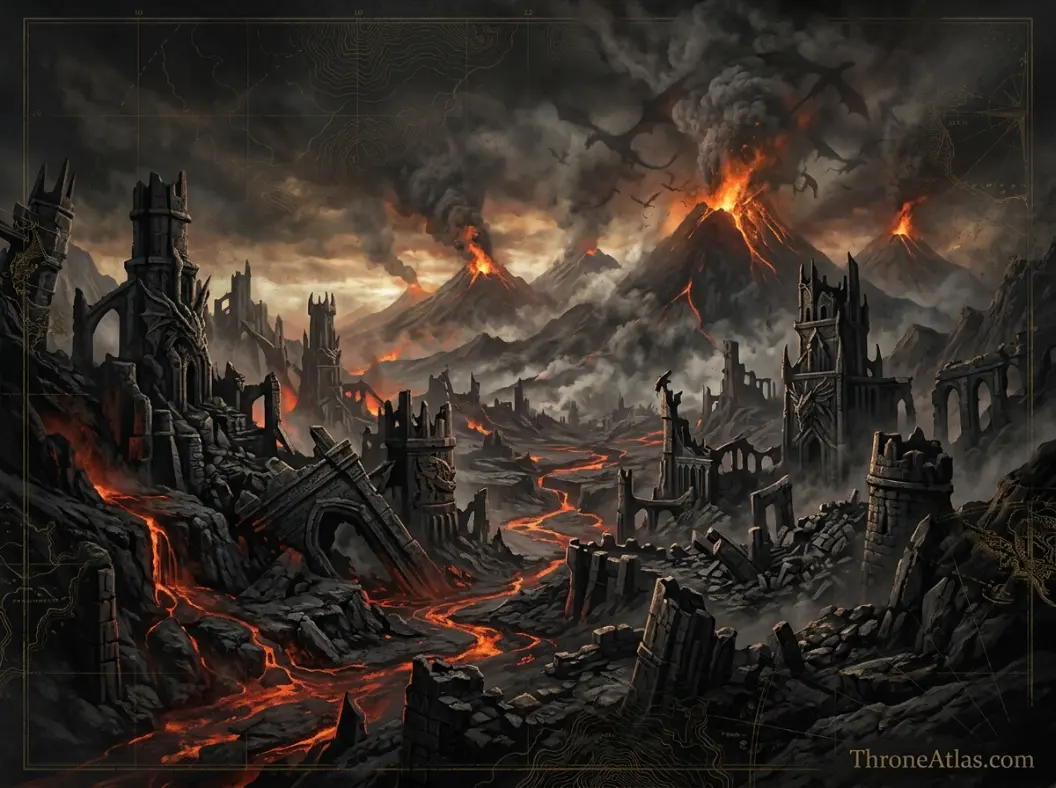
The Doom of Valyria
The cataclysm that destroyed the Valyrian Freehold, scattered dragon power across the world, and turned the greatest civilization in history into a smouldering ruin.
Read Full Guide →
Aegon’s Conquest
How three dragons and one family turned seven kingdoms into one realm, created the Iron Throne, and built King’s Landing from a muddy river crossing into a capital.
Read Full Guide →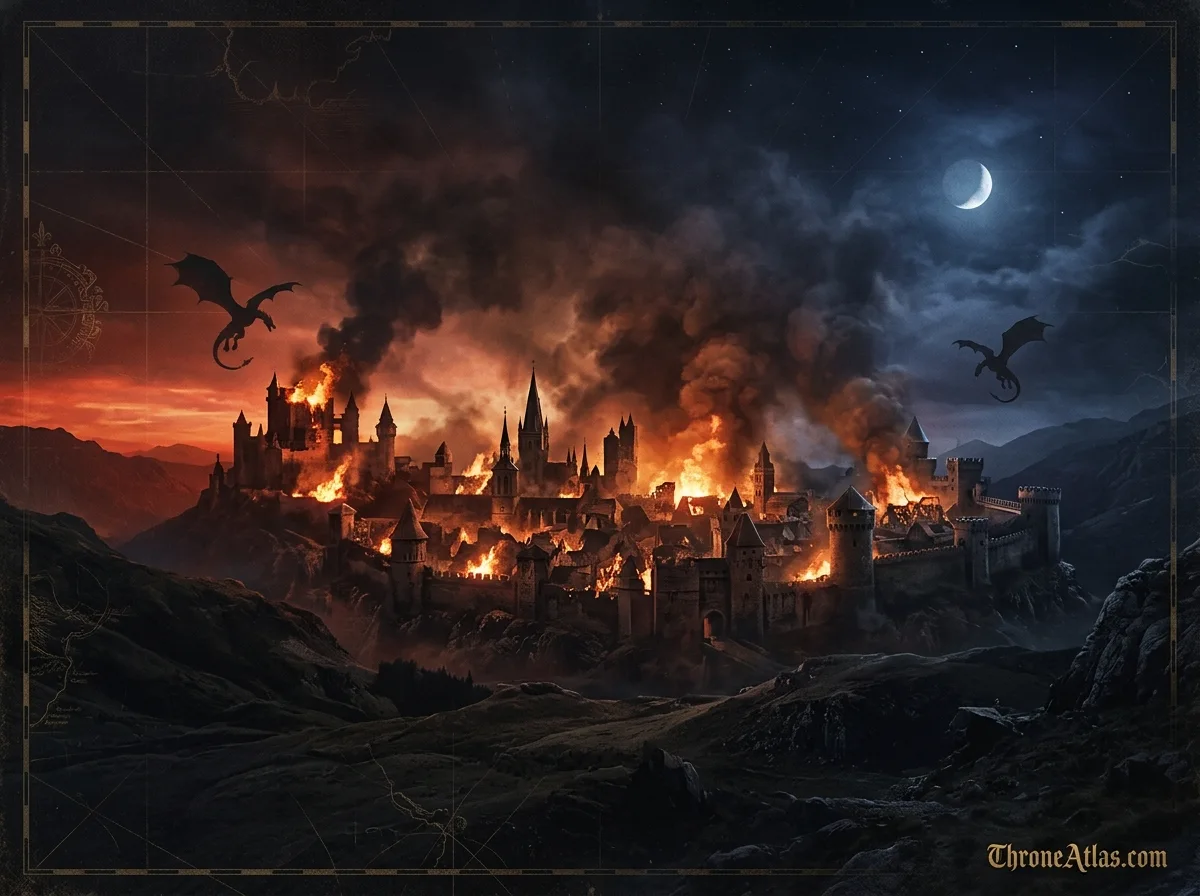
Dance of the Dragons
The Targaryen civil war of 129–131 AC between the Blacks and the Greens — the conflict that ends dragon dominance in Westeros and sets up the world of Game of Thrones.
Read Full Guide →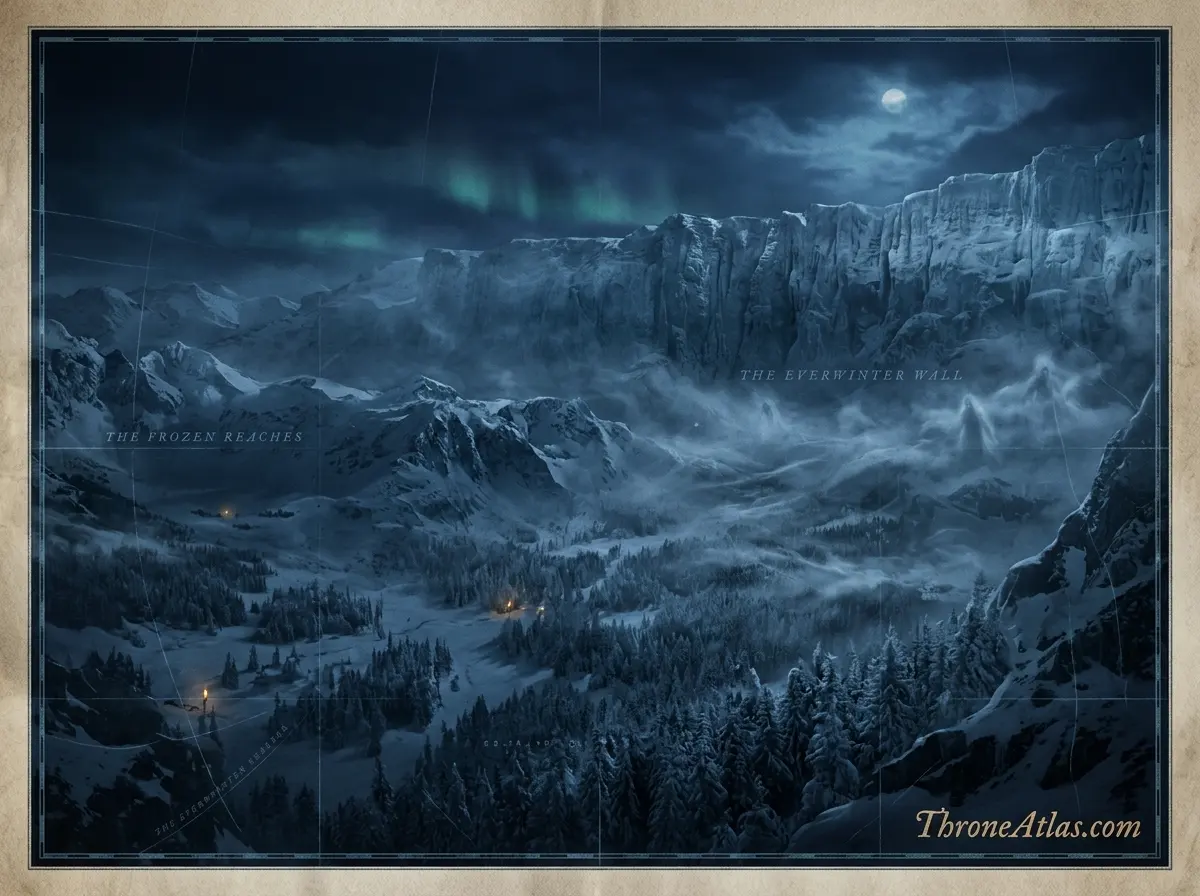
The Long Night
The ancient period of darkness when the White Walkers first invaded the lands of the living — the foundational threat that explains the Wall, the Night’s Watch, and all northern prophecy.
Read Full Guide →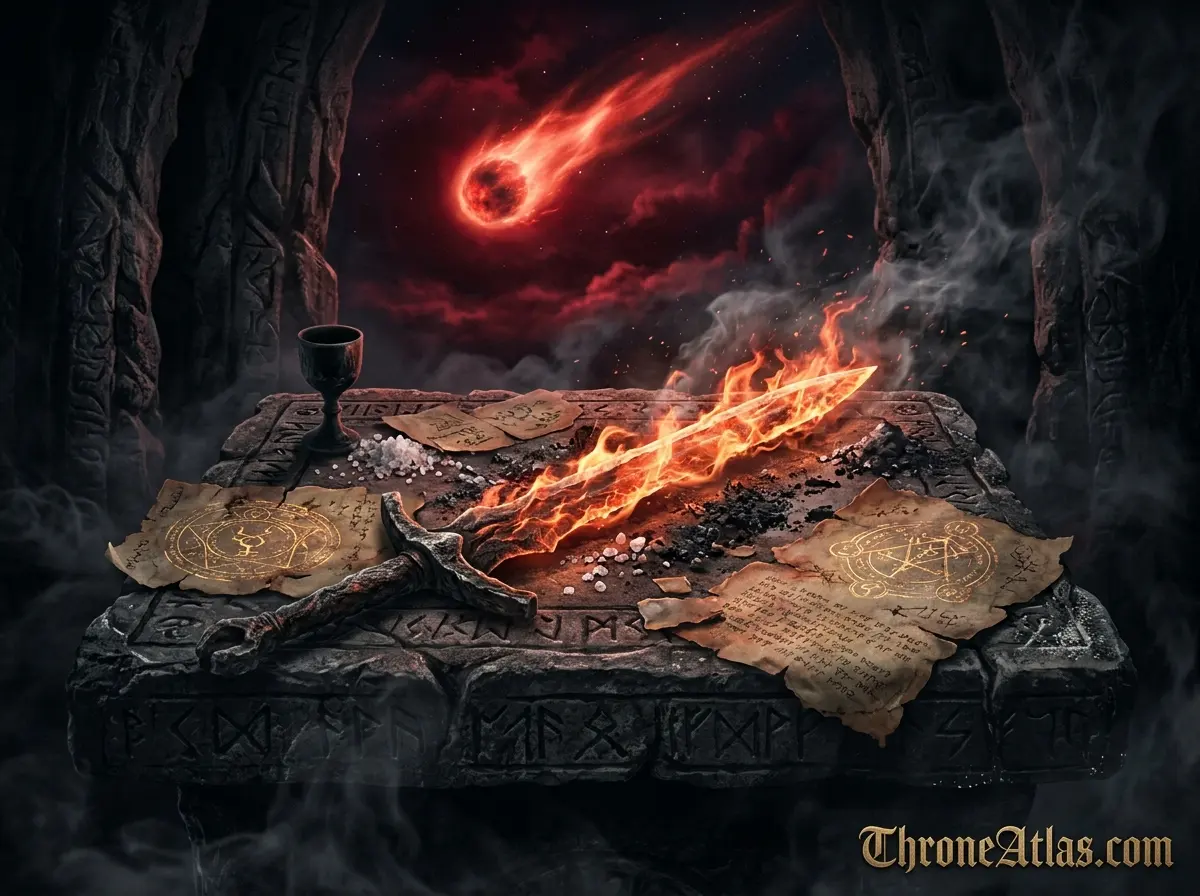
Azor Ahai & the Prince That Was Promised
The most debated prophecy in the story — a hero reborn amid salt and smoke who forges Lightbringer through sacrifice and pushes back the darkness. Jon and Daenerys are the top candidates.
Read Full Guide →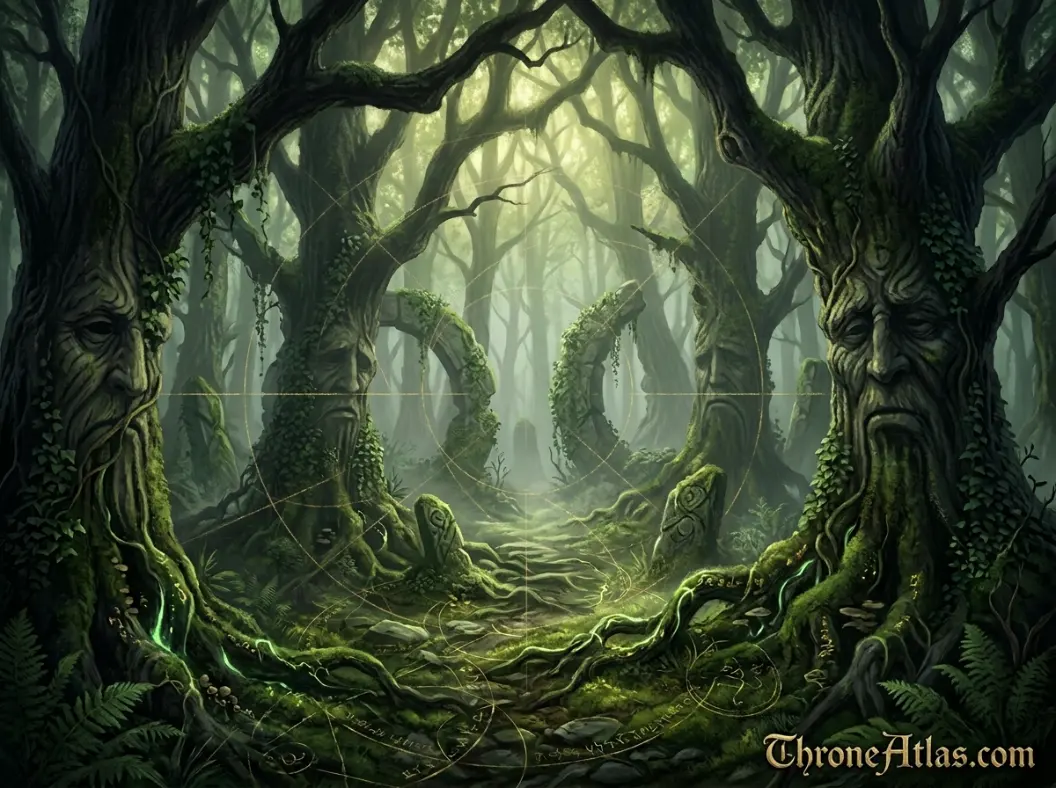
Children of the Forest & Greenseers
The original inhabitants of Westeros — their pact with the First Men, their weirwood network, and how greenseeing and Bran’s transformation connect to the oldest memory in the world.
Read Full Guide →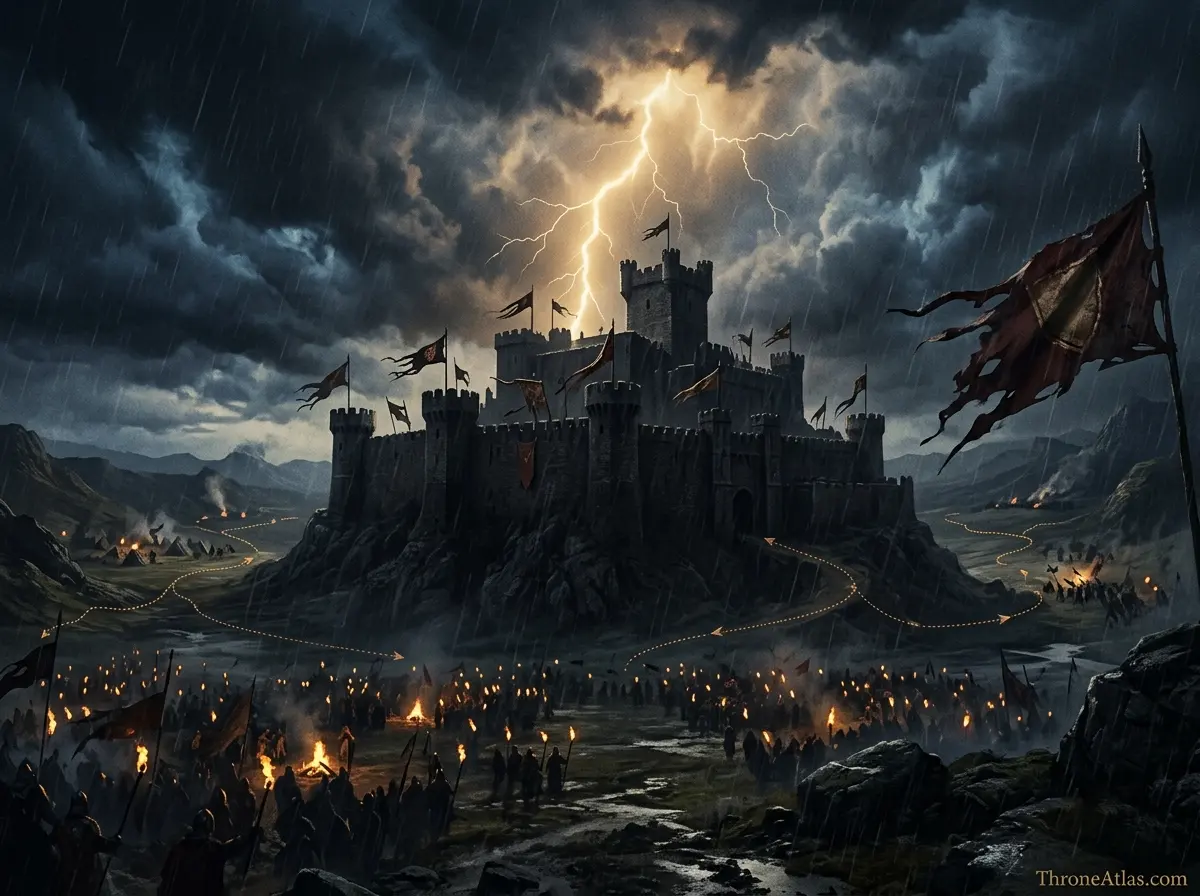
Robert’s Rebellion
The 281–283 AC war that toppled the Targaryen dynasty, placed Robert Baratheon on the Iron Throne, and secretly set Jon Snow’s parentage in motion at the Tower of Joy.
Read Full Guide →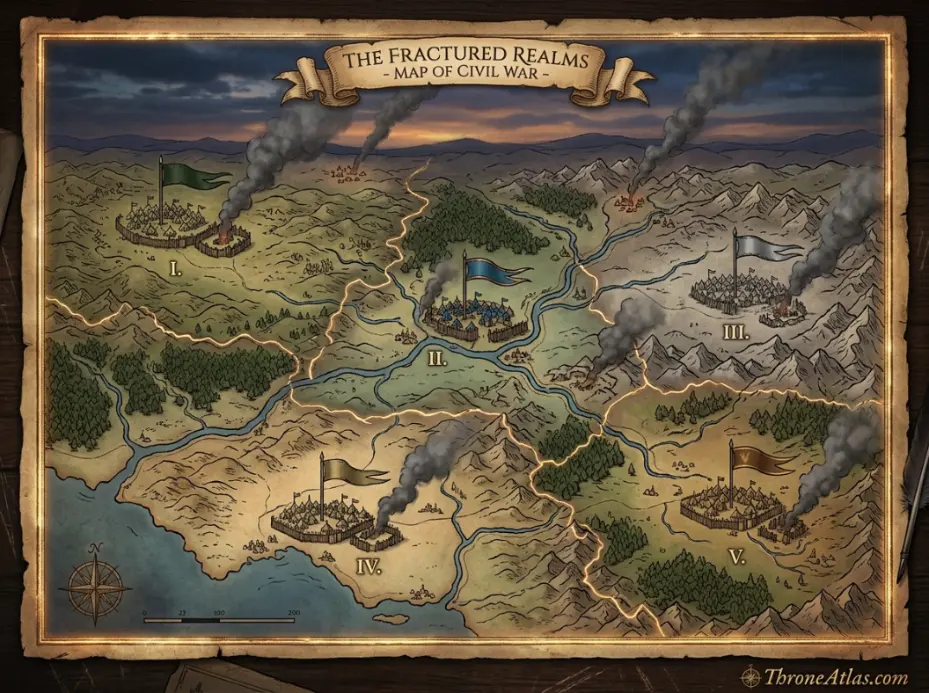
War of the Five Kings
The multi-claimant war that defines the first four seasons of Game of Thrones — five kings, the Red Wedding, the Riverlands devastated, and no single winner emerging intact.
Read Full Guide →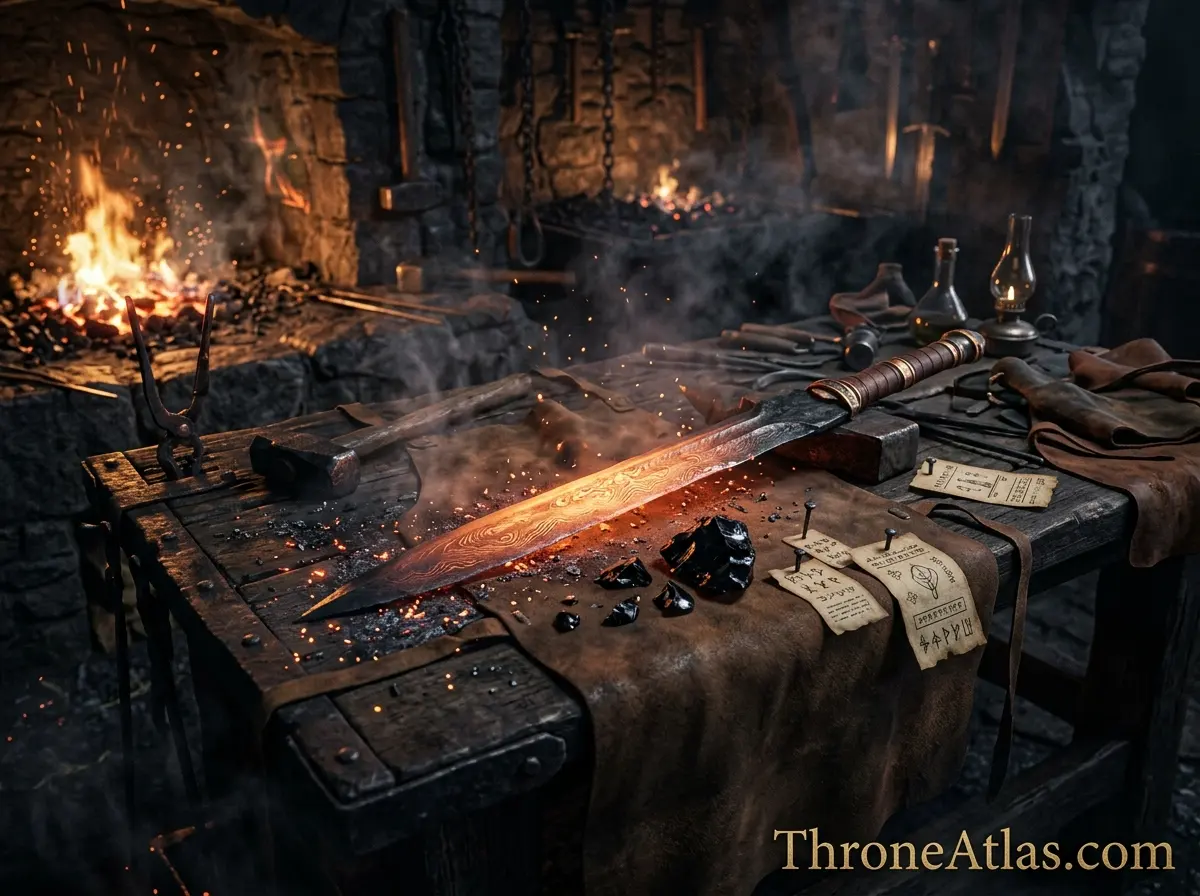
Valyrian Steel & Dragonglass
The only two materials confirmed to kill White Walkers — both tied to dragon fire, Valyrian craft, and Dragonstone’s volcanic caves. Why they’re rare, where they come from, and who holds them.
Read Full Guide →The Game of Thrones Lore Timeline
From the age of the Children of the Forest to the War of the Five Kings — how ancient events laid the foundations for every political crisis in the present story.
- Game of Thrones lore spans roughly 12,000 years of in-world history, from the age of the Children of the Forest to the events of the main series.
- The Doom of Valyria (~114 BC) and Aegon’s Conquest (1–2 AC) are the two most important pre-story events for understanding Westeros’s political shape.
- The Long Night (~8,000 BC) is the source of every northern prophecy, the Wall, and the threat of the White Walkers.
- Valyrian steel and dragonglass are the only confirmed weapons capable of killing White Walkers — both rooted in ancient dragonfire.
- The Dance of the Dragons (129–131 AC) explains why almost no living dragons exist by the time of Game of Thrones.
- Robert’s Rebellion (281–283 AC) is the most recent major lore event and directly explains the main series’ political starting position — including Jon Snow’s hidden parentage.
What Is Game of Thrones Lore?
The surface story of Game of Thrones is political: crowns, betrayals, marriages, armies, and the Iron Throne. But none of it makes full sense without the lore underneath it. Why does a Targaryen king think dragonfire gives him the right to rule? Why does a sword made centuries ago matter in a battle against the dead? Why does a prophecy spoken in a dead language move armies in the present?
Lore answers those questions. It’s the soil under the map — the reason geography feels ancient, dynasties feel inevitable, and threats feel like returning patterns rather than random events. This guide organizes that lore chronologically and thematically, connecting each major topic to the locations, houses, characters, and map pages where you can follow it further.
The Doom of Valyria: Why Dragons Are Rare in Westeros
Before the Doom, the Valyrian Freehold was extraordinary. Dragonlord families — of which the Targaryens were just one — controlled fleets of dragons, built roads that still stand across Essos, forged Valyrian steel through a now-lost process that combined magic and dragonfire, and spoke a language that eventually evolved into High Valyrian. They didn’t just rule an empire; they rewrote what power could look like.
When all of that vanished in a single generation, the aftershocks were permanent. Valyrian steel became irreplaceable because no one remembered how to make it. Dragons became mythic because most of them died in the catastrophe or in the wars that followed. The Free Cities of Essos — Braavos, Pentos, Myr, Tyrosh, Lys, Volantis, and others — emerged from Valyrian colony settlements, which is why they still carry traces of Valyrian culture and language.
House Targaryen on Dragonstone became the western remnant of an empire that no longer existed. That inheritance — dragons, Valyrian steel, blood magic, prophecy, and the peculiar stone architecture of Dragonstone itself — explains everything about how the Targaryens think of themselves and why their fall from power in Robert’s Rebellion felt, to some, like the end of a 300-year-old dream.
Aegon’s Conquest: How Three Dragons Drew the Map of Westeros
Before Aegon, Westeros was seven distinct kingdoms: the North, the Vale, the Westerlands, the Reach, the Stormlands, the Riverlands, and the Iron Islands. They had their own kings, cultures, alliances, and languages. Dorne held out and was never conquered by dragonfire — it was absorbed through marriage nearly two centuries later.
The conquest matters for a reason that goes beyond military history. It created a fictional geography where the political map is held together by force and fear rather than by shared identity. The North doesn’t stop thinking of itself as the North just because a Targaryen dragon demands taxes. The Westerlands don’t forget the Lannisters. The Iron Islands never really accept the authority of a southern king. Aegon can conquer the map, but he can’t erase what each region remembers.
That tension explains most of Game of Thrones and all of House of the Dragon. Every claim to the Iron Throne is haunted by the knowledge that the original claim was made with dragons, and that without dragons, the whole structure might unravel.
The Iron Throne as a Lore Object
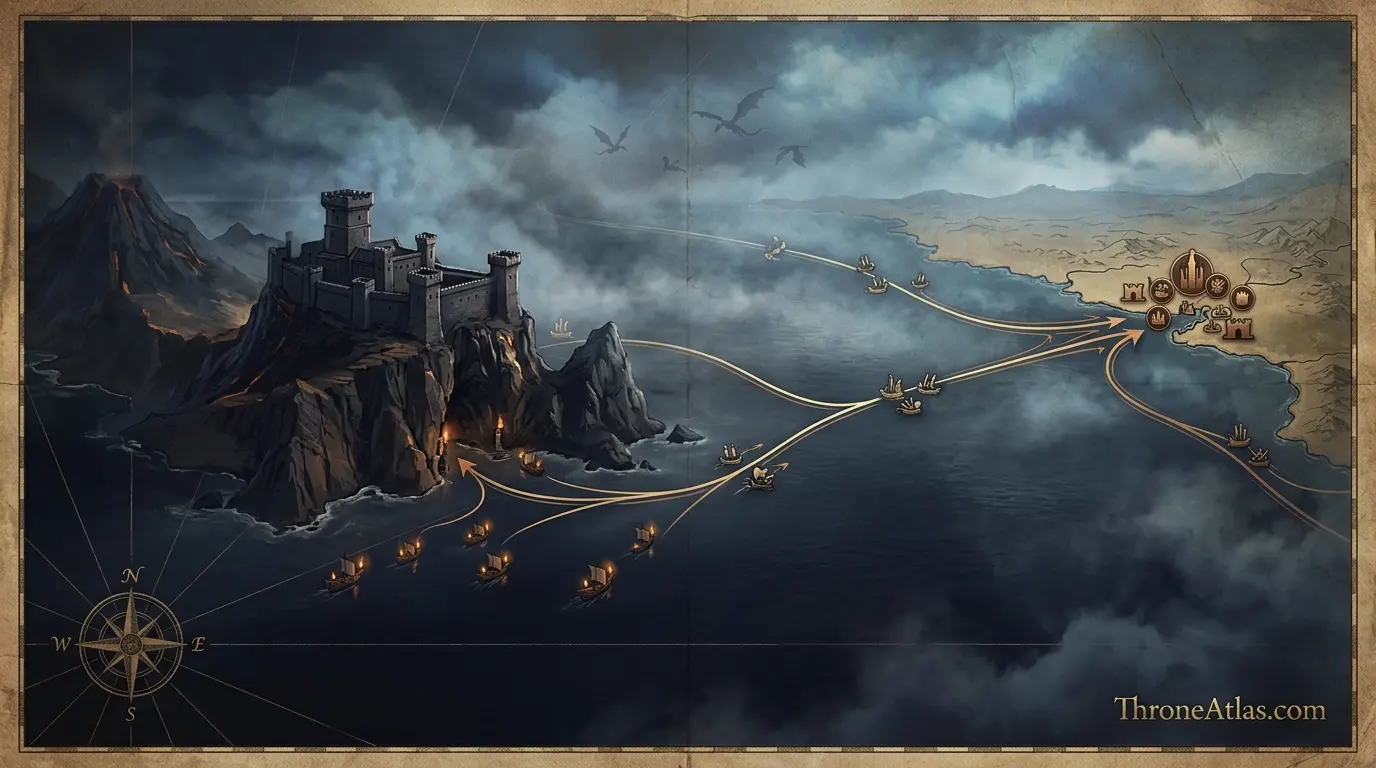
The Iron Throne was forged from the swords of Aegon’s defeated enemies, melted by Balerion’s dragonfire. It’s deliberately uncomfortable — Aegon reportedly believed that a king who sat easy on a throne wasn’t paying enough attention. That origin explains why possession of the Iron Throne always requires constant defense. It was built from other people’s surrenders, not consensus.
The Long Night: The Ancient Threat That Built the Wall
Most southern characters in the main story treat the Long Night as myth, superstition, or old wives’ tales that northerners use to justify the expensive and politically inconvenient Night’s Watch. That scepticism is one of the story’s core dramatic ironies. The Wall is 700 feet tall, 300 miles long, and built partially with magic. It doesn’t take that much effort to contain a folk tale.
The Long Night connects to at least five separate systems of lore simultaneously. It explains the Wall and the Night’s Watch. It explains northern memory and why Starks take “Winter is coming” seriously as a house words rather than a weather observation. It explains the Children of the Forest and their alliance with the First Men. It explains dragonglass, which humans used to fight the Others before Valyrian steel existed. And it explains Azor Ahai, the hero who allegedly drove back the darkness — whose return is prophesied for when the darkness comes again.
The Long Night is also the lore topic that most directly ties the books’ supernatural elements to the political plot. Jon Snow ends up as Lord Commander of the Night’s Watch not because of career ambition, but because the Wall is where the real war is, even when no one else believes it.
The Children of the Forest, the First Men, and the Origin of Magic
The First Men came from Essos through the arm of Dorne around 12,000 years before the main story. They chopped down weirwood trees, which the Children considered sacred — leading to a war that lasted centuries. The eventual pact between them is called the Pact of the First Men, agreed at the Isle of Faces. Under the pact, the First Men agreed to stop cutting weirwoods, and the Children agreed to let humanity settle the open land.
Out of that alliance came the old gods — the weirwood-based religion of nature and memory still practiced in the North. The Andals arrived roughly 6,000 years ago with the Faith of the Seven and eventually pushed the old gods out of most of Westeros. But north of the Neck, where the Andals never fully conquered, the First Men’s culture survived. That’s why House Stark still worships the old gods. That’s why a godswood matters more in Winterfell than in King’s Landing.
Greenseers and the Weirwood Network
Greenseers were individuals — among both the Children and some First Men descendants — who could access a network of consciousness through weirwood trees. Because weirwoods can live for thousands of years and the Children carved faces into them to serve as windows, the weirwood network is essentially a biological archive of recorded history. Bran Stark’s transformation into the Three-Eyed Raven connects him to this system, which is why he can see events from thousands of years ago. It’s not magic in a flash-and-sparkle sense — it’s more like archaeology, but through living trees.
The Dance of the Dragons: How Targaryens Destroyed Their Own Power
It’s hard to overstate how important this conflict is. The main series of Game of Thrones features Daenerys Targaryen arriving with three dragons as though they’re extraordinary and miraculous — which they are, but only because the Dance wiped out the rest. Before the Dance, the Targaryens had seventeen named dragons. After it: one sickly survivor, and eventually none for over a century and a half.
The Dance also established patterns that repeat throughout Targaryen history. Succession disputes, the preference for male heirs, the tension between Dragonstone and King’s Landing as rival power bases, the question of whether dragon riders make better rulers than tacticians — all of these show up again in the broader history. The Dance didn’t just kill dragons. It showed that dragon power was finite and that a family willing to fight each other with their greatest weapons would inevitably exhaust them.
Geographically, the Dance touches almost every major location in Westeros. Dragonstone is the Blacks’ stronghold. King’s Landing is the Greens’. Driftmark (Driftmark Map) is crucial because it’s home to House Velaryon and their sea power. Harrenhal changes hands repeatedly. The Riverlands become a war front again. Understanding the Dance requires a map — which is exactly why the House of the Dragon Map exists.
Robert’s Rebellion: The War That Explains Everything About the Present
Robert’s Rebellion is only ~17 years before the start of Game of Thrones. That’s recent enough that most of the adult characters lived through it — Ned Stark, Robert, Jaime, Cersei, Tywin, Barristan, the Hound, Varys, Littlefinger. Their memories of that war shape everything they do in the present. It’s why Robert is still angry about Lyanna. It’s why Daenerys grows up believing she was wrongfully exiled from a throne that should have been hers. It’s why Ned Stark keeps a secret that eventually costs him his life.
The rebellion also proves something important about how lore works in this story: you don’t have to go back 8,000 years to find events that still shape the present. One generation is enough. The choices made between 281 and 283 AC — Lyanna’s disappearance, Rhaegar’s decisions, Aerys’s paranoia, Ned’s honour — are still causing consequences 17 years later in the throne room, the crypts of Winterfell, and the court of King’s Landing.
The War of the Five Kings: When the Lore Collapses Into the Present
What makes this war interesting as lore — rather than just as plot — is how clearly it demonstrates the structural weaknesses created by all the preceding history. Aegon’s Conquest never fully resolved regional independence. Robert’s Rebellion replaced one dynasty with another without fixing the succession system. The realm was governed by a king whose claim rested entirely on military victory and a now-dead friendship. When Robert dies, the structure he inherited has no legitimate successor — because it was never really legitimate to begin with.
Azor Ahai and the Prince That Was Promised
What makes this prophecy compelling — and frustrating — is its deliberate ambiguity. The texts that describe it were originally in Old Valyrian and High Valyrian, and the word translated as “prince” is gender-neutral in the original. That alone opens it to Daenerys. The word “reborn” might mean literal resurrection (Jon died and came back). Or it might be metaphorical.
Melisandre spends much of the series certain she knows who the Prince is — first Stannis, then Jon. The fact that she’s wrong about Stannis doesn’t shake her faith; it just reshuffles her interpretation. That’s how prophecy works in this world. It doesn’t come with a user manual. People impose meaning on it, and the meaning they choose reveals their desires as much as any divine truth.
The books haven’t resolved this. George R. R. Martin has suggested that prophecy is dangerous precisely because it can be self-fulfilling or self-defeating. A character who acts to fulfill a prophecy might be the one who makes it come true — or the one who prevents a better outcome from happening. That ambiguity is the point.
Valyrian Steel and Dragonglass: The Materials That Bridge History and Survival
Both Valyrian steel and dragonglass (obsidian) matter to Game of Thrones lore because they connect to the same source: dragon fire. Dragonglass is volcanic obsidian, naturally concentrated at Dragonstone because the island sits on a dormant volcano. It was used against the Others during the Long Night, thousands of years before Valyria existed. Valyrian steel came later, forged by dragonlords using a method that combined metallurgy, magic, and presumably dragon fire — a process no one has been able to replicate since the Doom.
| Property | Valyrian Steel | Dragonglass (Obsidian) |
|---|---|---|
| Origin | Forged in Valyria using dragonfire and magic | Volcanic obsidian; concentrated at Dragonstone |
| Age | ~500+ years old (no new forging since Doom) | Naturally occurring; used during the Long Night (~8,000 years ago) |
| Known blades | Longclaw, Heartsbane, Ice/Widow’s Wail/Oathkeeper, Brightroar | Weapons made from Dragonstone’s mines |
| Effect on White Walkers | Kills them; confirmed | Kills them; confirmed |
| Rarity | Extremely rare; fewer than 200 known blades in Westeros | More common once Dragonstone’s caves are opened |
Asshai and the Eastern Mysteries
Asshai-by-the-Shadow sits at the easternmost edge of the Known World, on the estuary of the Ash River near the Shadow Lands. It’s the only city in the Known World built entirely of a black, oily stone that absorbs light. Plants don’t grow in or near Asshai. Animals brought there die or go mad. The city reportedly never sleeps, its streets walked by shadowbinders and warlocks from across the Known World who come to learn knowledge unavailable — or illegal — elsewhere.
Melisandre trained in Asshai before she became a Red Priestess. The glass candles that allow communication over vast distances come from there. Some of the oldest dragon prophecies were first recorded in Asshai. The city keeps appearing at the edges of lore precisely because it represents the limits of what can be explained. Not every question in this world has an answer that a Maester’s chain can address.
Asshai is also a structural device. By placing the most dangerous knowledge at the eastern edge of the world — far from Westeros, unreachable by most characters — George R. R. Martin creates a horizon of mystery that the story never fully crosses. It’s the lore that explains why some things can’t be explained.
How to Read Game of Thrones Lore: A Suggested Path
If you’re new to the deep lore, here’s the most efficient reading order based on how each topic supports the others:
- Doom of Valyria — Establishes the origin of Targaryen power, dragons, and Valyrian steel. Everything flows from this.
- Aegon’s Conquest — Explains the political shape of Westeros and why the Iron Throne exists at all.
- The Long Night — Establishes the supernatural threat and why the Wall, dragonglass, and Valyrian steel matter.
- Children of the Forest and Greenseers — Explains the magical depth beneath the northern story and Bran’s transformation.
- Dance of the Dragons — Explains why dragons are rare by the time of the main series and how Targaryen civil war works.
- Robert’s Rebellion — The most recent major lore event; explains nearly everything about the main story’s starting position.
- Azor Ahai — Explores the prophecy layer once you understand the Long Night and the characters most associated with the prophecy.
- Valyrian Steel and Dragonglass — Makes most sense after reading the Doom and the Long Night.
Where to Start With Game of Thrones Lore
Each guide is written to stand alone, but reading in this order builds the clearest picture of how one era shapes the next.
Foundation guide Understand Valyrian power, dragons, Valyrian steel, Targaryen survival, and Dragonstone before anything else. Nearly every other lore topic connects back here.
Political map guide Explains the creation of the Iron Throne, King’s Landing, unified Westeros, and why the kingdom’s regions never fully accepted central rule.
Ancient threat guide Establishes the supernatural stakes — the Wall, the Night’s Watch, the White Walkers, dragonglass, and the oldest prophecy in the story.
Magic foundation guide Explains greenseeing, weirwoods, the old gods, skinchangers, and Bran’s role. The North only makes full sense once you understand this layer.
House of the Dragon guide The Targaryen civil war that burns through dragon power and explains why no living dragons exist by the start of the main series.
Main story entry guide The most recent major lore event. Explains Jon’s parentage, Daenerys’s exile, the Stark-Baratheon alliance, and the political starting point of Season 1.
Prophecy guide Best read after the Long Night. Covers Lightbringer, the Prince That Was Promised, Melisandre, Jon, Daenerys, and why fire prophecy is politically dangerous.
Weapons guide The final piece connecting the Doom (where Valyrian steel comes from) and the Long Night (why these materials are the only known weapons against the dead).
How Lore Connects Every Part of the Atlas
These lore pages don’t sit in isolation — they’re the authority layer underneath every map, character, house, route, and location in the ThroneAtlas system.
History Explains Geography
The Doom explains why Dragonstone feels Valyrian. Aegon’s Conquest explains why King’s Landing was built where it was. The Long Night explains why the Wall is 700 feet tall. The Dance explains why Dragonstone is a Targaryen stronghold in House of the Dragon. Geography without lore is just coordinates.
Every Character Carries a History
Jon Snow’s identity, Daenerys’s exile, Jaime’s Kingslayer reputation, Bran’s transformation, Rhaenyra’s claim, Daemon’s ambition — none of these make full sense without the lore that predates them. Characters are walking consequences of old events.
Bloodlines Carry Memory
House Stark’s honour is inseparable from the Long Night and the old gods. House Targaryen’s identity is inseparable from Valyria. House Lannister’s wealth comes from a history of gold and political maneuvering that predates the conquest. A house name is a compressed history.
Game of Thrones Lore Questions Answered
The most common questions about GoT history, prophecy, and ancient events — answered directly, with context.
Game of Thrones lore is the deeper history, mythology, magic, prophecy, and ancient events behind the main story. It spans roughly 12,000 years of in-world history and includes the Doom of Valyria, Aegon’s Conquest, the Long Night, the Dance of the Dragons, Robert’s Rebellion, Azor Ahai, the Children of the Forest, greenseers, Valyrian steel, dragonglass, and the far-eastern mysteries of Asshai. Lore explains why geography, dynasties, weapons, and prophecies carry the weight they do in the present story.
The Doom of Valyria (~114 BC) and Aegon’s Conquest (1–2 AC) are the two most foundational. The Doom explains the origin of dragon scarcity, Targaryen identity, Valyrian steel, and the political shape of Essos. Aegon’s Conquest explains the Iron Throne, King’s Landing, and the unified Westeros that the entire main story is set within. Between them, they explain every major power structure in the story.
The cause of the Doom of Valyria is deliberately left unexplained in both the show and George R. R. Martin’s books. The event involved the simultaneous eruption of the Fourteen Fires (the volcanic mountains of the Valyrian peninsula), which destroyed the entire Freehold in a single day. Popular theories include a dragonlord experiment gone catastrophically wrong, a Blood Mage ritual, or a magical catastrophe triggered by the Valyrians’ own sorcery. Martin has confirmed the ambiguity is intentional.
The Long Night was an ancient period of darkness approximately 8,000 years before Game of Thrones, during which the White Walkers (called the Others in the books) invaded the lands of the living. It ended when a legendary hero named Azor Ahai drove them back with a flaming sword called Lightbringer. The Wall was built afterward to prevent their return. The Night’s Watch was founded to defend it. The Long Night is the source of all northern prophecy about winter, darkness, and the dead.
Azor Ahai is a legendary hero from ancient history who is prophesied to be reborn when darkness threatens the world again. The prophecy says the reborn Azor Ahai will be “born amidst salt and smoke beneath a bleeding star” and wield a sword called Lightbringer. In Game of Thrones, Melisandre first identifies Stannis Baratheon as Azor Ahai, then later Jon Snow. Daenerys Targaryen is also a strong candidate. The books leave the identity deliberately unresolved, suggesting prophecy itself may be unreliable.
The Dance of the Dragons was the Targaryen civil war of 129–131 AC, fought between Queen Rhaenyra Targaryen (supported by the Blacks) and King Aegon II Targaryen (supported by the Greens) over succession to the Iron Throne. It is the central conflict of House of the Dragon. By its end, nearly all of the Targaryens’ dragons had been killed, fundamentally weakening the dynasty. The Dance is the primary reason dragons are nearly extinct by the time of Game of Thrones.
Valyrian steel is important because it is one of only two materials confirmed to kill White Walkers (the other is dragonglass). It is extremely rare because the forging process — which combined metallurgy, magic, and dragonfire — was lost with the Doom of Valyria. Fewer than 200 Valyrian steel blades are believed to exist in Westeros. Notable examples include Longclaw (Jon Snow’s sword), Heartsbane (Samwell Tarly’s family sword), and the reforged Lannister swords Widow’s Wail and Oathkeeper, both made from Ned Stark’s original Valyrian steel blade, Ice.
Robert’s Rebellion was triggered by Prince Rhaegar Targaryen’s abduction (or elopement, depending on interpretation) of Lyanna Stark in ~281 AC. When Lyanna’s father Rickard Stark and brother Brandon Stark protested to King Aerys II, the Mad King executed them both. Aerys then demanded the heads of Robert Baratheon and Eddard Stark from their guardian, Jon Arryn. Arryn refused and called his banners instead. The war lasted approximately two years and ended with Robert taking the Iron Throne after Jaime Lannister killed Aerys.
The Children of the Forest were the original non-human inhabitants of Westeros, living in the continent for thousands of years before humans arrived. They are small, cat-eyed beings who worshipped nature and the old gods through weirwood trees. They made a peace pact with the First Men approximately 10,000 years before the events of Game of Thrones. According to the show, they also created the White Walkers by plunging a dragonglass blade into a captured First Man’s heart. They are largely extinct by the time of the main series, surviving only in the cave of the Three-Eyed Raven.
House of the Dragon is set approximately 172 years before Game of Thrones and covers the Dance of the Dragons (129–131 AC). It connects directly through House Targaryen, Dragonstone, King’s Landing, Driftmark, Harrenhal, and dragon history. The near-extinction of dragons in the Dance explains why no dragons exist by the start of Game of Thrones. Characters in House of the Dragon — Rhaenyra, Daemon, Aemond, Alicent — are ancestors of characters in Game of Thrones, and their decisions shape the political and cultural landscape that Daenerys and Jon Snow inherit.
ThroneAtlas covers both the show (HBO’s Game of Thrones and House of the Dragon) and George R. R. Martin’s A Song of Ice and Fire novels, plus companion works like The World of Ice and Fire and Fire and Blood. The books contain significantly more lore detail than the show adapts. Where show and book canon diverge — such as the origin of the White Walkers, or specific battle details — individual lore pages note both versions. The broader lore framework (Doom of Valyria, Aegon’s Conquest, the Long Night, Robert’s Rebellion) is consistent across both.
Related Lore, Maps, Houses & Locations
Lore Guides
Key Locations
ThroneAtlas is an independent fan-made map and lore reference site for Game of Thrones, House of the Dragon, and A Song of Ice and Fire. It is not affiliated with, endorsed by, or connected to HBO, Warner Bros. Discovery, George R. R. Martin, or any official property. All character names, house names, locations, and story elements are the intellectual property of their respective owners. Content on this site is original editorial analysis and geographic reference work.