Long Night Map Ancient Darkness, White Walkers, Wall, Winterfell & Battle for the Dawn Route
A map-first explanation of the oldest winter, the Wall’s purpose and the final echo at Winterfell
The Long Night map connects myth, migration, war memory and northern defense. It explains why the Wall exists, why the old stories matter, and why Winterfell becomes the modern echo of an ancient battle.
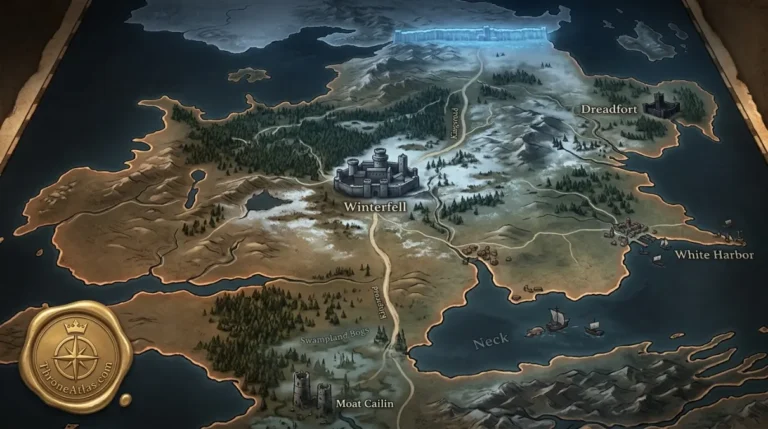
The Long Night map traces the ancient winter and White Walker threat from the far north into the memory of the First Men, Children of the Forest, the Battle for the Dawn legends, the raising of the Wall, and the modern Battle of Winterfell. It is a historical-lore map rather than a simple battle map: the most important locations are the far north, old-god spaces, the Wall, Winterfell, and every place where human memory preserves warnings about winter returning.
What this Long Night Map explains
The fast cards below give the two-minute answer before the deeper route, table and FAQ sections.
Main stops on the Long Night Map
This simplified route graphic is designed for reading flow, not exact geographic scale. Use it to understand order, pressure and consequence.
The Long Night begins as a northern darkness beyond normal political memory.
The First Men preserve the terror through stories and defensive memory.
The Children and old magic connect the war to weirwoods and ancient pacts.
The remembered victory becomes the foundation of later prophecy and warning.
The Wall transforms memory into architecture and military geography.
“Winter is Coming” preserves Long Night logic inside Stark identity.
The Wall’s fall proves that the old defense can fail.
The Battle of Winterfell becomes the living generation’s Battle for the Dawn.
Complete Long Night Map Guide
A thin map page only lists names. A strong ThroneAtlas page explains how places create pressure, change decisions and connect to the wider atlas. This guide is built to help readers follow the route, understand the stakes at each stop, and continue into connected maps without losing context.
How to read the Long Night as a map
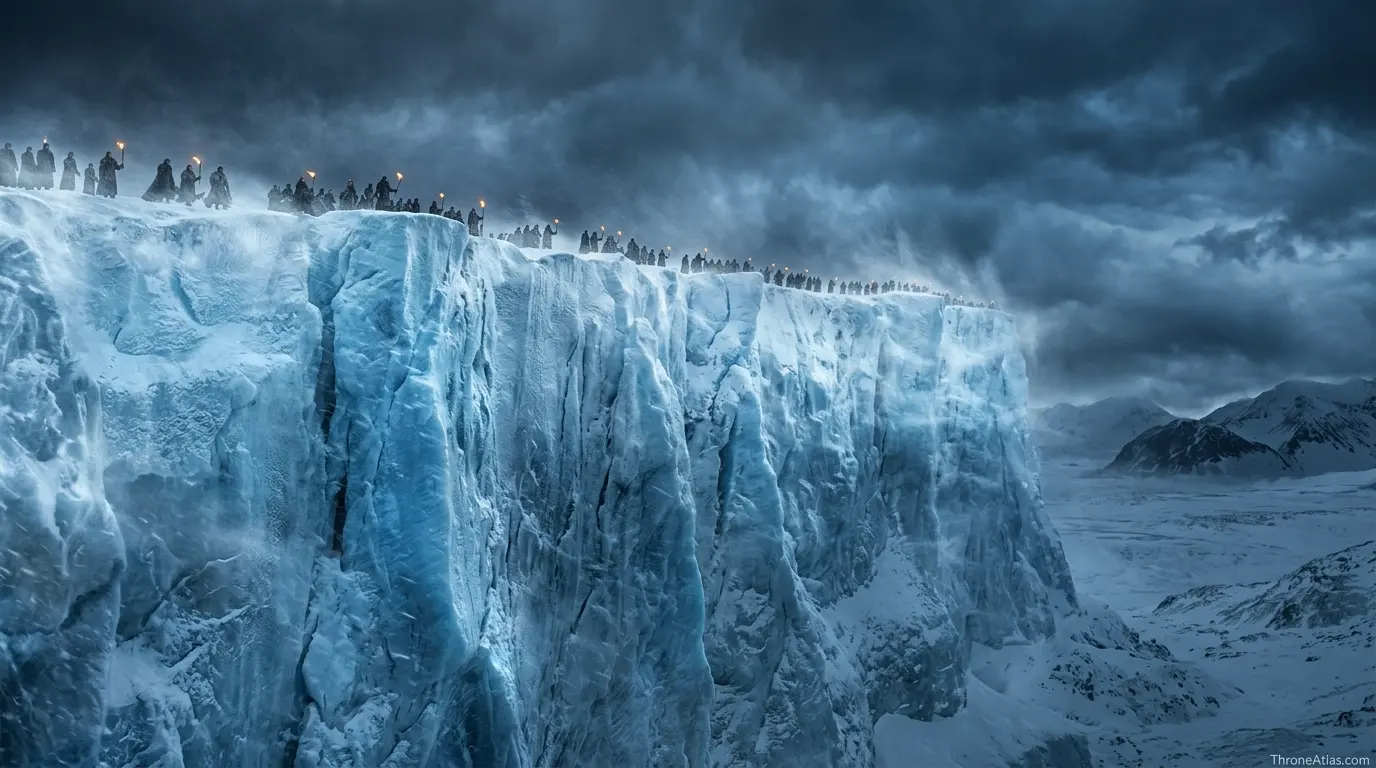
The Long Night is difficult to map because it is not a single campaign with a neat battlefront. It is an ancient catastrophe preserved through memory, architecture, religion and warning phrases. A good Long Night Map therefore needs to show zones of meaning rather than only roads.
The far north represents threat origin. The First Men and Children represent ancient survival and conflict. The Wall represents memory turned into defense. Winterfell represents the modern echo where the old warning becomes immediate again.
For search intent, this page should answer what the Long Night was, where it happened, why the Wall matters, and how the Battle of Winterfell connects to the older story.
The Wall as memory made physical
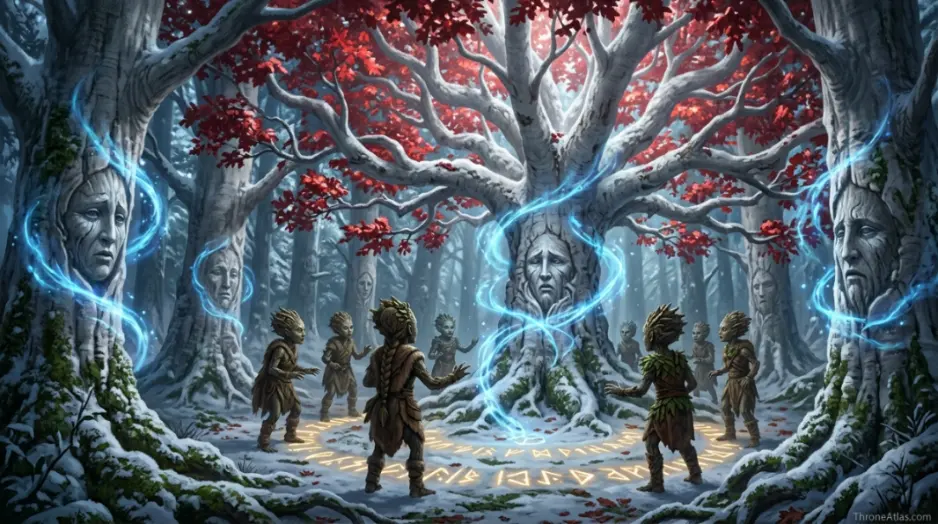
The Wall is the most important geographic artifact of the Long Night. It is not simply a border between the realm and wildling territory. In Long Night logic, it is a monument to fear that later generations forget how to interpret.
This is why the Night’s Watch decline matters. The defense remains visible, but the cultural memory behind it weakens. Southern courts treat the Wall as a prison edge rather than a world-saving barrier. That misunderstanding is a map failure.
This section should link to The Wall, Castle Black, Night’s Watch, Beyond the Wall, White Walker Map and Night King Route Map. Those pages reinforce the same northern defense cluster.
Winterfell and Stark memory
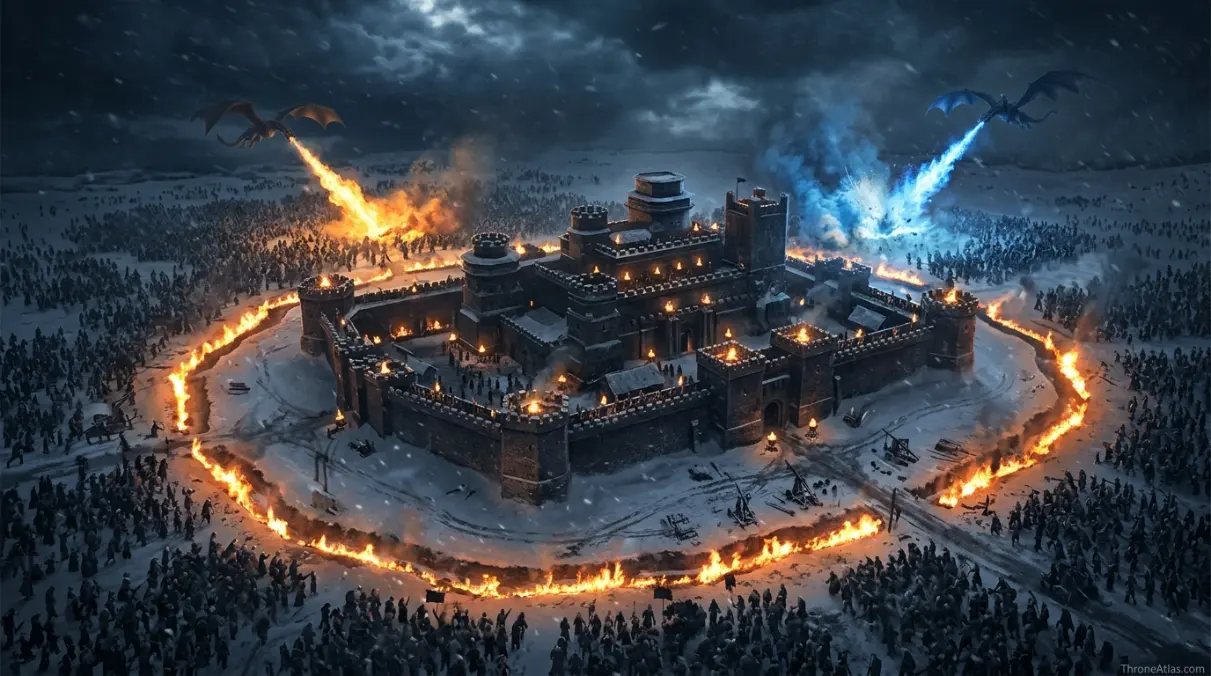
Winterfell belongs in the Long Night map because Stark identity preserves winter warning better than most southern houses. “Winter is Coming” works as a family motto, but also as ancient map literacy. It tells the North to remember what the rest of the realm treats as myth.
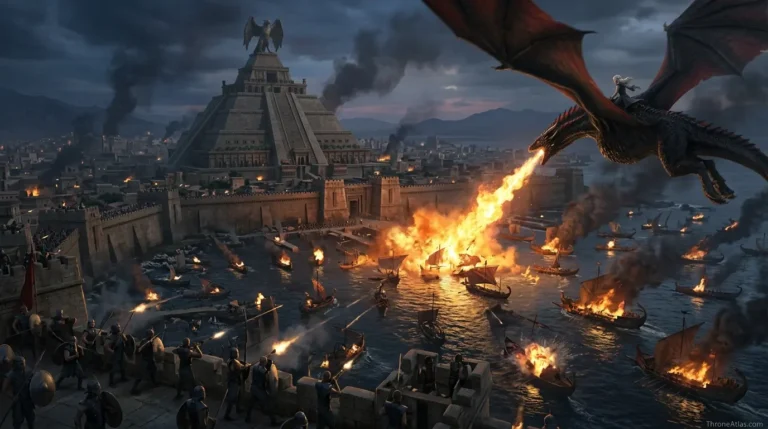
The final Battle of Winterfell makes that memory literal. The dead arrive at the Stark seat, dragons fly above northern walls, and the Godswood becomes the focus of the final strike. The modern battle is not the whole Long Night, but it is the clearest show-era echo.
For readers, the helpful distinction is ancient Long Night versus the episode titled “The Long Night.” This page should explain both without confusing them.
Battle for the Dawn, prophecy and old-god geography
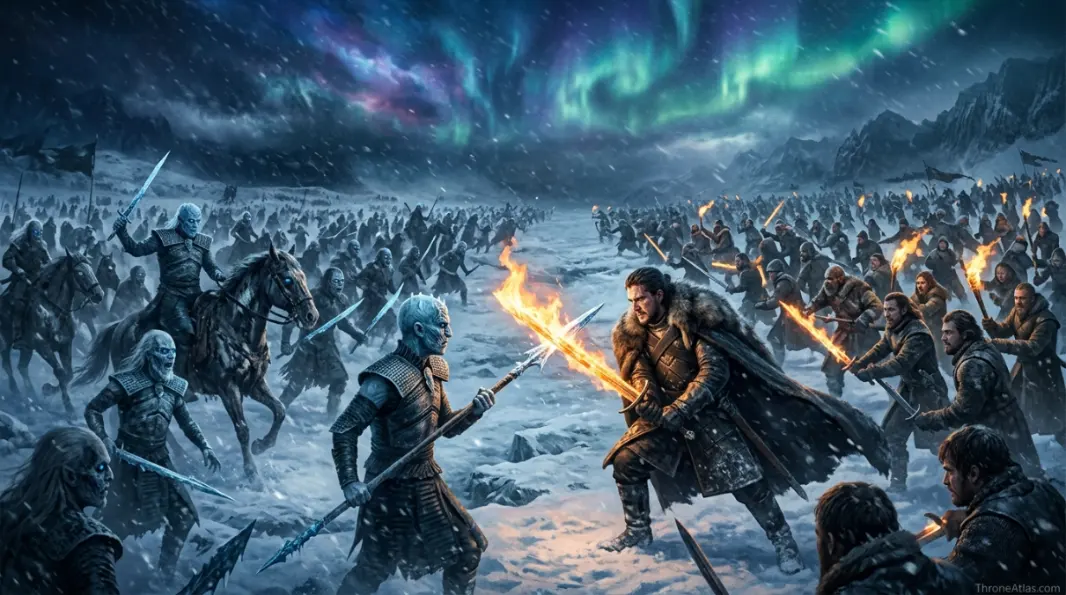
The Battle for the Dawn is a legendary memory rather than a fully mapped modern battlefield. Its value is not in exact coordinates but in what it explains: humanity survived once, and stories about heroes, old magic and light against darkness remain afterward.
Prophecy and geography meet here. Azor Ahai, the Prince That Was Promised, the Last Hero and old-god memories all function as attempts to preserve survival knowledge across thousands of years. Some are religious, some are mythic, and some may be distorted history.
A strong Long Night Map should therefore connect lore pages, not isolate them: Children of the Forest, White Walkers, Night King, Wall, Winterfell, Bran and the Battle of Winterfell.
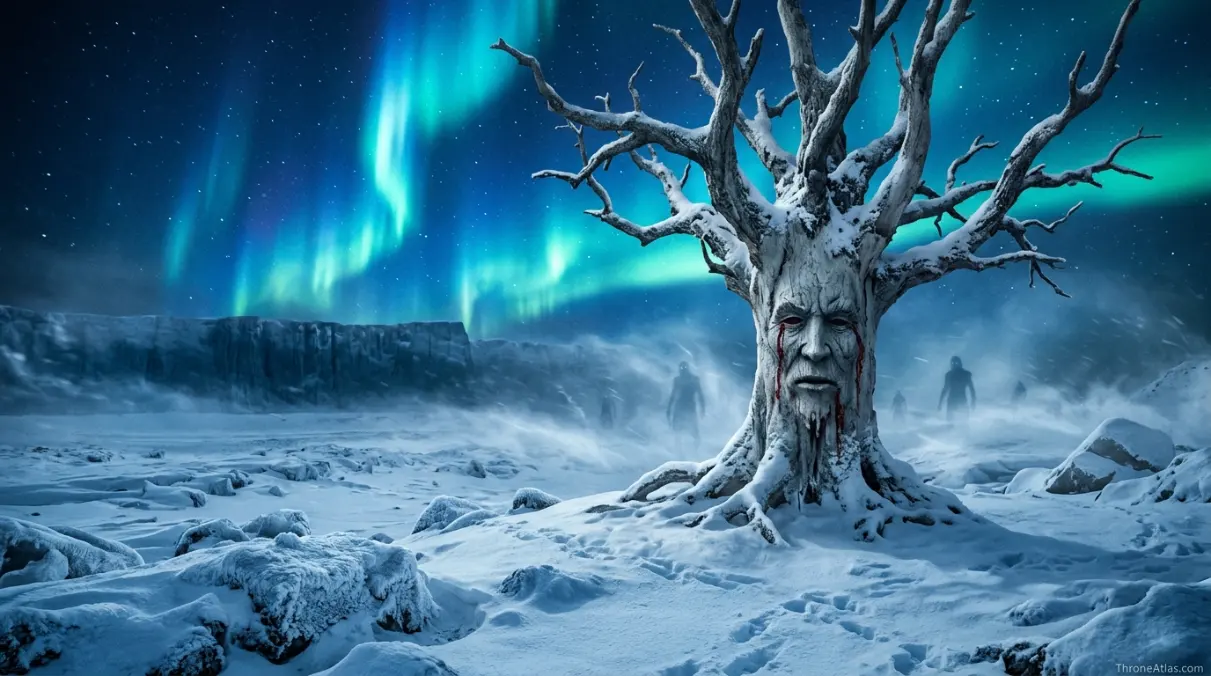
Detailed map reading for Long Night Map
The quick route above gives the order, but the deeper value of this historical lore map is in the transition between points. A thin page says what happened; a true ThroneAtlas page explains why a location changes the next decision, danger, alliance, or battlefield condition.
For Long Night Map, each stop should be read as a pressure point. The map does not exist only to decorate the story. It reveals distance, leverage, timing, memory, fear, terrain and political consequence. That is what makes the page useful for readers who want more than a recap.
1. Far North Darkness — Threat origin
The Long Night begins as a northern darkness beyond normal political memory. On the atlas, this point belongs to Lands beyond the Wall. Its job is to change what can happen next: movement becomes harder, trust becomes weaker, defense becomes narrower, or a hidden truth becomes impossible to contain. From this stop, the page naturally moves toward First Men Lands, carrying the consequence forward instead of treating the event as isolated.
2. First Men Lands — Human survival zone
The First Men preserve the terror through stories and defensive memory. On the atlas, this point belongs to Ancient Westeros. Its job is to change what can happen next: movement becomes harder, trust becomes weaker, defense becomes narrower, or a hidden truth becomes impossible to contain. From this stop, the page naturally moves toward Children’s Old Magic, carrying the consequence forward instead of treating the event as isolated.
3. Children’s Old Magic — Hidden alliance
The Children and old magic connect the war to weirwoods and ancient pacts. On the atlas, this point belongs to Forests / caves. Its job is to change what can happen next: movement becomes harder, trust becomes weaker, defense becomes narrower, or a hidden truth becomes impossible to contain. From this stop, the page naturally moves toward Battle for the Dawn, carrying the consequence forward instead of treating the event as isolated.
4. Battle for the Dawn — Legendary turning point
The remembered victory becomes the foundation of later prophecy and warning. On the atlas, this point belongs to Mythic battlefield. Its job is to change what can happen next: movement becomes harder, trust becomes weaker, defense becomes narrower, or a hidden truth becomes impossible to contain. From this stop, the page naturally moves toward The Wall, carrying the consequence forward instead of treating the event as isolated.
5. The Wall — Permanent barrier
The Wall transforms memory into architecture and military geography. On the atlas, this point belongs to Northern border. Its job is to change what can happen next: movement becomes harder, trust becomes weaker, defense becomes narrower, or a hidden truth becomes impossible to contain. From this stop, the page naturally moves toward Winterfell Warnings, carrying the consequence forward instead of treating the event as isolated.
6. Winterfell Warnings — House Stark memory
“Winter is Coming” preserves Long Night logic inside Stark identity. On the atlas, this point belongs to The North. Its job is to change what can happen next: movement becomes harder, trust becomes weaker, defense becomes narrower, or a hidden truth becomes impossible to contain. From this stop, the page naturally moves toward Eastwatch Breach, carrying the consequence forward instead of treating the event as isolated.
7. Eastwatch Breach — Ancient warning returns
The Wall’s fall proves that the old defense can fail. On the atlas, this point belongs to The Wall. Its job is to change what can happen next: movement becomes harder, trust becomes weaker, defense becomes narrower, or a hidden truth becomes impossible to contain. From this stop, the page naturally moves toward Winterfell Battle, carrying the consequence forward instead of treating the event as isolated.
8. Winterfell Battle — Modern echo
The Battle of Winterfell becomes the living generation’s Battle for the Dawn. On the atlas, this point belongs to The North. Its job is to change what can happen next: movement becomes harder, trust becomes weaker, defense becomes narrower, or a hidden truth becomes impossible to contain. From this stop, the page naturally moves toward Far North Darkness, carrying the consequence forward instead of treating the event as isolated.
How this page should win search intent
Visitors searching for Long Night Map usually want fast orientation first: the main locations, the correct order, the central turning point, and the ending. After that, they want context that a normal wiki-style paragraph does not provide. This page is built with a quick answer, route schematic, map-point cards, deeper analysis, a scanner table and FAQs so both casual fans and lore readers can find the right level quickly.
The strongest SEO angle is not keyword stuffing. It is topical completeness. Each page should answer map order, character or lore function, region names, battle/lore connections, and follow-up links. That creates a useful internal hub that can support related pages across Winterfell, the Wall, Riverlands, Iron Islands, King’s Landing, White Walkers, Stark routes and battle maps.
For publishing, keep anchor text descriptive and natural. Use names like “Winterfell battlefield map,” “Night King route,” “Riverlands road,” “Pyke and Winterfell route,” “Long Night lore map,” and “Battle of the Bastards field layout.” These anchors tell users and search engines exactly why the next page matters.
10/10 publishing angle for Long Night Map
The reason this page can compete as a stronger SERP result is that it does not treat the map as decoration. It answers the obvious query first, then gives the reader a framework for why the route matters. A visitor can scan the quick answer, jump to the schematic, check the route cards, read the deeper analysis, or use the FAQ without needing another tab open.
The unique angle is the relationship between Far North Darkness, The Wall, and Winterfell Battle. The first point gives the map its original identity. The middle point creates pressure and changes the stakes. The endpoint shows what the route has finally become. This beginning-middle-ending structure is what turns a list of places into a memorable atlas page.
For topical authority, this page should be internally linked from every related character, house, location, battle and lore article. It should also link outward with exact context rather than generic read-more anchors. Strong examples include the specific location name, the regional map, the battle title, the connected house, and the nearest lore page. That makes the page useful to readers and also helps search engines understand where it sits inside the ThroneAtlas knowledge graph.
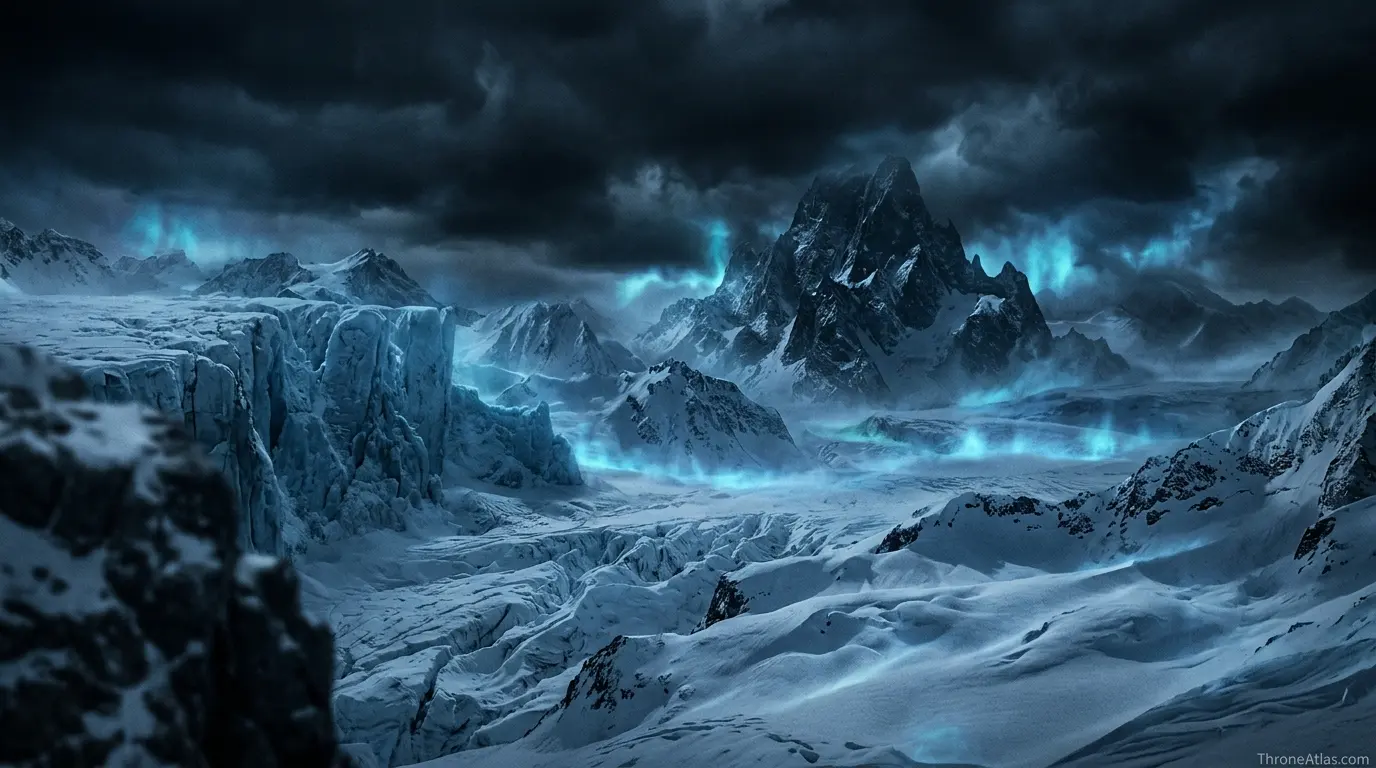
For image SEO, the WebP images are placed as real <img> elements with descriptive alt text instead of CSS-only backgrounds. That means the visuals support accessibility, image indexing and page experience at the same time. The hero establishes mood, the compass preserves the locked ThroneAtlas brand system, and the in-body images divide the article into readable map stages.
For human readability, the page balances quick answers with deeper interpretation. Short sections help mobile users, while the longer analysis gives serious fans enough context to stay, click related maps and understand how this page belongs inside the wider ThroneAtlas atlas rather than standing alone as a thin article.
The final result is designed for publication as a complete map hub: readable, visually branded, internally connected, accessible through alt text, and strong enough to support future clusters around houses, routes, battles and ancient lore.
Location order and story function
The table below condenses the map into a scanner-friendly format for readers who want quick orientation before moving into related maps.
| Location | Map role | Region / route | Story function |
|---|---|---|---|
| Far North Darkness | Threat origin | Lands beyond the Wall | The Long Night begins as a northern darkness beyond normal political memory. |
| First Men Lands | Human survival zone | Ancient Westeros | The First Men preserve the terror through stories and defensive memory. |
| Children’s Old Magic | Hidden alliance | Forests / caves | The Children and old magic connect the war to weirwoods and ancient pacts. |
| Battle for the Dawn | Legendary turning point | Mythic battlefield | The remembered victory becomes the foundation of later prophecy and warning. |
| The Wall | Permanent barrier | Northern border | The Wall transforms memory into architecture and military geography. |
| Winterfell Warnings | House Stark memory | The North | “Winter is Coming” preserves Long Night logic inside Stark identity. |
| Eastwatch Breach | Ancient warning returns | The Wall | The Wall’s fall proves that the old defense can fail. |
| Winterfell Battle | Modern echo | The North | The Battle of Winterfell becomes the living generation’s Battle for the Dawn. |
Long Night Map Questions
The Long Night was an ancient winter and war against the White Walker threat remembered across Westeros and beyond.
It is tied especially to the far north, the lands of the First Men, the Wall and later Winterfell’s modern echo.
The Wall is the lasting northern defense associated with keeping the ancient threat beyond the realm.
The Battle of Winterfell is the show-era echo/final confrontation, while the original Long Night is ancient history.
The Night King route shows the modern return of the ancient threat described by the Long Night.
Related maps, houses, battles and lore routes
ThroneAtlas is an independent fan-made atlas. Game of Thrones, House of the Dragon and related names belong to their respective rights holders. This page is for educational, lore-navigation and fan-reference purposes.