House Dondarrion MapBlackhaven, Stormlands Border Defense and the Lightning Lord’s Route
Stormlands / Dornish Marches · Blackhaven · War of the Five Kings
This complete House Dondarrion map explains the location, route logic, political stakes, nearby places, and story connections that make this page important inside the wider ThroneAtlas atlas.
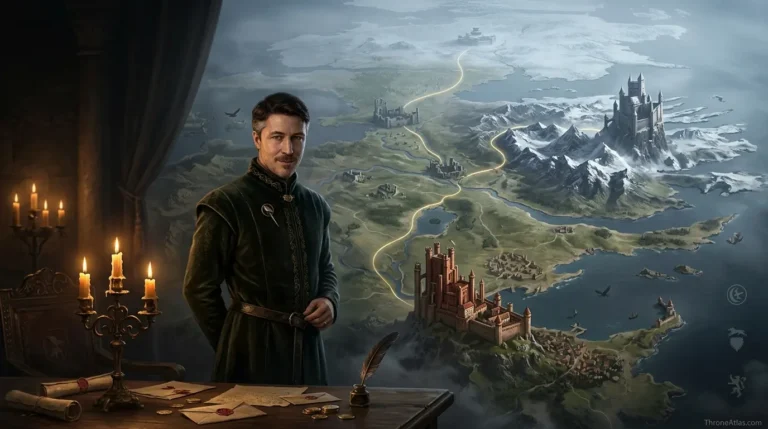
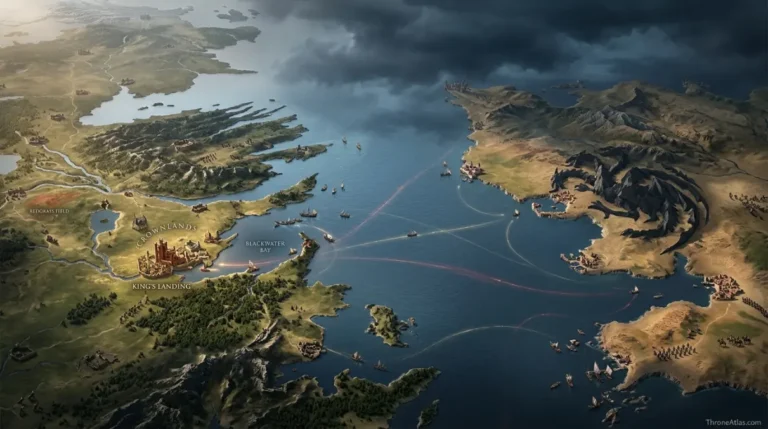
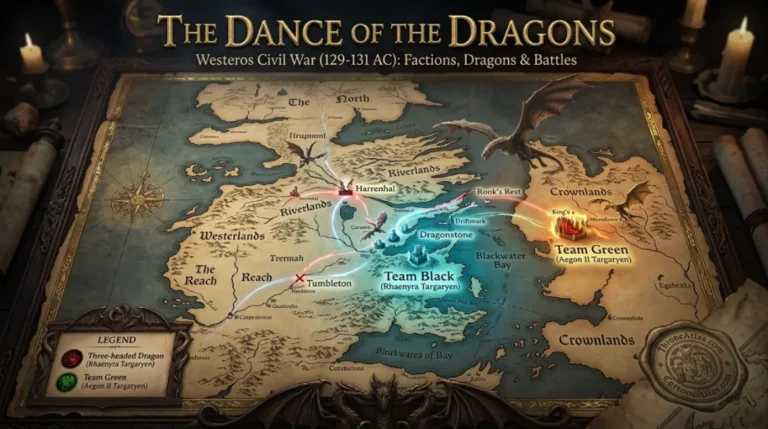
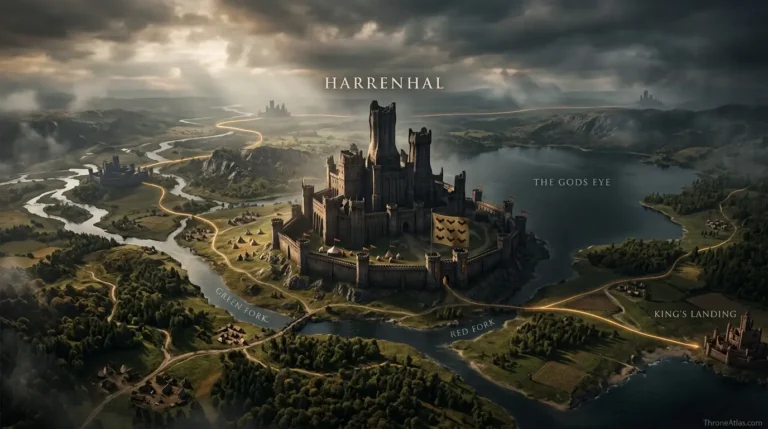
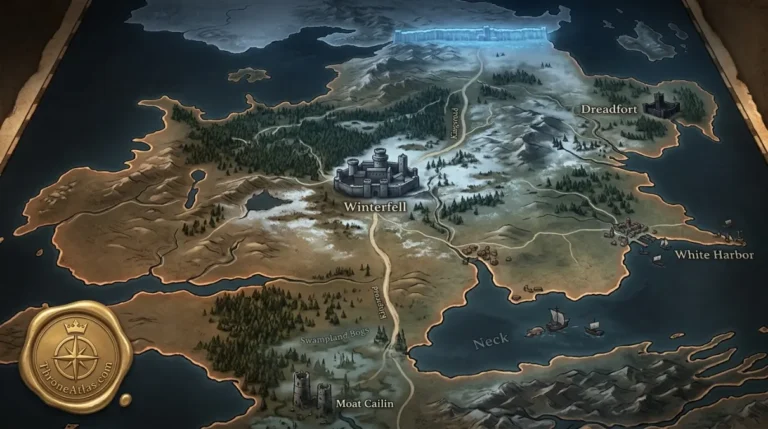
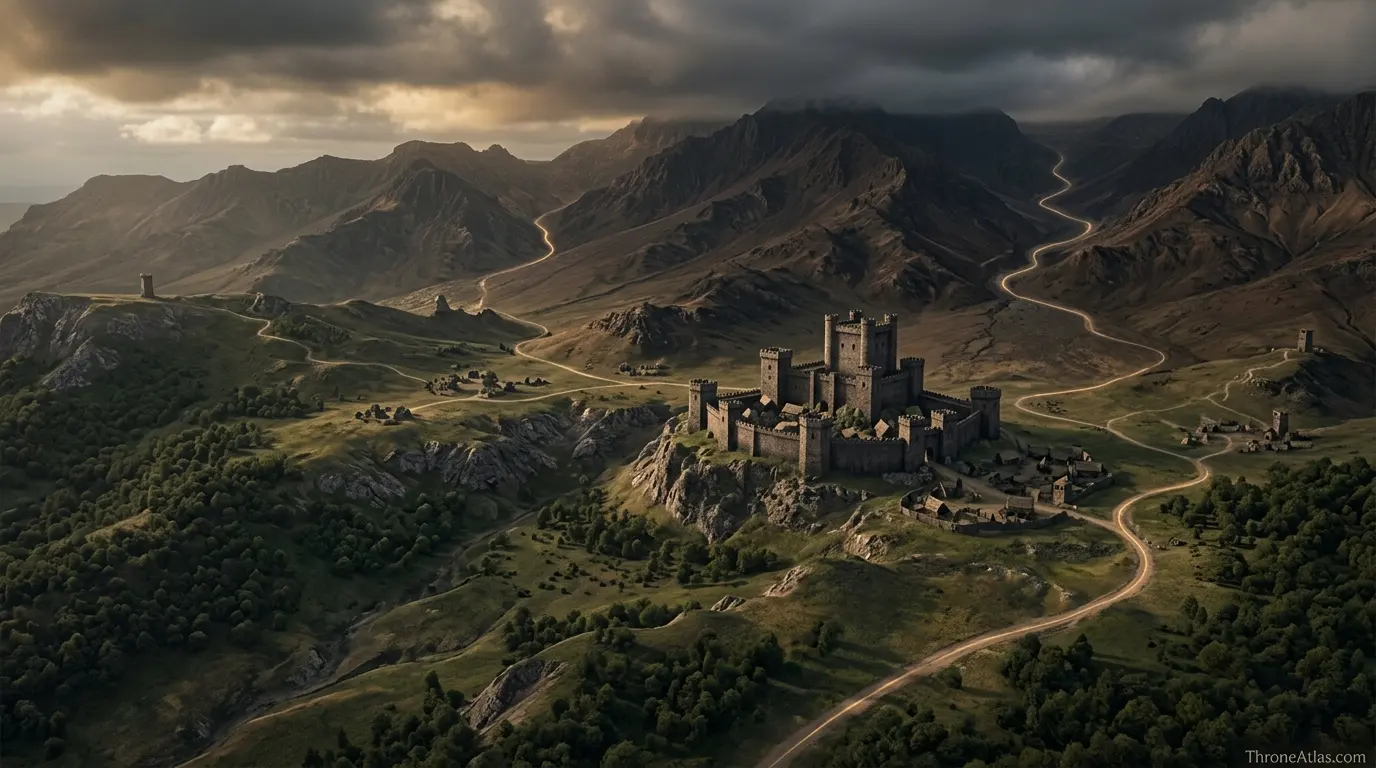
The House Dondarrion map centers on Blackhaven in the Dornish Marches, where the Stormlands face the red mountains and old Dornish border routes. The house matters because its seat is both defensive and symbolic: it guards a dangerous frontier, links Storm’s End to Dorne, and later becomes tied to Beric Dondarrion’s outlaw route through the Riverlands. A complete map should show Blackhaven, Storm’s End, the Boneway, Prince’s Pass, the Riverlands, and the Brotherhood Without Banners connection.
Maester Aldric
Maester Aldric prepares map-based guides to Westeros, Essos, noble houses, battle routes, character journeys, and historical geography across Game of Thrones, House of the Dragon, and the wider published lore. Each guide is organized for readers who want clear geography, careful chronology, and useful internal connections between castles, houses, battles, routes, and lore events.
House Dondarrion Map Fast Facts
Key map details before the full reading.
Page Index
- Quick Answer
- Fast Facts
- Visual Map Guide
- Territory Reading
- History and Timeline
- Political Network
- Route Logic
- Book and Show Notes
- Common Map Mistakes
- Related Atlas Network
- FAQ
Visual Map Guide
The visual reading begins with the anchor point, then expands outward through roads, rivers, coastlines, castles, cities, factions, and story consequences. A useful map for House Dondarrion map should not only name Blackhaven; it should explain why that place affects movement and power.
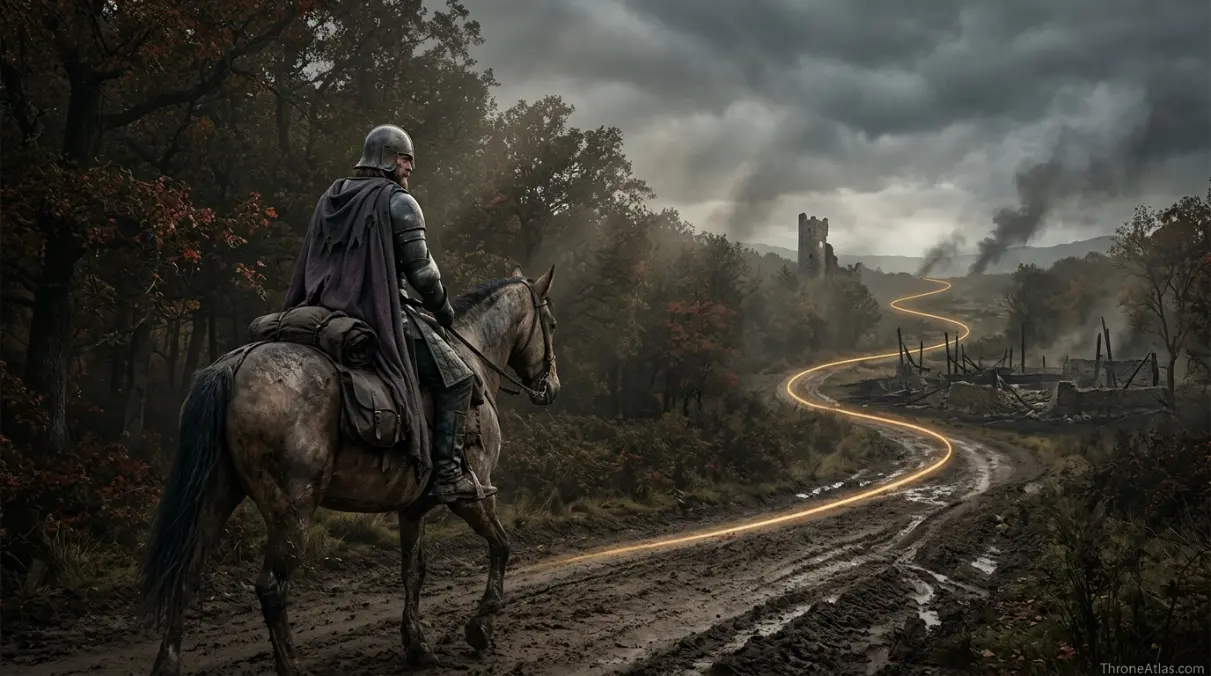
How to Read the House Dondarrion Map
A strong House Dondarrion map should begin with the seat, but it should not end there. The seat gives the reader a pin; the surrounding roads, rivers, marches, ports, rival houses, and overlord chains explain why that pin matters. House Dondarrion is best understood through Blackhaven, the wider frame of Stormlands / Dornish Marches, and the pressure created by nearby places such as Storm’s End, Boneway, Prince’s Pass. That is the difference between a decorative fantasy map and a useful atlas page.
The most important map question is not simply “where is it?” but “what can move from there?” Ravens, armies, marriages, trade, hostages, rumors, and royal orders all move through geography. In a medieval political world, the shortest line on a modern map is not always the most believable route. A lord may need to follow a river crossing, avoid a hostile pass, seek a friendly harbor, or travel through another lord’s lands before reaching the destination that looks simple at first glance.
For House Dondarrion, the territory reading works through three layers. The first layer is the home seat, which anchors the name. The second layer is the regional system, where neighbors, rivalries, roads, and castles shape daily power. The third layer is the story layer, where that house becomes visible because a war, council, claim, rebellion, oath, or character route pulls it into the wider politics of Westeros and Essos.
What the Map Should Show
- Blackhaven as a marcher seat rather than an inland court castle.
- Beric’s shift from royal mission to outlaw resistance.
- The Dornish Marches as a map zone of raids, passes, and watchfulness.
- Stormlands loyalty as a geography problem after Robert’s death.
- Why road control matters more than castle beauty in this region.
- The house’s thunderbolt imagery as a useful memory hook for readers.
These details help the page serve both readers who remember the house name and readers who only recognize a connected event. A reader may arrive looking for House Dondarrion map, but the page should also answer why this house appears beside larger names, which routes make it relevant, and which nearby powers explain its choices.
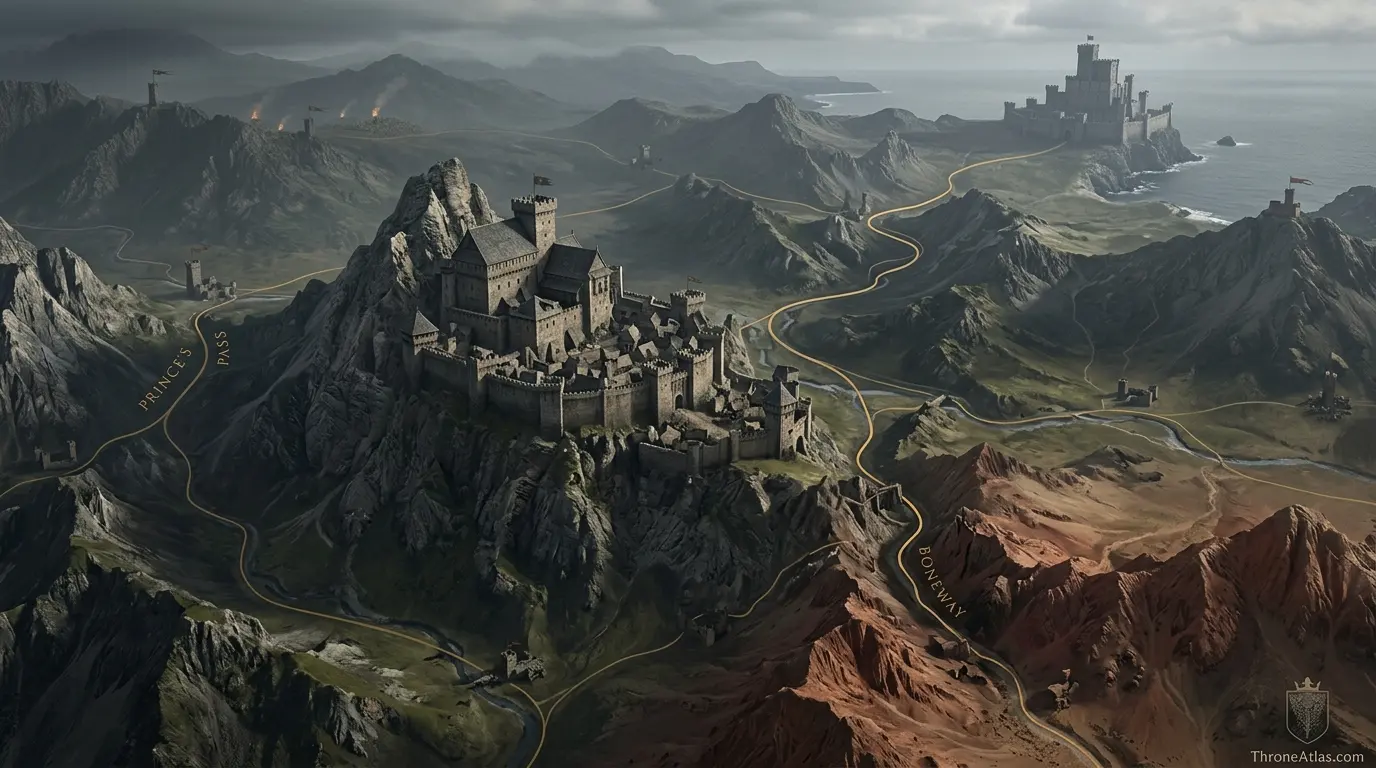
History and Timeline Reading
The history of House Dondarrion should be mapped as a sequence of pressure points rather than a flat list of names. In Westeros, houses survive by balancing local duty, overlord command, royal power, marriage ties, and the threat of violence. The map shows why a house may appear loyal at one moment and cautious at another. Distance from the capital matters. Proximity to a hostile border matters. Access to food, river crossings, ports, or mountain passes matters. Reputation also matters, because a remembered feud or old oath can influence choices generations later.
Readers should pay close attention to how Blackhaven sits relative to Storm’s End, Boneway, Prince’s Pass. If the seat lies near a border, the house often becomes defensive and watchful. If it lies near a court or great city, it may become more connected to council politics. If it lies near a river or road, armies and messengers can pull it into conflicts that begin elsewhere. If it has old rivalries, the map may explain why a seemingly small dispute keeps returning whenever the realm becomes unstable.
| Map Layer | What to Notice | Why It Matters |
|---|---|---|
| Seat | Blackhaven | The central pin for the house and the safest starting point for the map. |
| Region | Stormlands / Dornish Marches | The climate, roads, nearby powers, and political culture around the house. |
| Nearby Places | Storm’s End, Boneway, Prince’s Pass | The places most likely to shape travel, conflict, alliance, and rumor. |
| Story Era | War of the Five Kings | The period when the house becomes most important for readers following the wider atlas. |
Political Network and House Stakes
No house map exists in isolation. Every noble family belongs to a network of overlords, rivals, marriage partners, military obligations, and remembered grievances. The practical question is how easily that house can support a larger faction. A house near a vital road can matter even without a huge army. A house with a famous knight can matter through reputation. A house near a pass can delay an invasion. A house connected to court can change events without moving a banner across the map.
That is why the House Dondarrion map should be read as a political diagram. House Dondarrion matters because its position interacts with Border defense, outlaw resistance, marcher identity. In some periods, the house’s importance is local. In others, the same location becomes part of a continental crisis because nearby powers start moving through the region. The atlas approach helps readers see that change clearly.
Seat Power
Blackhaven anchors the house name and gives the reader a stable point for nearby routes, castles, and rival powers.
Regional Pressure
Stormlands / Dornish Marches shapes travel and loyalty through terrain, roads, climate, and neighboring houses.
Story Weight
Border defense, outlaw resistance, marcher identity explains why this house belongs in a larger ThroneAtlas network rather than a short name entry.
Routes, Roads and Movement Logic
Movement from Blackhaven should be explained carefully. Fictional maps often tempt readers into drawing straight modern lines, but Westeros is a world of mud roads, river crossings, mountain gates, local tolls, dangerous coastlines, and disputed castles. A message can move faster than an army. A small party can move through routes that a host cannot. A noble household may prefer a politically safer road even when another way looks shorter.
For this reason, a useful House Dondarrion map should show direction and connection without pretending that every journey has one exact measurement. The page should let readers understand which places are adjacent in story logic, which routes are risky, and which nearby powers could block or support movement. That is especially important for House Dondarrion, because the house’s meaning changes depending on whether the reader is following local politics, major wars, court influence, or family history.
Book and Show Notes
Some houses appear more fully in the books than on screen, while others are remembered through dialogue, banners, councils, family names, or the actions of one character. A careful ThroneAtlas page should not force both versions into the same visual certainty. Instead, it should give readers the stable map logic and then explain where adaptation emphasis changes the experience.
The book reader usually wants deeper house history, succession context, and regional detail. The show viewer often wants to know where the house belongs and why the name matters in relation to better-known places. The House Dondarrion map works for both audiences when it begins with Blackhaven, adds Stormlands / Dornish Marches, and then connects the house to the major people, conflicts, and roads that define its place in the story.
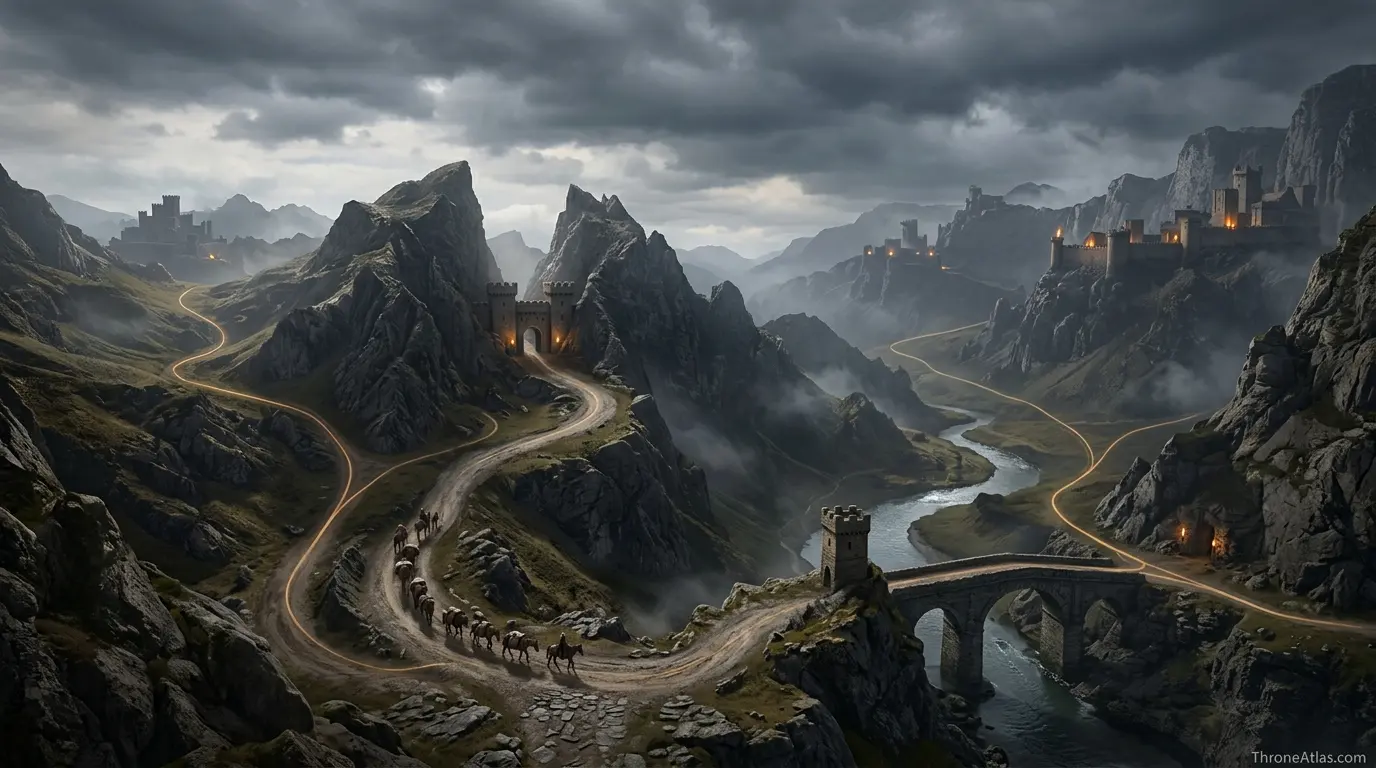
The final cartographic lesson of House Dondarrion Map is that fantasy geography works best when it explains choice. Location shapes which allies can arrive, which enemies can threaten, which messages can travel, and which claims become believable. In that sense, House Dondarrion map is not only a reference page; it is a reading path through power, memory, and movement.
The final cartographic lesson of House Dondarrion Map is that fantasy geography works best when it explains choice. Location shapes which allies can arrive, which enemies can threaten, which messages can travel, and which claims become believable. In that sense, House Dondarrion map is not only a reference page; it is a reading path through power, memory, and movement.
The final cartographic lesson of House Dondarrion Map is that fantasy geography works best when it explains choice. Location shapes which allies can arrive, which enemies can threaten, which messages can travel, and which claims become believable. In that sense, House Dondarrion map is not only a reference page; it is a reading path through power, memory, and movement.
The final cartographic lesson of House Dondarrion Map is that fantasy geography works best when it explains choice. Location shapes which allies can arrive, which enemies can threaten, which messages can travel, and which claims become believable. In that sense, House Dondarrion map is not only a reference page; it is a reading path through power, memory, and movement.
The final cartographic lesson of House Dondarrion Map is that fantasy geography works best when it explains choice. Location shapes which allies can arrive, which enemies can threaten, which messages can travel, and which claims become believable. In that sense, House Dondarrion map is not only a reference page; it is a reading path through power, memory, and movement.
The final cartographic lesson of House Dondarrion Map is that fantasy geography works best when it explains choice. Location shapes which allies can arrive, which enemies can threaten, which messages can travel, and which claims become believable. In that sense, House Dondarrion map is not only a reference page; it is a reading path through power, memory, and movement.
Reader Map Reading
The deeper value of the House Dondarrion Map is that it gives readers a way to connect scattered story memory into one geographic frame. Many fans remember a castle name, a character moment, a council scene, a siege, a betrayal, or a line of dialogue before they remember where it belongs. A map page closes that gap. It shows the reader how a local place connects to the roads, regions, coasts, rivers, armies, houses, and claims that shape the larger story.
This is especially important because the world of Westeros and Essos is built around uneven movement. A message by raven can outrun a rider. A fleet can reach a coast that an army cannot easily march toward. A mountain pass can make a nearby place feel distant. A river crossing can turn a simple journey into a strategic decision. A court command may be politically powerful but geographically slow. When the map is read through those limits, the page becomes more useful than a name list.
The best approach is to read the page in three passes. First, identify the anchor point and its region. Second, look at the nearby places that create pressure, opportunity, or danger. Third, follow the consequences outward. A house may matter because of a court office, a border road, a port, an old rivalry, or a famous character. A battle may matter because it changes supplies, morale, hostages, succession, or the confidence of a ruler. In both cases, the map reveals why the story moves the way it does.
How This Page Fits the Larger Atlas
No ThroneAtlas page should feel cut off from the rest of the world. The strongest reading comes from moving from this page into the neighboring maps, then into the house and route pages that explain who controls those places. For example, a castle page becomes clearer when linked to its ruling house. A house page becomes clearer when linked to its seat, rivals, and battlefield commitments. A battle page becomes clearer when linked to the roads and castles that made the conflict possible.
That is why this guide includes both local detail and wider connections. The local detail helps the reader answer the immediate question. The wider connections help the reader keep exploring without losing the thread. A reader who begins with House Dondarrion Map may next need a regional map, a nearby castle guide, a related battle, or a character journey. The page is designed to support that movement naturally.
Distance, Scale and Careful Reading
Fantasy maps often look exact, but the story does not always give modern survey precision. A careful atlas should avoid claiming exact mile counts or fixed travel times unless the source gives enough support. It is safer and more helpful to explain direction, relative distance, terrain difficulty, and political risk. A short route across friendly ground is not the same as a short route through mountains, hostile castles, raiders, winter roads, or contested coastlines.
When reading the House Dondarrion Map, keep that difference in mind. The map is reliable as a guide to relationship and movement. It shows which places belong together in story logic and which routes or regions shape decisions. It should not be treated as a modern road atlas where every curve, bridge, wall, and gate has been measured. The strength of this page is its ability to show clear relationships while respecting the limits of the fictional geography.
Why Small Places Can Have Large Consequences
One of the most common mistakes in reading the map is assuming that only great castles matter. In Westeros, smaller seats, roads, harbors, river crossings, and border houses can change the outcome of a much larger conflict. A minor lord may hold a pass. A narrow crossing may delay an army. A coastal town may become a landing point. A hostage may turn a castle. A family reputation may convince allies or frighten enemies. The map often gives smaller places a larger shadow than their size suggests.
The House Dondarrion Map should therefore be read with attention to consequence, not only fame. If a place influences movement, loyalty, supplies, fear, legitimacy, or memory, it belongs in the atlas network. Some pages explain the throne directly. Others explain the roads and loyalties that make the throne possible. Both kinds of pages matter because power in this world is never held by one city alone.
Cartographer’s Final Reading
The final reading is simple: geography is story structure. The map decides who can arrive in time, who is isolated, who is exposed, who controls a crossing, who has food, who can flee by sea, who must march through hostile country, and who can claim a place with enough force to be believed. The House Dondarrion Map is part of that structure. Read carefully, it helps explain not only where events happen, but why they happen in that order.
For readers building a full mental map of the world, this page works best as one piece of a larger route. Start with the quick answer, use the fast facts to place the topic, study the visual map guide, then follow the Related Atlas Network. That path turns a single page into a wider geographic understanding of houses, wars, journeys, and lore.
Common Map Mistakes
Readers often misunderstand this topic when the page is reduced to a single location name. The most reliable reading keeps the seat, nearby places, movement routes, and political consequences together.
- Placing Blackhaven too close to King’s Landing instead of the Dornish frontier.
- Forgetting that Beric’s most famous route moves away from his home seat.
- Treating the Stormlands as one smooth region instead of a borderland with passes.
The fix is to read the map as a network. Begin with Blackhaven, connect it to Storm’s End, Boneway, Prince’s Pass, then follow how people, armies, ships, claims, or messages move through that space.
Related Atlas Network
Use these related maps to follow nearby places, connected houses, character routes, battles, and lore events across ThroneAtlas.
Primary Links
Routes and Wars
House Dondarrion Map FAQ
Clear answers to common reader questions about this map, its location, and its story connections.
Where is House Dondarrion located?
House Dondarrion is mapped through Blackhaven in Stormlands / Dornish Marches. The most useful reading also includes nearby places such as Storm’s End, Boneway, Prince’s Pass because those connections explain movement and political pressure.
What should a House Dondarrion map show?
A strong House Dondarrion map should show the seat, region, nearby powers, main roads or sea routes, connected events, and the house stakes that make the location important.
Why does House Dondarrion matter?
House Dondarrion matters because it connects local geography with Border defense, outlaw resistance, marcher identity. That connection turns a house name into a working part of the wider atlas.
Is the page based on book or show geography?
The page keeps stable geography in view and explains book/show emphasis carefully. It avoids exact modern distances where the source material leaves room for interpretation.
Which pages should I read next?
Start with the related maps around Storm’s End, Boneway, Prince’s Pass, then move to the core Westeros map, the houses hub, and the relevant battle or route pages listed in the Related Atlas Network.
Explore More of the ThroneAtlas Map Network
Move from this page into the wider network of regions, castles, houses, battles, routes, and lore geography.