War of the Five Kings Map Robb, Joffrey, Stannis, Renly, Balon, Riverlands, North & King’s Landing War Map
Five crowns, fractured regions and the war routes that tear Westeros apart
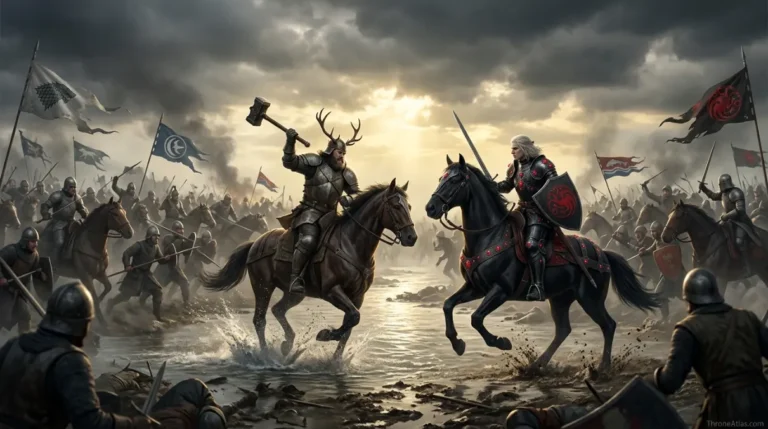
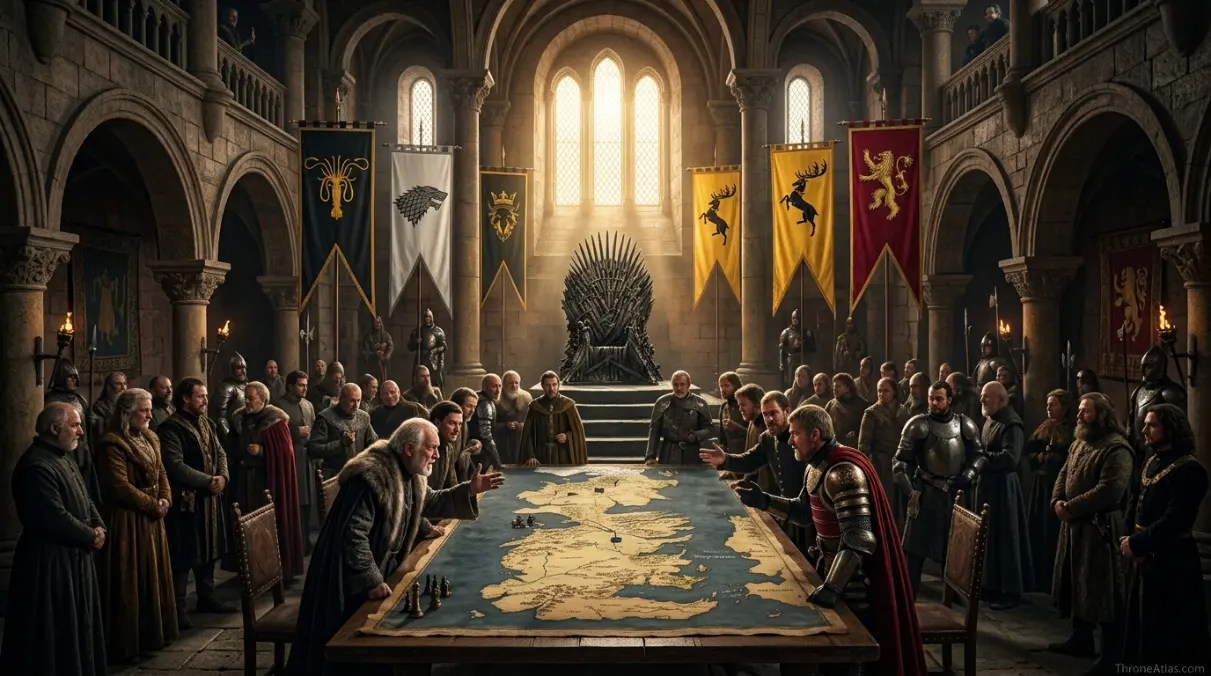
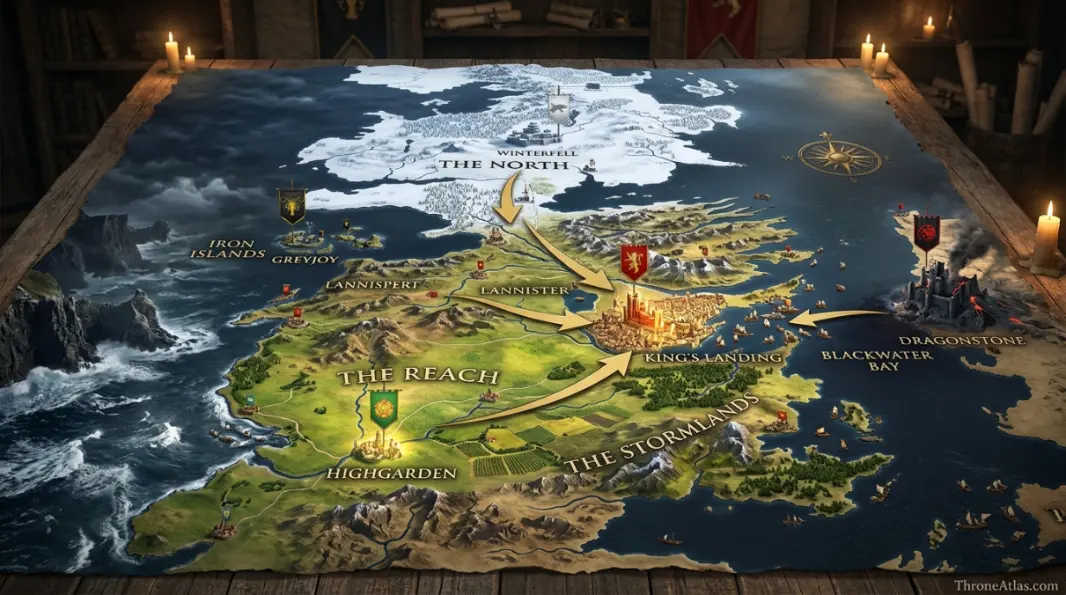
The War of the Five Kings map is a continent-wide fracture pattern: one throne crisis turns into five claims, and each claim controls a different type of geography.
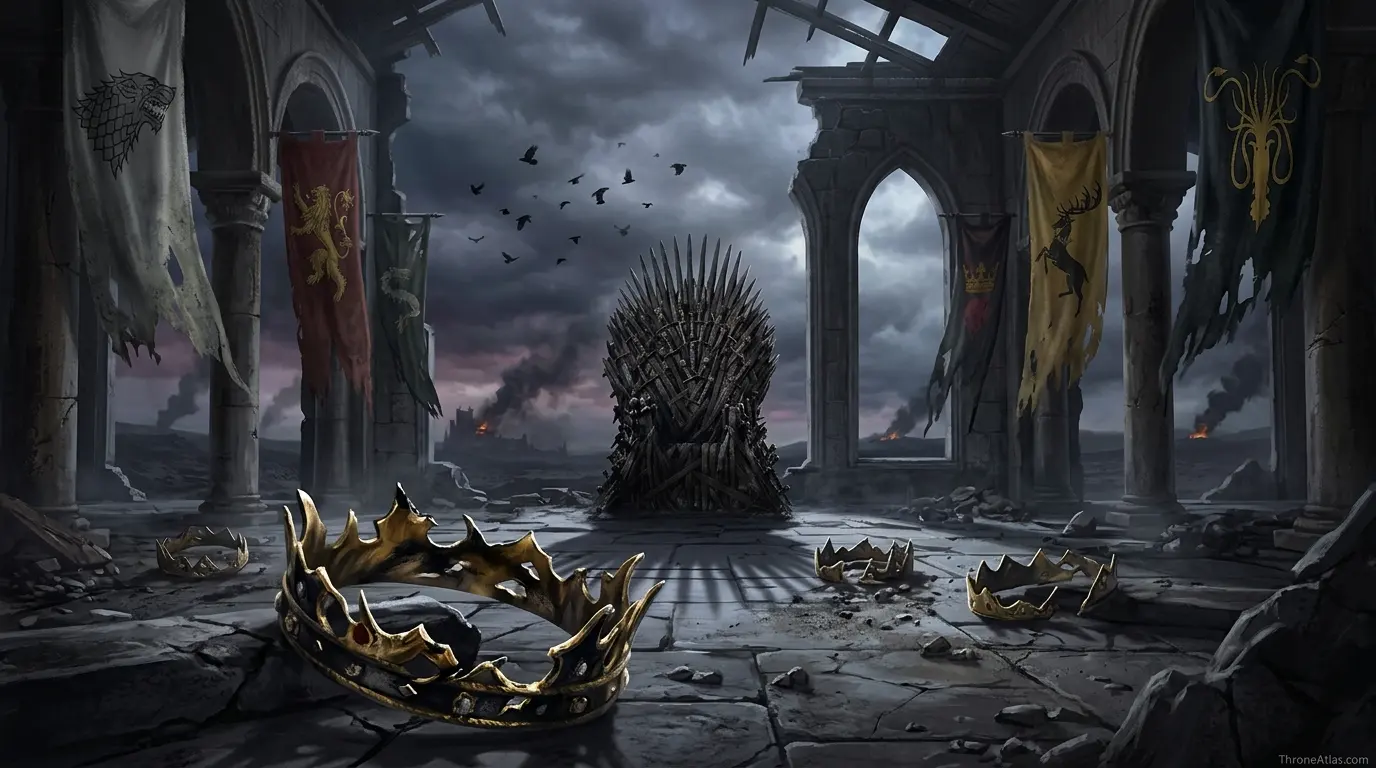
The War of the Five Kings map follows five rival claims after Robert Baratheon’s death: Joffrey in King’s Landing, Robb Stark in the North and Riverlands, Stannis from Dragonstone, Renly through the Stormlands and Reach, and Balon Greyjoy from the Iron Islands. The main theaters are King’s Landing, the Riverlands, the North, the Stormlands, the Reach, Dragonstone, the Iron Islands, Blackwater Bay and the Twins. The war ends with most claimants dead and Lannister power temporarily stabilized through alliance and betrayal.
What this War of the Five Kings Map explains
The cards below give the fast orientation before the deeper route, table and FAQ sections.
Main points on the War of the Five Kings Map
This simplified graphic is designed for reading flow, not exact geographic scale. Use it to understand order, pressure and consequence.
The capital gives Joffrey visibility but not unquestioned legitimacy.
Robb’s kingship is built on loyalty, grief and northern independence.
The Riverlands become the central wound of the civil war.
Stannis controls legal argument, island power and naval pressure.
Renly controls numbers and pageantry but lacks legal priority.
Balon uses sea power to exploit northern vulnerability.
Wildfire and Tyrell arrival save the city from Stannis.
The Red Wedding removes Robb and changes the war’s structure.
Complete War of the Five Kings Map Guide
A thin map page only lists names. A strong ThroneAtlas page explains how places create pressure, change decisions and connect to the wider atlas. This guide is built to help readers follow the route, understand the stakes at each stop, and continue into connected maps without losing context.
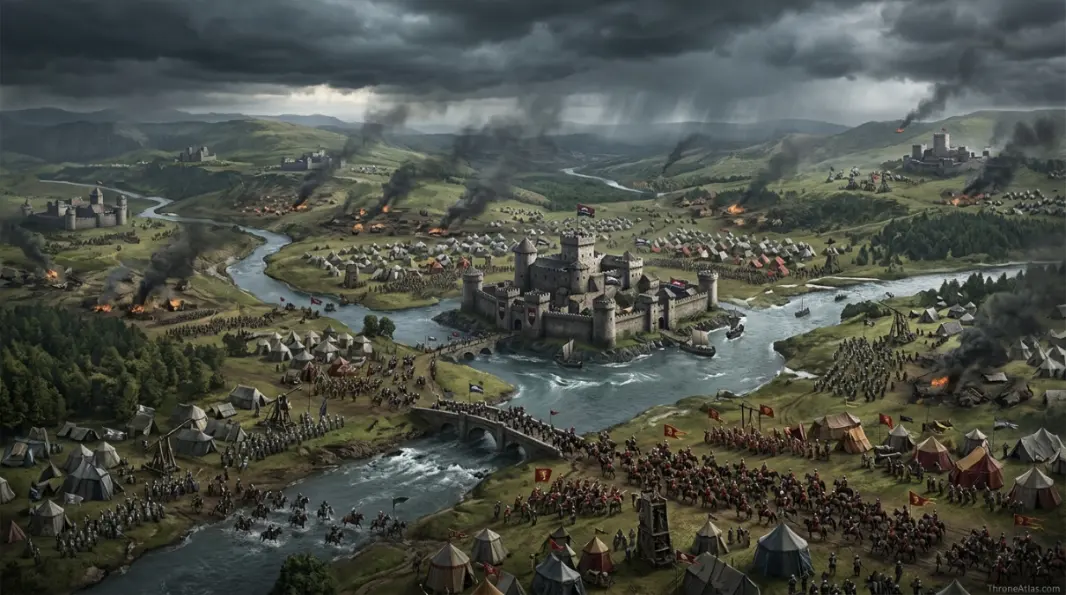
One crown becomes five claims
The War of the Five Kings begins because Robert’s death exposes a legitimacy crisis that the realm cannot solve peacefully. Joffrey holds the capital, but his bloodline is contested. Stannis has the legal argument, but limited affection. Renly has charm and numbers, but weaker law. Robb wants northern justice rather than the Iron Throne. Balon sees opportunity from the sea.
This makes the map unusually fragmented. Each claimant is strong in one geography and weak in another. Joffrey has the Red Keep; Robb has northern loyalty; Stannis has Dragonstone and fleet pressure; Renly has the south’s abundance; Balon has ships and island isolation. The war is not simply five men fighting. It is five regional strengths colliding.
A strong page should help readers see those strengths before jumping into battles.
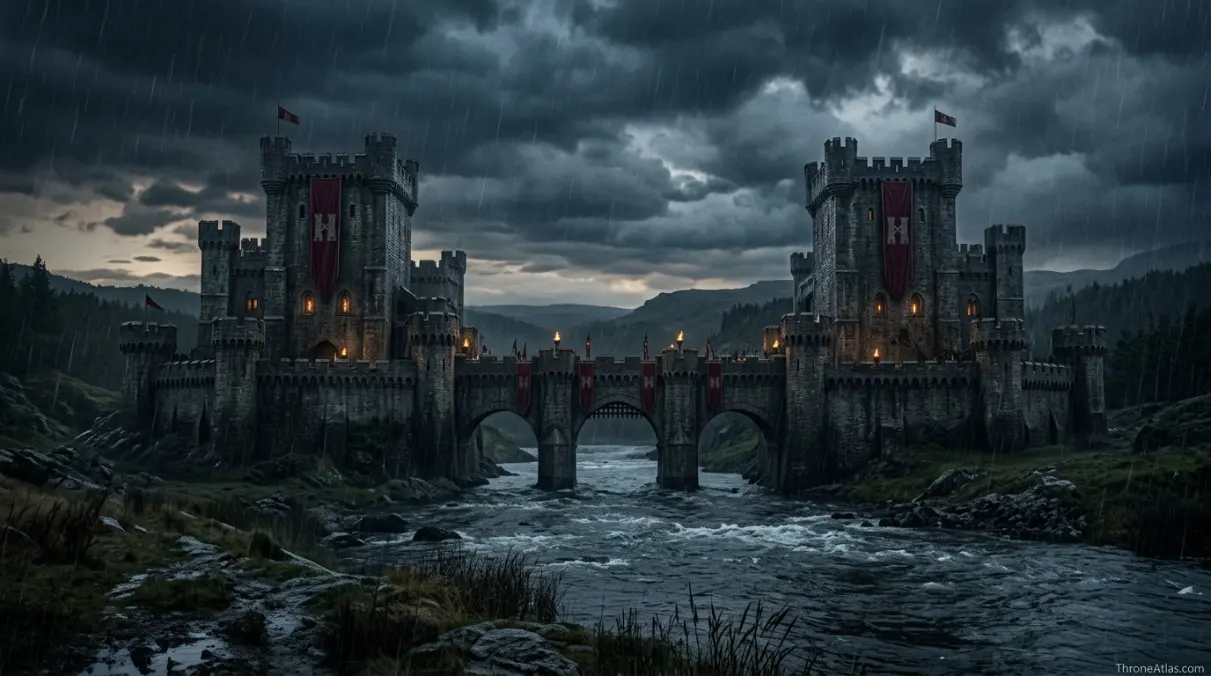
The Riverlands as the central wound
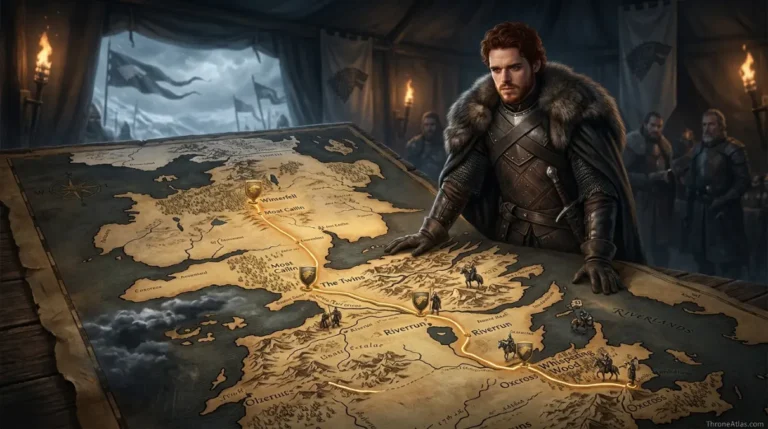
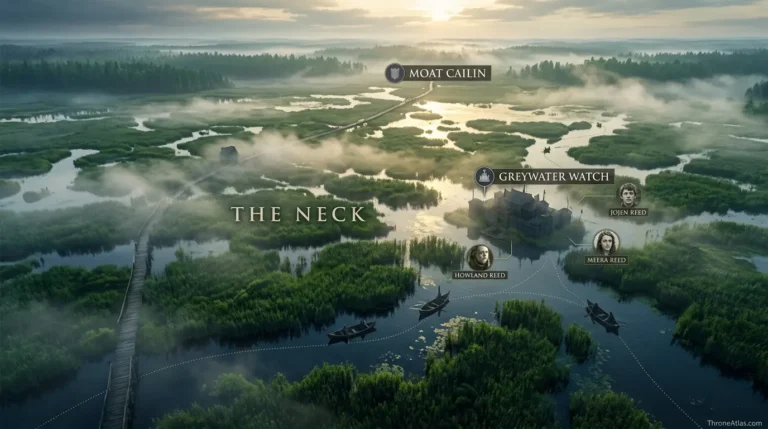
The Riverlands are the heart of the War of the Five Kings map because they sit between northern movement, western Lannister force, central roads and Tully alliances. They are exposed, fertile, strategically unavoidable and politically tied to both Stark and Tully causes.
This is why so many key movements pass through Riverrun, the Twins, Harrenhal and the Trident routes. The Riverlands are not just where battles happen. They are where the costs of civil war become visible in burned villages, broken crossings and contested castles.
For topical authority, this page should heavily link to Riverlands Map, Harrenhal, Riverrun, Robb Stark Campaign Map, Red Wedding Map and Battle of the Trident where relevant.
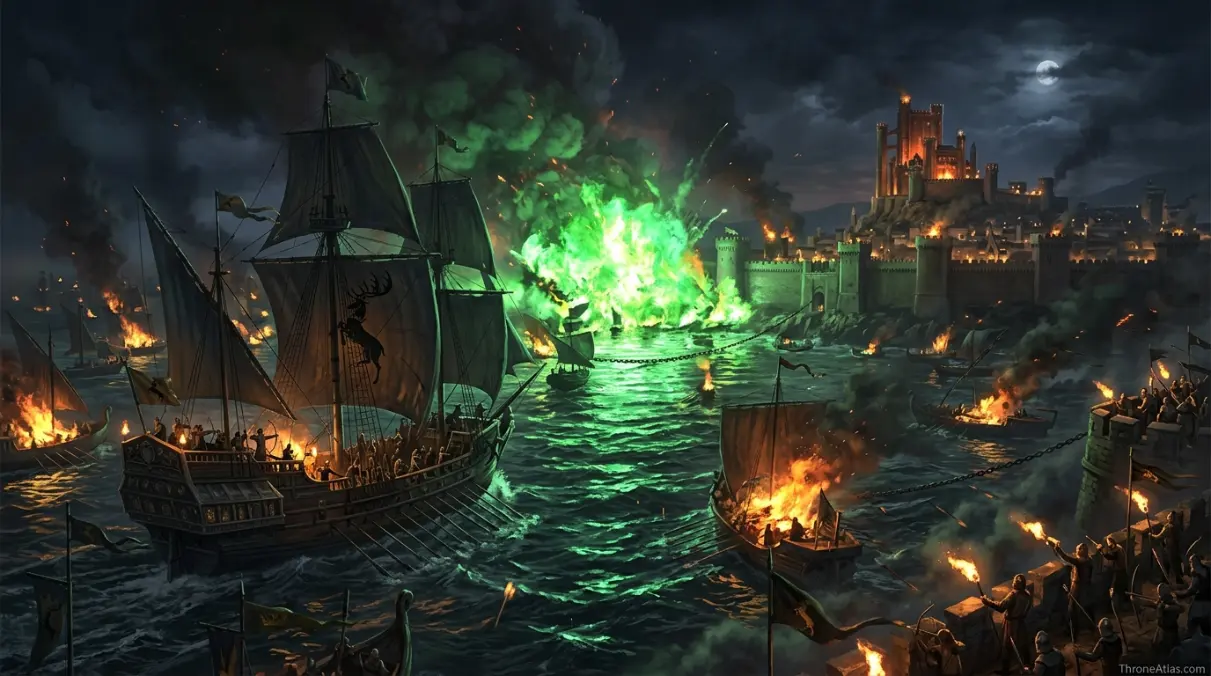
Blackwater and the capital theater
The Battle of the Blackwater is the war’s most important capital defense. Stannis brings the strongest direct challenge to King’s Landing, and the city survives through wildfire, Tyrion’s defense and Tyrell-Lannister reinforcement.
Geographically, Blackwater Bay is a trap and opportunity at once. It gives Stannis a route to the capital, but it also channels his ships into a space where wildfire can destroy formation and momentum. The battle proves that holding a capital requires harbor defense, alliances and timing.
After Blackwater, the war is not over, but the strongest legal claimant is weakened. That shifts the map toward Lannister-managed politics and away from clean succession debate.
Red Wedding and the end of northern momentum
Robb wins battles, but the Red Wedding proves that battle victories are not enough if crossings, marriages and host obligations collapse. The Twins turn from bridge to trap and remove the Stark-Tully leadership structure in one night.
This is why the War of the Five Kings map needs both battle and event pages. A war can be decided by a harbor, a bridge, a marriage pact, a shadow, a fleet or a feast hall. The map is wider than swords.
The final SERP answer should make clear that the war does not create a stable peace. It leaves the realm damaged, power concentrated temporarily, and future conflicts waiting.
Detailed map reading for War of the Five Kings Map
The quick route above gives the order, but the real value of this page is the cause-and-consequence logic between map points. A normal recap tells you what happened. A ThroneAtlas map explains why the location made that outcome possible, why the next route opened, and why some choices became almost impossible once characters entered the wrong room, road, crossing or battlefield.
For War of the Five Kings Map, each stop should be read as a pressure point. Roads control timing, castles control access, rivers control movement, halls control sightlines, islands control isolation, and sacred places control memory. That is why this page is structured as an atlas guide instead of a thin summary.
1. King’s Landing — Joffrey’s throne
The capital gives Joffrey visibility but not unquestioned legitimacy. In map terms, this point belongs to Crownlands, but its function is larger than place-labeling. It changes leverage, visibility, safety or legitimacy. From here the reader naturally moves toward Winterfell / North, carrying the previous consequence forward instead of treating the event as a disconnected scene.
2. Winterfell / North — Robb’s crown
Robb’s kingship is built on loyalty, grief and northern independence. In map terms, this point belongs to The North, but its function is larger than place-labeling. It changes leverage, visibility, safety or legitimacy. From here the reader naturally moves toward Riverrun / Riverlands, carrying the previous consequence forward instead of treating the event as a disconnected scene.
3. Riverrun / Riverlands — War corridor
The Riverlands become the central wound of the civil war. In map terms, this point belongs to Riverlands, but its function is larger than place-labeling. It changes leverage, visibility, safety or legitimacy. From here the reader naturally moves toward Dragonstone, carrying the previous consequence forward instead of treating the event as a disconnected scene.
4. Dragonstone — Stannis’s claim
Stannis controls legal argument, island power and naval pressure. In map terms, this point belongs to Narrow Sea, but its function is larger than place-labeling. It changes leverage, visibility, safety or legitimacy. From here the reader naturally moves toward Stormlands / Reach, carrying the previous consequence forward instead of treating the event as a disconnected scene.
5. Stormlands / Reach — Renly’s strength
Renly controls numbers and pageantry but lacks legal priority. In map terms, this point belongs to South, but its function is larger than place-labeling. It changes leverage, visibility, safety or legitimacy. From here the reader naturally moves toward Iron Islands, carrying the previous consequence forward instead of treating the event as a disconnected scene.
6. Iron Islands — Balon’s invasion
Balon uses sea power to exploit northern vulnerability. In map terms, this point belongs to Western seas, but its function is larger than place-labeling. It changes leverage, visibility, safety or legitimacy. From here the reader naturally moves toward Blackwater Bay, carrying the previous consequence forward instead of treating the event as a disconnected scene.
7. Blackwater Bay — Capital defense
Wildfire and Tyrell arrival save the city from Stannis. In map terms, this point belongs to King’s Landing, but its function is larger than place-labeling. It changes leverage, visibility, safety or legitimacy. From here the reader naturally moves toward The Twins, carrying the previous consequence forward instead of treating the event as a disconnected scene.
8. The Twins — Campaign collapse
The Red Wedding removes Robb and changes the war’s structure. In map terms, this point belongs to Riverlands, but its function is larger than place-labeling. It changes leverage, visibility, safety or legitimacy. From here the reader naturally moves toward King’s Landing, carrying the previous consequence forward instead of treating the event as a disconnected scene.
Why this page is built for search intent
People searching for War of the Five Kings Map usually want a fast answer first: the main location, the correct order, the central turning point and the final consequence. After that, they want context that a short wiki paragraph cannot provide. This page supports both needs with a quick answer, fact cards, route schematic, location cards, deep explanations, table and FAQ.
The stronger SEO angle is topical completeness rather than repetition. The content uses natural entity coverage: region names, castles, houses, battles, characters, terrain and route logic. That helps the page work as a map hub and not just an isolated article.
How to use this War of the Five Kings Map on ThroneAtlas
Use this page as the orientation layer before opening the deeper location pages. Start with the quick answer to confirm the place, then use the route schematic to understand order, then scan the table if you only need the map role of each point. If you are building a full reading path, follow the related links into the houses, regional maps and battle or lore pages connected to this event.
The page is intentionally written for map-first readers. That means it avoids treating geography as decoration. Every location is included because it changes the balance of power, the available route, the safety of a character, the meaning of a battle, or the historical memory of Westeros. This is the difference between a normal recap and a useful atlas entry.
For best internal SEO, publish this page with a short URL, descriptive image alt text, one H1, and related links using exact but natural anchors such as “War of the Five Kings Map,” “Riverlands map,” “King’s Landing map,” “Dragonstone map,” “House Targaryen map,” or the specific battle/location phrase that matches the page topic.
Topical authority notes for War of the Five Kings Map
The page is also designed to answer the follow-up questions readers usually ask after the first map answer. They want to know how the event connects to nearby regions, which houses gain or lose power, which characters move because of the event, and which later routes are changed by the outcome. For War of the Five Kings Map, that means the map should not stop at King’s Landing or The Twins. It should show how the consequence travels through surrounding castles, roads, rivers, courts, islands or sacred places.
This is especially important for ThroneAtlas because map pages work best as clusters. A reader who lands on this page should be able to continue naturally into a regional guide, a house guide, a battle guide, a character route or a lore explanation. That internal path increases usefulness for humans and gives search engines clearer entity relationships around Westeros geography.
The content also avoids the common thin-page mistake of repeating the title in every sentence. Instead, it uses supporting entities: the relevant kingdom, controlling house, nearby castle, route pressure, battlefield condition, political consequence and memory layer. These supporting terms make the page feel complete without sounding forced.
For final publication, keep the hero image near the top, retain the round compass card, and do not remove the boxed quick answer. That combination gives the page the same visual identity as the master Westeros page while still allowing each event or lore location to have its own voice. The design rhythm should feel familiar across the site, but the analysis should feel unique to the map.
If this page is being used for programmatic publishing, pair it with two to four exact internal links in the first half of the article and several broader atlas links near the end. The safest anchor style is descriptive rather than generic: “War of the Five Kings Map route,” “King’s Landing location,” “The Twins consequence,” and the specific region or house name. That keeps the page helpful and prevents the internal link block from feeling pasted on.
Before publishing, compare the page against the surrounding cluster and make sure the opening answer, the first image alt text, the first two H2s, and the related-link anchors all reinforce the same search intent. That final pass is what makes the page feel handcrafted rather than generated in bulk. For War of the Five Kings Map, the reader should leave with a clear route, a clear consequence, and a clear next page to open.
Location order and story function
The table below condenses the event into a scanner-friendly format for readers who want quick orientation before moving into related maps.
| Location | Map role | Region / route | Story function |
|---|---|---|---|
| King’s Landing | Joffrey’s throne | Crownlands | The capital gives Joffrey visibility but not unquestioned legitimacy. |
| Winterfell / North | Robb’s crown | The North | Robb’s kingship is built on loyalty, grief and northern independence. |
| Riverrun / Riverlands | War corridor | Riverlands | The Riverlands become the central wound of the civil war. |
| Dragonstone | Stannis’s claim | Narrow Sea | Stannis controls legal argument, island power and naval pressure. |
| Stormlands / Reach | Renly’s strength | South | Renly controls numbers and pageantry but lacks legal priority. |
| Iron Islands | Balon’s invasion | Western seas | Balon uses sea power to exploit northern vulnerability. |
| Blackwater Bay | Capital defense | King’s Landing | Wildfire and Tyrell arrival save the city from Stannis. |
| The Twins | Campaign collapse | Riverlands | The Red Wedding removes Robb and changes the war’s structure. |
War of the Five Kings Map Questions
The five are Joffrey Baratheon, Robb Stark, Stannis Baratheon, Renly Baratheon and Balon Greyjoy.
Robert Baratheon’s death and the disputed legitimacy of Joffrey’s claim trigger the crisis.
The Riverlands are the most heavily contested region.
The Battle of the Blackwater saves the capital from Stannis.
The Red Wedding at the Twins destroys Robb’s campaign.
Related maps, houses, battles and lore routes
ThroneAtlas is an independent fan-made atlas. Game of Thrones, House of the Dragon and related names belong to their respective rights holders. This page is for educational, lore-navigation and fan-reference purposes.