Tower of Joy MapLyanna Stark, Arthur Dayne & Jon Snow’s Birth Location
Dorne / Red Mountains · House Targaryen, House Stark, House Dayne
Dornish mountain stronghold, Robert’s Rebellion mystery, and the hidden route that changes the Stark and Targaryen story. This complete atlas guide explains the Tower of Joy map through geography, connected houses, nearby routes, character movement, lore chronology, visual context, and related ThroneAtlas pages.
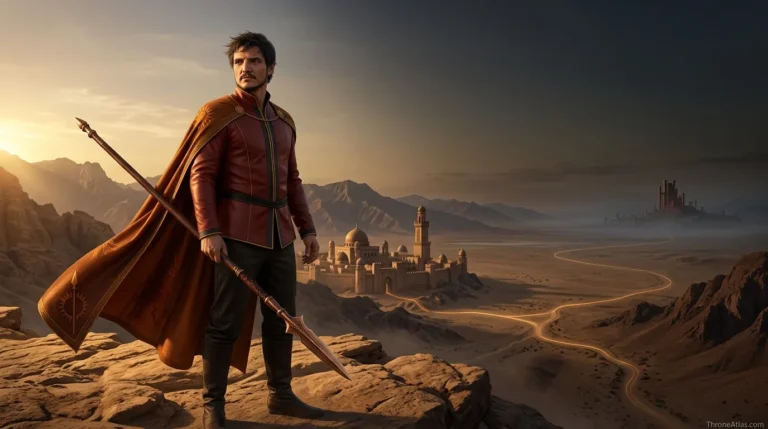
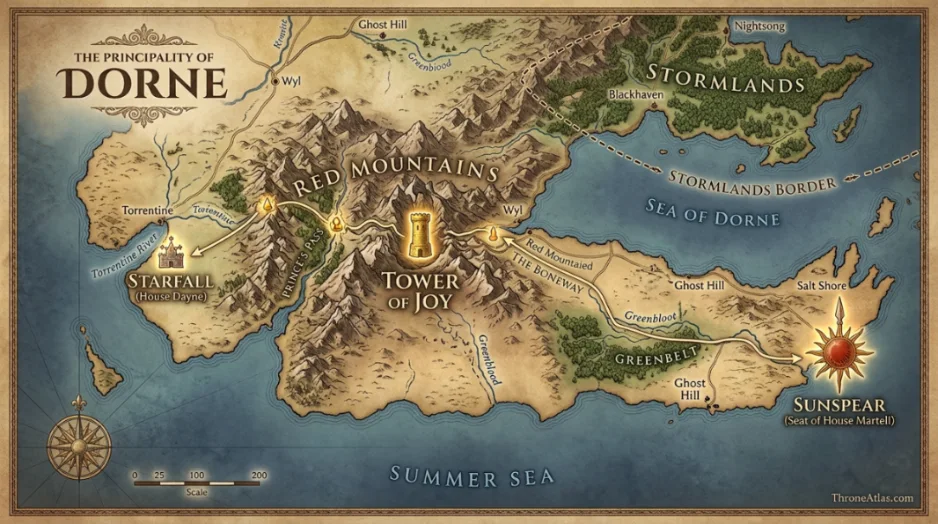
The Tower of Joy sits in the Red Mountains of Dorne and is remembered as the place where Ned Stark found Lyanna Stark at the end of Robert’s Rebellion. Its map position matters because it is remote, difficult to reach, close enough to Dornish and Dayne territory to hide a royal secret, and far from the public war routes around King’s Landing and the Trident.
Page Index
How to Read the Tower of Joy map
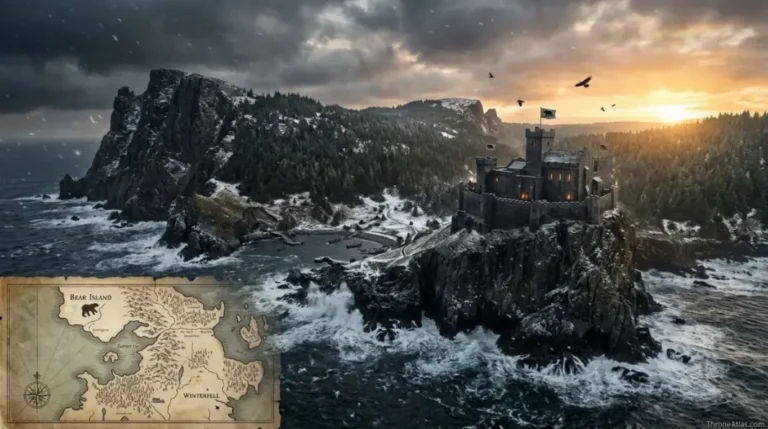
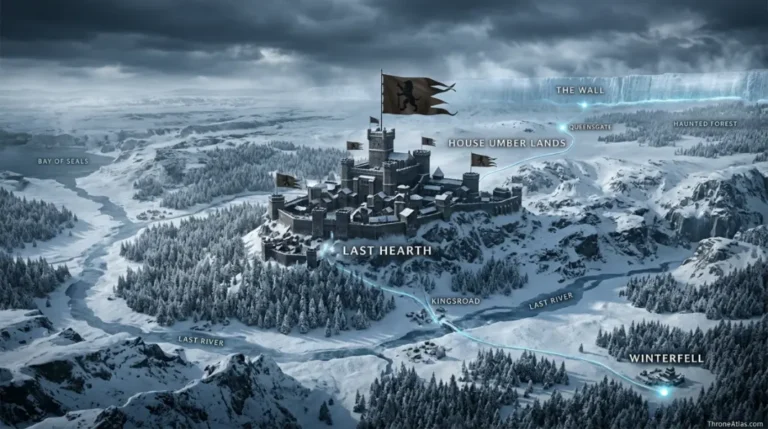
These image blocks use ThroneAtlas sample sources so the layout, alt text, and image indexing structure are ready for replacement before publication.
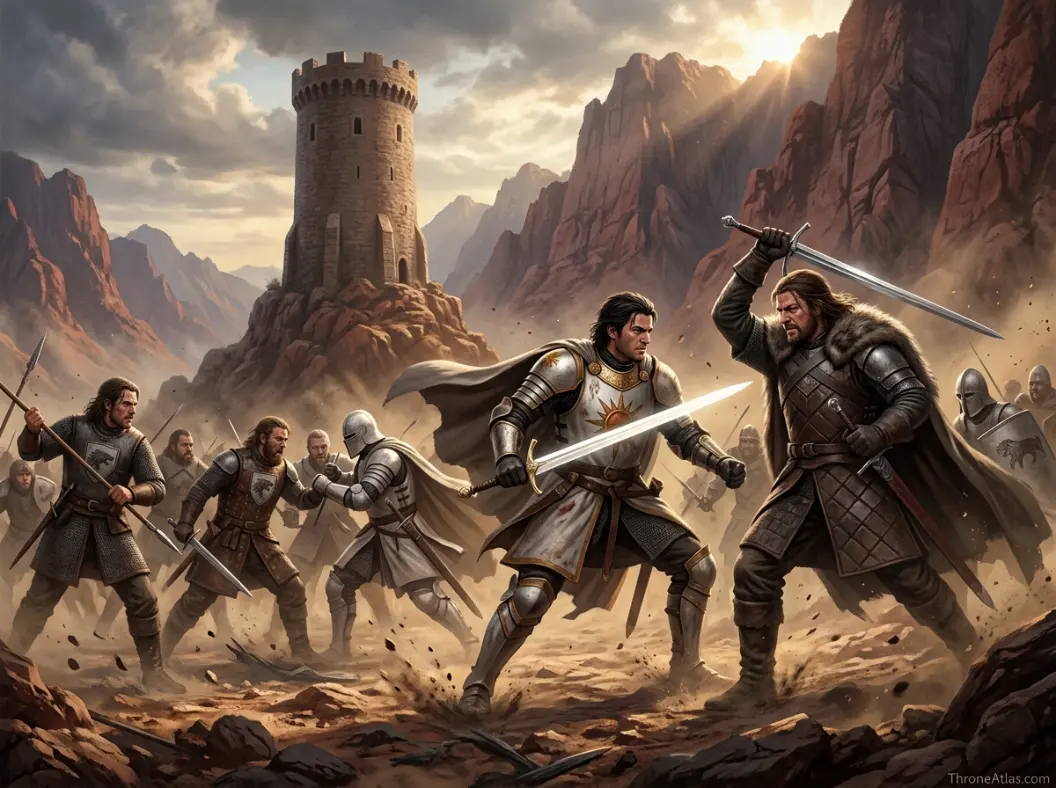
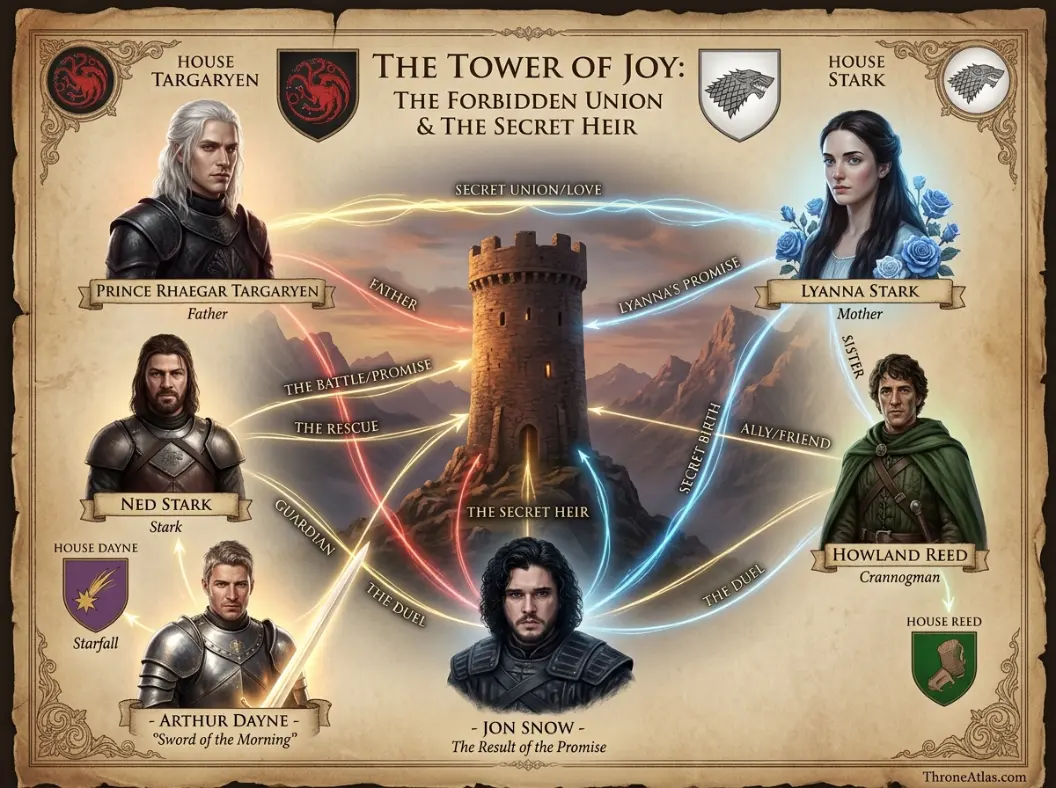
Where the Tower of Joy map Fits on the Atlas
The Tower of Joy map belongs to the wider ThroneAtlas geography because it answers a question that a simple label cannot answer: why does this place matter when characters move, houses choose sides, armies march, or old secrets return? Tower of Joy is best read through its surrounding region, nearby roads, nearby waters, and political neighbors. On this page, the map is treated as a story engine rather than decoration.
The Tower of Joy sits in the Red Mountains of Dorne and is remembered as the place where Ned Stark found Lyanna Stark at the end of Robert’s Rebellion. Its map position matters because it is remote, difficult to reach, close enough to Dornish and Dayne territory to hide a royal secret, and far from the public war routes around King’s Landing and the Trident. This makes the page useful for readers who want the immediate answer, but it also gives enough surrounding detail to understand why the location keeps appearing in conversations about houses, battles, journeys, and lore. The strongest map pages on ThroneAtlas do not isolate one castle or river from its world. They place it beside the route network that gives it meaning.
For this page, the key reading angle is hidden Dornish geography, the route from war to revelation, the Dayne connection, and the way a remote tower becomes the hinge between Stark honor and Targaryen succession. That angle keeps the article focused and prevents the location from becoming a loose encyclopedia entry. The map should show where the place is, what it touches, who uses it, what political pressure surrounds it, and how it changes the viewer’s understanding of Westeros.
Visual Map Guide
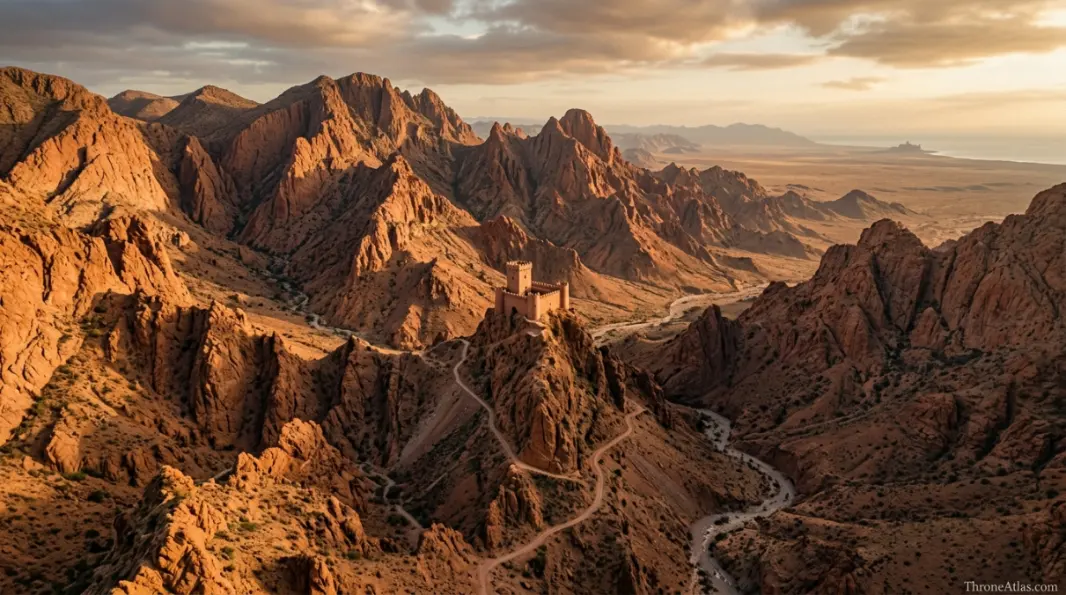
The visual reading of Tower of Joy begins with distance. Is it close to a capital, hidden in rough terrain, exposed to water, guarded by mountains, or placed between two larger regions? The answer changes how readers should interpret every journey connected to it. A castle beside a road is a political checkpoint. An island is a defensive and cultural world. A river is a movement corridor. A ruined fort is memory made visible on the landscape.
When replacing the sample image sources before publication, keep the composition focused on map value: show the location in relation to surrounding regions, use enough negative space for readable labels, and avoid images that feel like generic fantasy scenery without geographic clarity. The image should help readers understand position, not only mood.
Route Logic and Travel Pressure
Route logic is the heart of this page. Tower of Joy cannot be understood only by naming its rulers or nearby landmarks. It must be read as a place that controls, hides, interrupts, or redirects movement. In a world where ravens, roads, ships, river crossings, mountain passes, and winter conditions decide the speed of politics, map position often matters as much as bloodline.
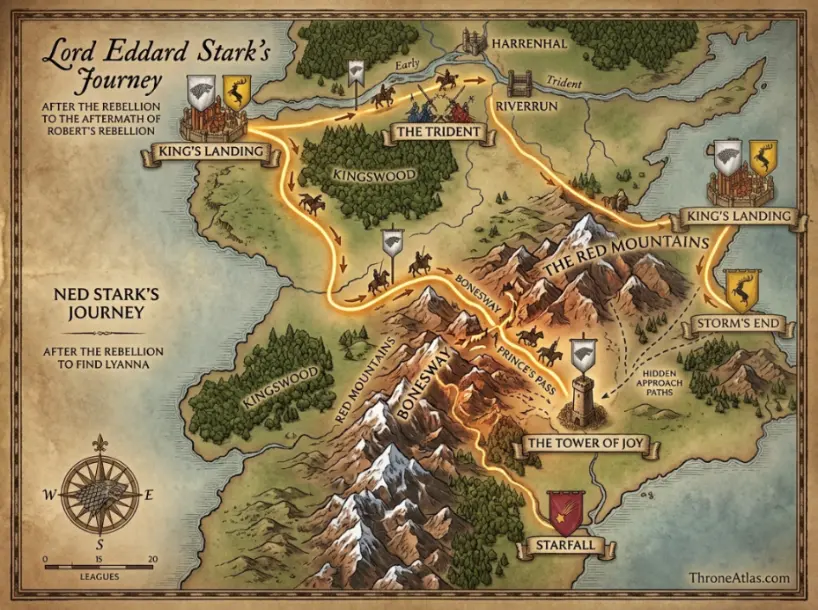
- The northern memory route from Winterfell to the truth Ned never publicly names.
- The rebellion route from the Trident and King’s Landing into hidden Dornish terrain.
- The Dayne connection route from Starfall to the Red Mountains.
- The succession route linking Dragonstone, King’s Landing, the tower, and Winterfell.
Each route above gives the location a different kind of value. Some routes carry armies. Some carry rumors. Some carry family obligations, hidden children, royal claims, marriage politics, trade goods, or warnings from the edge of the known world. On ThroneAtlas, the strongest interpretation is usually the one that combines physical geography with political consequence.
Strategic Meaning
The Tower of Joy is the most important hidden-location mystery in the political geography of Game of Thrones because it connects Lyanna Stark, Rhaegar Targaryen, Ned Stark, Arthur Dayne, and Jon Snow’s true parentage. That importance becomes clearer when the location is compared to larger, better-known pages. A major hub such as King’s Landing explains visible power. A page like this explains the supporting geography that lets power move, hide, fracture, or survive.
Strategically, Tower of Joy is shaped by Remote Dornish mountains, red passes, dry valleys, isolated tower country. Terrain is not neutral in Westeros. Mountains slow armies and hide secrets. Islands create hard cultures and sea-facing politics. Rivers preserve memory and movement. Abandoned fortifications reveal institutional decline. Ports turn noble power into trade and ships. A reader who knows the terrain can understand why one route is chosen and another is avoided.
Timeline and Story Order
The timeline below gives the page a clean reading order. It does not try to retell every chapter or episode. Instead, it follows the way the location gains meaning through history, war, memory, or movement. This helps readers place Tower of Joy within the bigger map without losing the details that make the location unique.
| Stage | Map Meaning |
|---|---|
| Phase 1 | Rhaegar Targaryen and Lyanna Stark disappear from the public map, turning a personal relationship into a realm-shaking cause of war. |
| Phase 2 | Robert’s Rebellion spreads across the Riverlands, Crownlands, Stormlands, and the south while the tower remains isolated in Dorne. |
| Phase 3 | Ned Stark travels south after the war and reaches the tower with a small group of loyal companions. |
| Phase 4 | Ser Arthur Dayne and other Kingsguard defend the tower, showing that the location guards something more important than a normal prisoner. |
| Phase 5 | Ned finds Lyanna in the tower, hears her final request, and carries a secret back to Winterfell. |
| Phase 6 | Jon Snow’s identity later transforms the tower from a tragic war site into a succession landmark. |
Notice how the location’s importance grows when it is placed beside linked pages such as Starfall Map, Dorne Map, Sunspear Map, Robert’s Rebellion Map, Battle of the Trident Map. The map is strongest when these pages speak to each other. A reader can begin on this page, move to a nearby castle, follow a character route, and then return to the regional hub with a clearer understanding of the whole cluster.
Houses and Characters Connected to This Location
The most important names connected to this page are Lyanna Stark, Rhaegar Targaryen, Ned Stark, Arthur Dayne, Howland Reed, Jon Snow, Robert Baratheon. These names do not all connect in the same way. Some are rulers, some are travelers, some are warriors, some are witnesses, and some are remembered because the location changes what the audience understands about them. A strong map page makes those differences visible.
- Lyanna Stark — tied to Tower of Joy through movement, memory, family politics, or the larger route network.
- Rhaegar Targaryen — tied to Tower of Joy through movement, memory, family politics, or the larger route network.
- Ned Stark — tied to Tower of Joy through movement, memory, family politics, or the larger route network.
- Arthur Dayne — tied to Tower of Joy through movement, memory, family politics, or the larger route network.
- Howland Reed — tied to Tower of Joy through movement, memory, family politics, or the larger route network.
- Jon Snow — tied to Tower of Joy through movement, memory, family politics, or the larger route network.
- Robert Baratheon — tied to Tower of Joy through movement, memory, family politics, or the larger route network.
House power is also important here. House Targaryen, House Stark, House Dayne gives the location its immediate political identity, but the surrounding map gives it practical meaning. When a house controls an island, a pass, a tower, a river, a ruined fort, or a port, it controls more than walls. It controls a kind of access. That is why small places can have large story weight.
Book vs Show Reading
The show turns the Tower of Joy into a direct visual revelation through Bran’s greensight, while the books preserve more uncertainty and emotional distance. In both versions, the geography stays the same in purpose: it is far from public power, difficult to reach, and protected by silence. This distinction matters because visual storytelling often compresses travel. A show can move from one region to another in a single cut, while the map reminds readers that distance, terrain, weather, and local loyalties still exist. The page therefore works for both show viewers who need orientation and book readers who want the broader geography restored.
The safest way to read any location in this world is to hold both versions together. The show provides memorable images and direct visual beats. The books usually provide deeper route logic, local detail, and regional texture. ThroneAtlas uses both lenses to keep the map clear without flattening the lore.
Common Map Mistakes
Many fan maps are useful at a glance but become weaker when they ignore route logic. The most common mistakes around this location are small but important:
- Treating the tower as a normal Dornish castle instead of an isolated wartime hiding place.
- Placing it beside Sunspear, when the stronger logic points to the Red Mountains and the Dayne orbit near Starfall.
- Reading it only as a birth location and missing its function as a route marker between the rebellion and the later succession crisis.
A better map reading begins by asking what the place does. Does it guard a pass? Hide a secret? Carry trade? Mark a frontier? Preserve cultural memory? Support a house? Threaten a coast? Once that function is clear, the location becomes easier to connect to the rest of Westeros.
Nearby Atlas Pages
Use the related pages below to keep exploring the surrounding cluster. The best next page depends on the question you are following. For geography, move to the regional hub. For family power, move to the house page. For movement, follow a route or battle map. For memory and mystery, continue into the lore pages.
Characters Connected to Tower of Joy
These connections help readers move from a location page into journeys, houses, battles, and lore without losing the map thread.
Lyanna Stark
Lyanna Stark connects to the Tower of Joy map through politics, memory, war movement, house loyalty, or the story route that passes near Tower of Joy. The connection helps readers move from location geography into character motivation.
Rhaegar Targaryen
Rhaegar Targaryen connects to the Tower of Joy map through politics, memory, war movement, house loyalty, or the story route that passes near Tower of Joy. The connection helps readers move from location geography into character motivation.
Ned Stark
Ned Stark connects to the Tower of Joy map through politics, memory, war movement, house loyalty, or the story route that passes near Tower of Joy. The connection helps readers move from location geography into character motivation.
Arthur Dayne
Arthur Dayne connects to the Tower of Joy map through politics, memory, war movement, house loyalty, or the story route that passes near Tower of Joy. The connection helps readers move from location geography into character motivation.
Howland Reed
Howland Reed connects to the Tower of Joy map through politics, memory, war movement, house loyalty, or the story route that passes near Tower of Joy. The connection helps readers move from location geography into character motivation.
Jon Snow
Jon Snow connects to the Tower of Joy map through politics, memory, war movement, house loyalty, or the story route that passes near Tower of Joy. The connection helps readers move from location geography into character motivation.
Core Map Pages
Related Atlas Pages
Routes and Battles
Explore More
Tower Of Joy Map FAQ
Clear answers to the most common questions about location, house control, route meaning, and related pages.
The Tower of Joy is in the Red Mountains of Dorne, away from the major public routes of the rebellion.
It is where Ned Stark finds Lyanna Stark and where Jon Snow’s hidden parentage becomes tied to the map.
Ned Stark and his companions fought Kingsguard including Ser Arthur Dayne.
Arthur Dayne belongs to House Dayne of Starfall, making Starfall the closest major house connection.
No. It is a remote tower or small stronghold rather than a city.
Robert’s Rebellion, Starfall, Dorne, Ned Stark, Bran Stark, and Targaryen family tree pages should all connect here.
Because its isolation explains how a secret that changed the realm could remain hidden for years.
Explore the Full Westeros Map
Continue from Tower of Joy into the full continent atlas, then follow nearby castles, house territories, battle routes, and character journeys across ThroneAtlas.
ThroneAtlas is an independent fan-made atlas and lore reference. Game of Thrones, House of the Dragon, and A Song of Ice and Fire belong to their respective rights holders. This page is created for commentary, navigation, and educational fan reference.