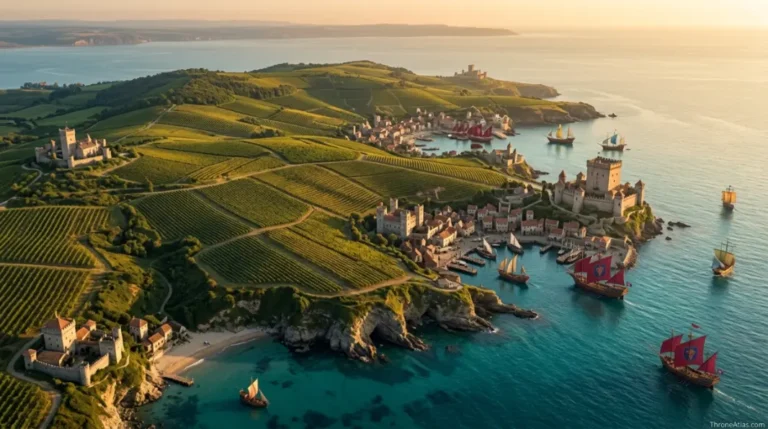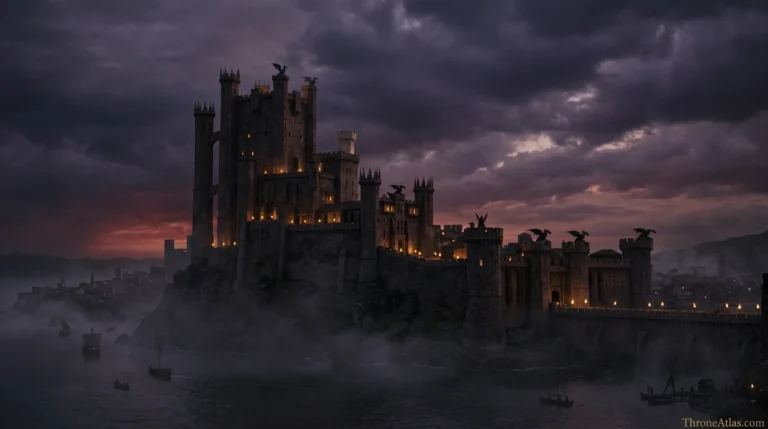
A Knight of the Seven Kingdoms Map: Ashford, Dunk & Egg’s Westeros
A close-scale atlas of HBO’s Dunk and Egg world, centered on Ashford Meadow in the Reach and the roads, camps, tourney spaces and royal encounters that turn one hedge knight’s journey into Targaryen history.
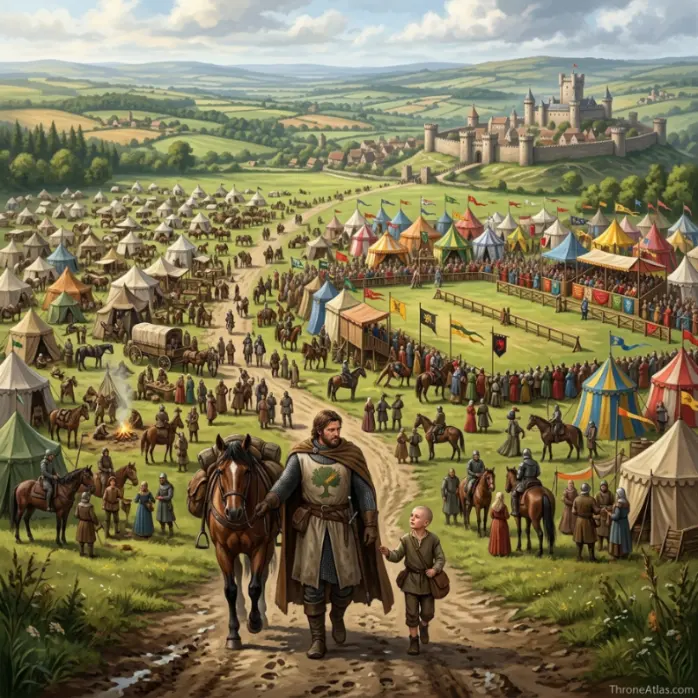
The A Knight of the Seven Kingdoms map is centered on Ashford Meadow in the Reach, where Ser Duncan the Tall travels to compete in a tournament, meets the boy called Egg, encounters members of House Targaryen and becomes involved in a Trial of Seven. Unlike Game of Thrones, the first season uses a deliberately local map: roads, camps and a single tourney ground matter more than continent-wide war.
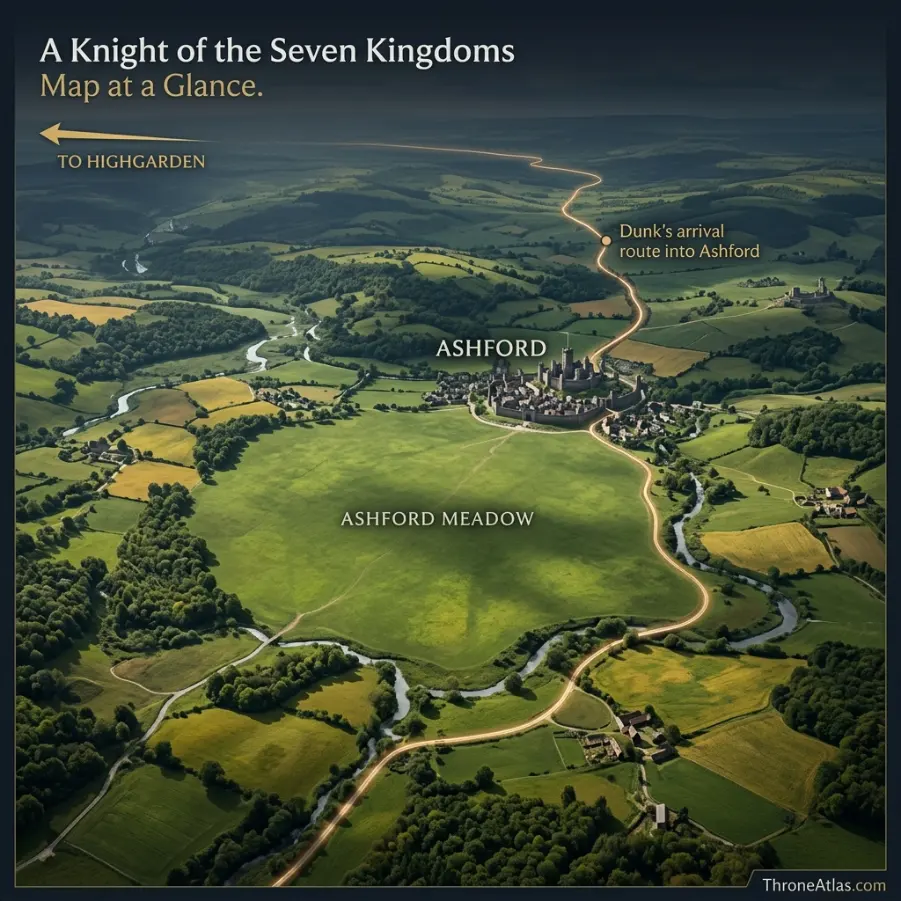
A Knight of the Seven Kingdoms Map at a Glance
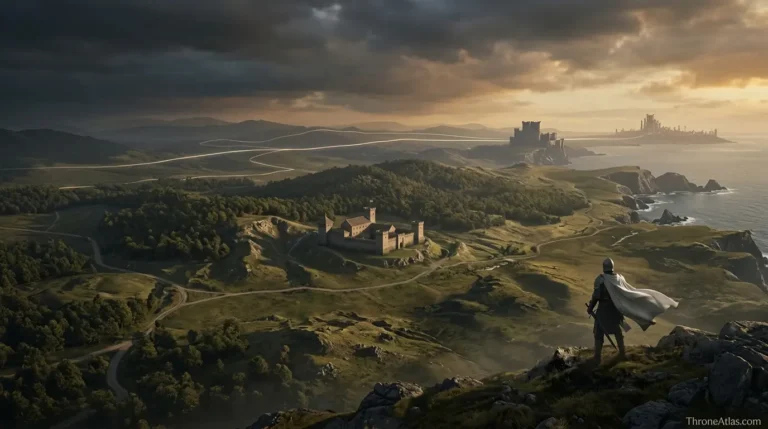
This visual map is the fast geographic reference for the guide below. It is designed to show the places, routes, borders, strongholds or battle zones that matter most to this topic before you move into the deeper lore and strategy.
In This Guide
- Visual Map at a Glance
- What the A Knight of the Seven Kingdoms Map Shows
- Ashford Meadow: The Center of Season 1
- Dunk’s Arrival: Why the Road Matters
- The Reach in Dunk and Egg’s Era
- House Targaryen on the Ashford Map
- Trial of Seven: Why Place and Audience Matter
- How the HBO Series Changes the Map Experience
- Where Dunk and Egg Go After Ashford
- A Knight of the Seven Kingdoms vs Game of Thrones Geography
- How to Read This Map Without Overstating Canon
A Knight of the Seven Kingdoms Map: Ashford, Dunk & Egg’s Westeros: What Matters Most
Core setting
Ashford Meadow and the nearby Ashford seat in the Reach form the geographic center of Season 1.
Story scale
The series is intentionally local: one road and one tournament can matter more than entire kingdoms because Dunk has little power or protection.
Regional context
Ashford lies inside the fertile Reach, a wealthy southern region dense with landed houses and tournament culture.
Dunk’s map
A hedge knight experiences Westeros through roads, camps, inns, horses and employers rather than permanent castles.
Egg’s secret
Egg can move through ordinary spaces because his royal identity is hidden, changing the political meaning of the same route once it is revealed.
Event geography
The Trial of Seven turns the tournament field into a public legal arena witnessed by gathered nobility.
Adaptation note
HBO gives Ashford a physical screen layout, but exact tent and path placement should be labeled adaptation geography rather than universal book canon.
Next route
After Ashford, Dunk and Egg return to the road; their wider journey belongs on a separate route map that can grow with later seasons.
Places to Plot on the Map
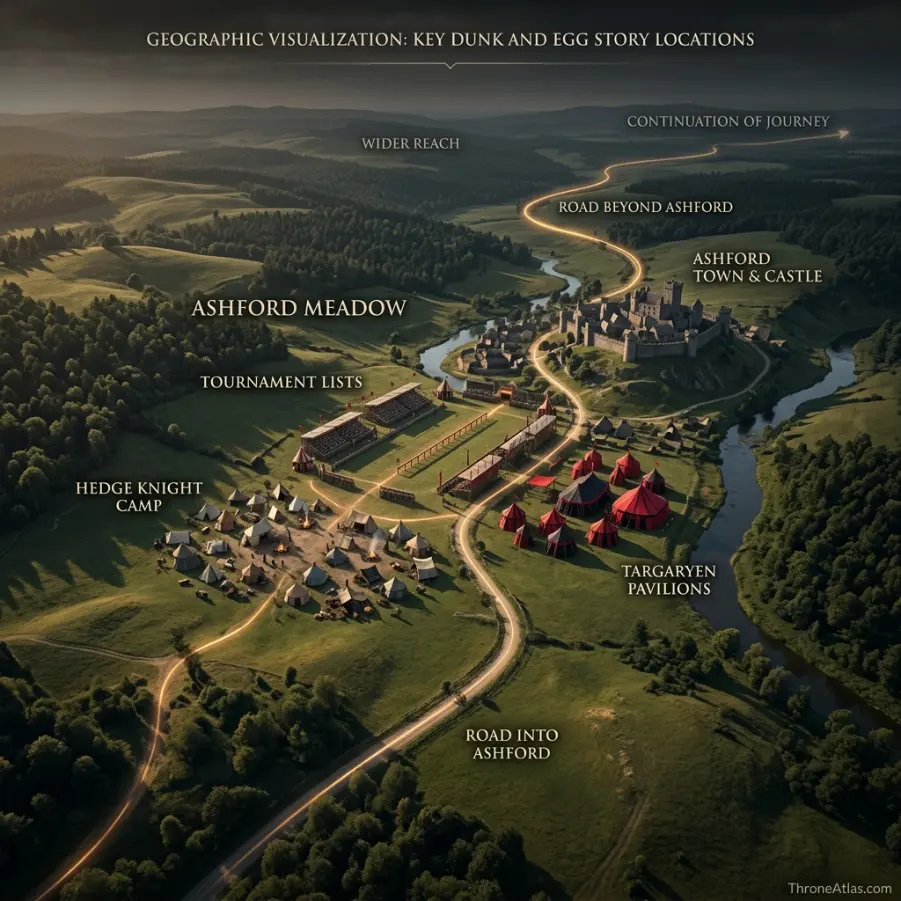
| Location | Region / Zone | Why It Matters | Map Reading |
|---|---|---|---|
| Ashford Meadow | The Reach | Main tournament and Trial of Seven setting | Confirmed story location; detailed local layout should be schematic |
| Ashford / local seat | The Reach | Permanent settlement/seat beside the tourney area | Regional anchor for the temporary meadow city |
| Tournament lists | Ashford Meadow | Jousts, public spectacle and later legal combat | Event zone rather than independent settlement |
| Hedge-knight camp | Ashford Meadow | Shows Dunk’s low status and mobile lifestyle | Temporary camp; relative placement more useful than false coordinates |
| Targaryen pavilions | Ashford Meadow | Royal family presence transforms a local tournament | Temporary noble zone within the event grounds |
| Road into Ashford | The Reach | Dunk arrives as a landless traveler and meets new opportunities | Key route concept even where exact road geometry is uncertain |
| Highgarden sphere | The Reach | Regional political context behind Ashford | Not the story’s main setting, but essential for understanding the Reach |
| Road beyond Ashford | Westeros | Beginning of Dunk and Egg’s continuing partnership | Connects Season 1 to the wider journey map and later adventures |
What the A Knight of the Seven Kingdoms Map Shows
The first-season map of A Knight of the Seven Kingdoms is intentionally smaller than Game of Thrones: its core geography is the road into the Reach and the Ashford Meadow tourney grounds, where Ser Duncan the Tall meets Egg and becomes entangled with several branches of House Targaryen.
A Knight of the Seven Kingdoms changes the scale of Westeros storytelling. Instead of cutting between the Wall, King’s Landing, Essos and several armies, the first season stays close to one hedge knight, one boy, one road and one tournament. That smaller map is not a weakness. It is the entire point. Westeros is suddenly experienced at walking speed.
On a broad political map, Ashford Meadow is a minor place in the Reach. On Dunk’s map, it is the whole world for several days: a camp, lists, pavilions, merchants, noble tents, a castle nearby, and enough gathered knights to expose the enormous social distance between a landless hedge knight and princes born into the ruling dynasty. The geography lets the story examine Westeros from below rather than from a throne room.
The map should therefore be read in two scales. The first is regional: Ashford lies in the Reach, within the wealthy southern kingdom that also contains Highgarden and Oldtown. The second is local: Dunk’s movements between camp, tourney ground, noble pavilions and places of confrontation matter more than continent-wide borders. ThroneAtlas treats both scales as essential.
Ashford Meadow: The Center of Season 1
Ashford Meadow is the tourney site where most of Season 1’s decisive events occur. It lies near Ashford in the Reach, and the temporary tournament settlement effectively becomes a short-lived city of knights, squires, horses, merchants, tents and noble households.
Tournaments in Westeros are mobile concentrations of wealth and violence. For a few days, roads funnel people toward one field: landed knights, hedge knights, princes, entertainers, armorers, cooks, gamblers, stable hands and spectators. Ashford Meadow therefore works like a seasonal capital without any permanent bureaucracy. The important people are present because the event draws them together.
That temporary density explains why Dunk’s life changes so quickly. On an ordinary road he can remain anonymous. At Ashford, identity is constantly tested. A knight needs a name, heraldry, witnesses, armor, a horse and social recognition. Dunk arrives with almost none of the institutional support enjoyed by the nobles around him. The map becomes a pressure chamber because every route through the grounds leads him past people who can judge whether he belongs.
The local layout is only partly fixed by canon, so any detailed Ashford Meadow map should be labeled schematic. We know the functional spaces—a tourney ground, encampments, pavilions, nearby Ashford seat and roads—but not a modern surveyed plan with precise distances. A responsible atlas should show relationships without inventing false precision.
Dunk’s Arrival: Why the Road Matters
Dunk reaches Ashford as a newly self-made hedge knight after the death of Ser Arlan of Pennytree. The road matters because it defines his social position: he owns what he can carry, depends on inns, fields and temporary work, and has no castle or household waiting behind him.
Most maps of Westeros privilege castles because castles generate records. A hedge knight’s map is different. It is a chain of roads, camps, bridges, villages, tourneys and temporary employers. Dunk’s first great decision—ride to Ashford and enter the tourney—only makes sense in that landscape. A tournament is one of the few places where an unknown knight might earn money, reputation or patronage quickly.
Travel also shapes the relationship between Dunk and Egg. They do not meet in a royal nursery. They meet in the unguarded social space around a road and tournament, where identity can be disguised and status is less obvious. Egg’s shaved head and plain appearance let a prince move through a world that would otherwise treat him very differently.
For viewers used to royal journeys with escorts, Dunk’s movement is a reminder that most people in Westeros encounter geography as inconvenience. Rain, food, horse condition, a safe place to sleep and the next paying opportunity matter more than strategic borders. That grounded scale is one of the series’ most distinctive strengths.
The Reach in Dunk and Egg’s Era
The Reach is the wealthy, fertile southern region that surrounds Ashford. During Dunk and Egg’s time the Iron Throne is still Targaryen, but the great regional structure recognizable from later stories already exists: Highgarden dominates the Reach, Oldtown anchors its southwest, and numerous powerful houses fill the countryside between them.
Placing Ashford in the Reach changes how the tournament feels. This is not a starving borderland. It is one of the realm’s richest agricultural regions, dense with roads, villages, landed houses and the surplus needed to support elaborate noble spectacle. Tourneys are expensive. Horses eat. Armor requires specialists. Visitors need food and drink. A fertile region can sustain that temporary population more easily than a remote northern district.
The Reach is also old political country. Long before the Targaryens, the Gardeners ruled from Highgarden; after the Conquest, the Tyrells became Lords Paramount. By Dunk’s era, centuries of lineage and status sit behind every shield in the lists. An unknown knight is not simply competing against individuals. He is entering a social system in which ancestry functions almost like currency.
That contrast between abundant land and unequal status is useful for readers. The countryside can be prosperous while one traveler remains almost penniless. Westeros’s wealth is not evenly distributed, and the Ashford setting allows the show to reveal that without leaving the Reach.
House Targaryen on the Ashford Map
The Targaryens are present at Ashford not as distant rulers but as competing princes and relatives. Their concentration at one tourney turns a local event into a dynastic crisis, eventually forcing Dunk into a trial that is much larger than his original reason for coming.
One of the cleverest geographic choices in The Hedge Knight is bringing royal blood to a place that is not the royal capital. At King’s Landing, a prince is protected by architecture, guards and court procedure. At a tournament, princes mingle more directly with knights and spectators, even if rank still surrounds them. That proximity makes confrontation possible.
Egg’s hidden identity adds another layer. On a map, he is simply a boy moving beside Dunk. Politically, his presence means a branch of the royal family is traveling incognito through spaces where ordinary people can speak to him. When his identity becomes relevant, the meaning of every earlier interaction changes without anyone having moved an inch.
The Targaryen presence also connects Ashford to the larger history of the realm. This is a generation living after the last dragons have died but before the dynasty itself falls. The family still holds the throne, yet internal personalities, rivalries and ideas of princely entitlement already foreshadow future instability. A local map becomes a window into dynastic history.
Trial of Seven: Why Place and Audience Matter
The Trial of Seven transforms the tournament ground from a sporting venue into a legal and religious arena. The same assembled nobility that came to watch jousts becomes witness to a judgment involving royal princes, making Ashford Meadow politically important far beyond its normal size.
A trial by combat depends on witnesses and legitimacy. The field matters because the conflict is not a private duel behind a barn. It is a public test conducted in front of the exact social class whose recognition matters to Dunk’s future. Surviving is not enough; the outcome has to be seen and accepted.
The “seven against seven” form magnifies the geography. Champions need space to charge, horses need room, spectators must be separated, and noble camps nearby become recruitment grounds as Dunk searches for men willing to risk themselves beside him. The tournament settlement suddenly becomes a network of possible allies and enemies.
For a mapmaker, this is a good example of why event maps need more than one marker. The key location is the field, but the story also depends on where champions are found, where Egg moves, where the Targaryen party is encamped, and where Dunk’s social standing is negotiated. Movement across a few hundred yards can carry as much narrative weight as a thousand-mile march in another series.
How the HBO Series Changes the Map Experience
HBO’s adaptation preserves the small-scale road-and-tourney geography that defines The Hedge Knight while giving viewers a physical Ashford they can visually navigate. That makes spatial relationships clearer, but the screen layout should still be treated as adaptation geography rather than a definitive surveyed map of book canon.
Prose can leave distances flexible. Television cannot. A production has to decide where a tent sits, how far a character walks before reaching the lists, what can be seen from a campfire, and how roads approach the location. Those choices create a practical screen map even when Martin never supplied exact measurements.
ThroneAtlas should use that visual information carefully. If the series clearly shows a relationship—such as one area being reached from another by a short walk—it is fair to map the relationship in a screen-canon layer. It is less responsible to convert a camera angle into exact miles or claim that a production layout is the only canonical version of Ashford Meadow.
This distinction makes the page stronger for AEO and AI retrieval too. A direct answer can say where Ashford is and what happens there, while a methodology note explains uncertainty. Clear limits improve trust more than invented precision.
Where Dunk and Egg Go After Ashford
After the Ashford story, Dunk and Egg continue wandering Westeros. The next published adventure, The Sworn Sword, moves them into a much more local rural dispute centered on Standfast and Coldmoat, showing that their journey map is a chain of small places rather than a march between famous capitals.
The end of Season 1 matters geographically because it restores movement. Ashford is a destination, not a permanent home. Once Egg commits to traveling with Dunk, the map opens outward again. Their partnership is defined by the road.
The next canonical story deliberately becomes even less glamorous. Rather than escalating to King’s Landing, it focuses on landed conflict, water, drought, loyalty and old Blackfyre wounds in a small patch of countryside. That is exactly why a separate Dunk and Egg journey map deserves to exist alongside this season map: one page can explain Ashford in depth while the journey page follows their wider route across multiple novellas and seasons.
HBO has renewed the series for a second season adapting the next stage of their adventures. For SEO architecture, the cleanest structure is a permanent main map hub plus season/event pages rather than repeatedly rewriting one URL whenever Dunk rides somewhere new.
A Knight of the Seven Kingdoms vs Game of Thrones Geography
The biggest geographic difference is scale. Game of Thrones regularly cuts across continents; A Knight of the Seven Kingdoms often asks the viewer to care about one road, one field, one stream, one landed dispute or one village. The world is the same, but the map is experienced by people with far less power.
In Game of Thrones, a king can order an army from one region to another and the map becomes strategy. In Dunk’s world, a horse throwing a shoe can be a meaningful travel problem. That does not make the geography less important. It makes it more intimate.
This scale also changes how landmarks function. Winterfell and King’s Landing are symbols known across the realm. Ashford Meadow becomes important because the story makes it important. A local stream can determine crops and a feud. A roadside inn can change who meets whom. The map is full of places that history books might not bother to name.
For fans, that creates a chance to learn Westeros in a different way. Instead of memorizing the seats of Great Houses, you begin to understand the connective tissue between them: minor houses, roads, market towns, tourneys, household knights, fields and the long stretches where nobody important is watching.
How to Read This Map Without Overstating Canon
The safest A Knight of the Seven Kingdoms map separates confirmed geography from schematic reconstruction. Ashford’s regional position in the Reach is established; the exact meter-by-meter arrangement of tents, lists and temporary structures is not. A useful atlas should show function and relative placement while labeling uncertainty.
Fantasy cartography often becomes less accurate when it tries to look more precise. A beautifully drawn local map can imply that every path and pavilion is canon even when the source only says that one place was near another. That is a presentation problem, not merely a lore problem.
ThroneAtlas can avoid it with a simple legend: “confirmed location,” “screen adaptation placement,” and “schematic/approximate.” That lets readers enjoy a detailed local plan without being misled. It also makes the page easier to update when later seasons reveal a clearer road or return to the same place.
For Ashford, the most valuable facts are stable: it is in the Reach; the tournament draws major nobles; Dunk and Egg meet there; the trial changes both their lives; and the road out of Ashford begins one of Westeros’s most important long-term friendships. Those truths are strong enough without inventing coordinates.
Key Dunk and Egg Story Locations
Continue Exploring ThroneAtlas
A Knight of the Seven Kingdoms Map: Ashford, Dunk & Egg’s Westeros: FAQs
Where is A Knight of the Seven Kingdoms set?
Season 1 is centered on Ashford Meadow in the Reach, one of southern Westeros’s richest regions. The story follows Ser Duncan the Tall as he arrives for a tournament, meets Egg and becomes entangled with members of House Targaryen.
Where is Ashford Meadow on the Westeros map?
Ashford Meadow is near Ashford in the Reach, south of the central Westeros heartlands and within the broad fertile region historically associated with Highgarden. It is far less politically famous than King’s Landing, but the tournament makes it temporarily important.
Is Ashford Meadow a real permanent city?
The meadow is best understood as a tournament site beside a permanent local settlement. During the event it functions like a temporary town because nobles, knights, merchants, horses, workers and spectators gather in camps and pavilions.
Does A Knight of the Seven Kingdoms take place before Game of Thrones?
Yes. The Dunk and Egg stories occur roughly a century before Game of Thrones, during continued Targaryen rule but after the age when living dragons dominated Westerosi politics.
Who are Dunk and Egg?
Dunk is Ser Duncan the Tall, a young hedge knight trying to establish himself after the death of his master, Ser Arlan of Pennytree. Egg is the disguised young Prince Aegon Targaryen, who becomes Dunk’s squire and later has a major place in Targaryen history.
What is the Trial of Seven?
It is a rare form of trial by combat in which seven champions fight on each side. At Ashford it transforms Dunk’s personal conflict into a public event involving royal princes and gathered nobles, making the tournament field a legal and political arena.
Is the HBO Ashford layout canon?
The show’s physical layout is screen canon for the adaptation, but it should not automatically be treated as an exact surveyed layout for George R. R. Martin’s written continuity. ThroneAtlas separates confirmed regional geography from production-specific local placement.
Where do Dunk and Egg go after Ashford?
Their adventures continue across Westeros. The next published story, The Sworn Sword, focuses on a smaller landed dispute around Standfast and Coldmoat, while later stories move them again. A dedicated journey map is the best place to follow that expanding route.
Will there be a Season 2 map?
HBO renewed A Knight of the Seven Kingdoms for a second season, expected to adapt The Sworn Sword. A separate Season 2 map keeps Ashford-focused search intent clean while allowing the wider series hub to connect both seasons.
How is this map different from a Game of Thrones map?
It is much more local. Game of Thrones often tracks kings, armies and continent-scale movement. A Knight of the Seven Kingdoms focuses on how ordinary roads, small holdings, tourney fields and local disputes shape the life of a hedge knight and his squire.
The Geography Behind the Story
The A Knight of the Seven Kingdoms map is centered on Ashford Meadow in the Reach, where Ser Duncan the Tall travels to compete in a tournament, meets the boy called Egg, encounters members of House Targaryen and becomes involved in a Trial of Seven. Unlike Game of Thrones, the first season uses a deliberately local map: roads, camps and a single tourney ground matter more than continent-wide war. The deeper value of this page is not memorizing names. It is seeing how roads, rivers, coasts, castles, distance, food, dragons, armies, and old political borders determine what characters can realistically do next. That is the layer ThroneAtlas is built to make visible.