
House Mormont Map Bear Island, Jeor, Jorah, Lyanna Mormont, Longclaw & Northern Loyalty
The small island house whose loyalty and ferocity outweigh its size on the map
The House Mormont Map begins on Bear Island, a harsh northern island whose people are famous for loyalty, toughness and direct speech. The house is small compared with great houses, but its map reaches the Wall, Essos, Winterfell and the final war through Jeor, Jorah, Lyanna and Longclaw.
House Mormont is based on Bear Island in the North. Its key map points are Bear Island, the northern coast, Winterfell loyalty route, the Wall through Jeor Mormont, exile routes through Jorah Mormont, Longclaw’s transfer to Jon Snow and Lyanna Mormont’s stand for northern independence. The house matters because it shows how a small northern seat can have an outsized effect on leadership, honor and war memory.
What this House Mormont Map explains
The cards below give the fast orientation before the deeper route, table and FAQ sections.
Main points on the House Mormont Map
This simplified graphic is designed for reading flow, not exact geographic scale. Use it to understand order, pressure and consequence.
Bear Island defines the family through isolation, toughness and scarce resources.
The surrounding coast reinforces the house’s defensive, self-reliant culture.
Mormont allegiance runs toward Winterfell despite distance and danger.
Jeor Mormont carries house honor into the Night’s Watch.
The sword passing to Jon Snow makes Mormont memory part of another hero’s route.
Jorah’s exile sends the house name into Daenerys’s eastern story.
Lyanna Mormont turns blunt loyalty into political force.
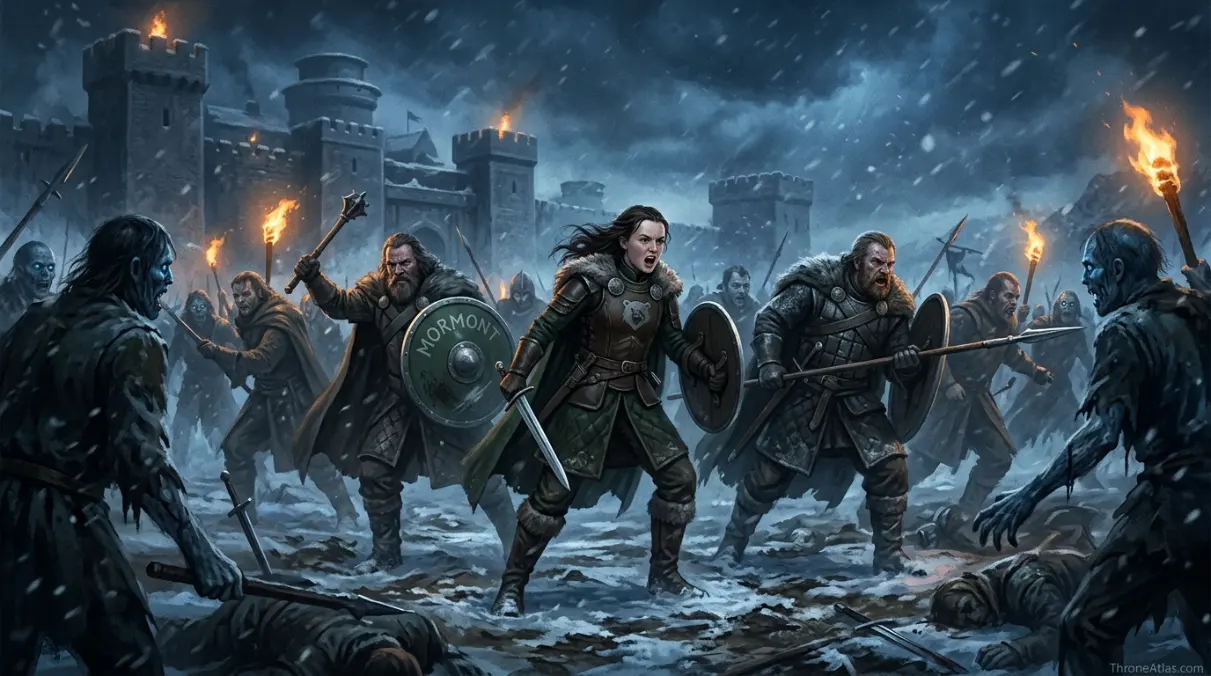
The house’s small size does not stop it from standing in the final northern war.
Complete House Mormont Map Guide
A thin map page only lists names. A strong ThroneAtlas page explains how places create pressure, change decisions and connect to the wider atlas. This guide is built to help readers follow the route, understand the stakes at each stop, and continue into connected maps without losing context.

Bear Island and northern toughness
Bear Island is the foundation of the House Mormont map because the land explains the people. It is remote, hard and exposed. A house that survives there cannot rely on luxury or easy routes. Its culture becomes practical, blunt and defensive.
That geography makes the house feel authentic when its members speak fiercely about loyalty. The words come from a place where weakness has consequences and distance from power requires self-reliance.
A House Mormont map should therefore begin with island ecology before moving into famous characters. The land is the first teacher.

Jeor Mormont and the Wall route
Jeor Mormont extends the house map from Bear Island to Castle Black. As Lord Commander of the Night’s Watch, he turns Mormont identity into institutional service. The Wall becomes the place where his honor matters more than his house seat.
His command also creates one of the most important object routes in the story: Longclaw. By giving the sword to Jon Snow, Jeor transfers Mormont legacy into the broader fight for the realm.
This makes the Mormont map unusually influential for a small house. Its steel and values travel far beyond its land.
Jorah Mormont and exile geography
Jorah’s route complicates the house’s reputation. He begins with disgrace and exile, then moves through Essos into Daenerys’s circle. His map shows that house identity can be carried as shame as well as pride.
This is useful for a 10/10 page because it avoids turning House Mormont into a simple loyalty slogan. The family includes honor, failure, longing and service. Jorah’s route makes the house emotionally complex.
His exile also links Bear Island to Daenerys, the Dothraki Sea, Slaver’s Bay and the wider Essos map.

Lyanna Mormont and political force
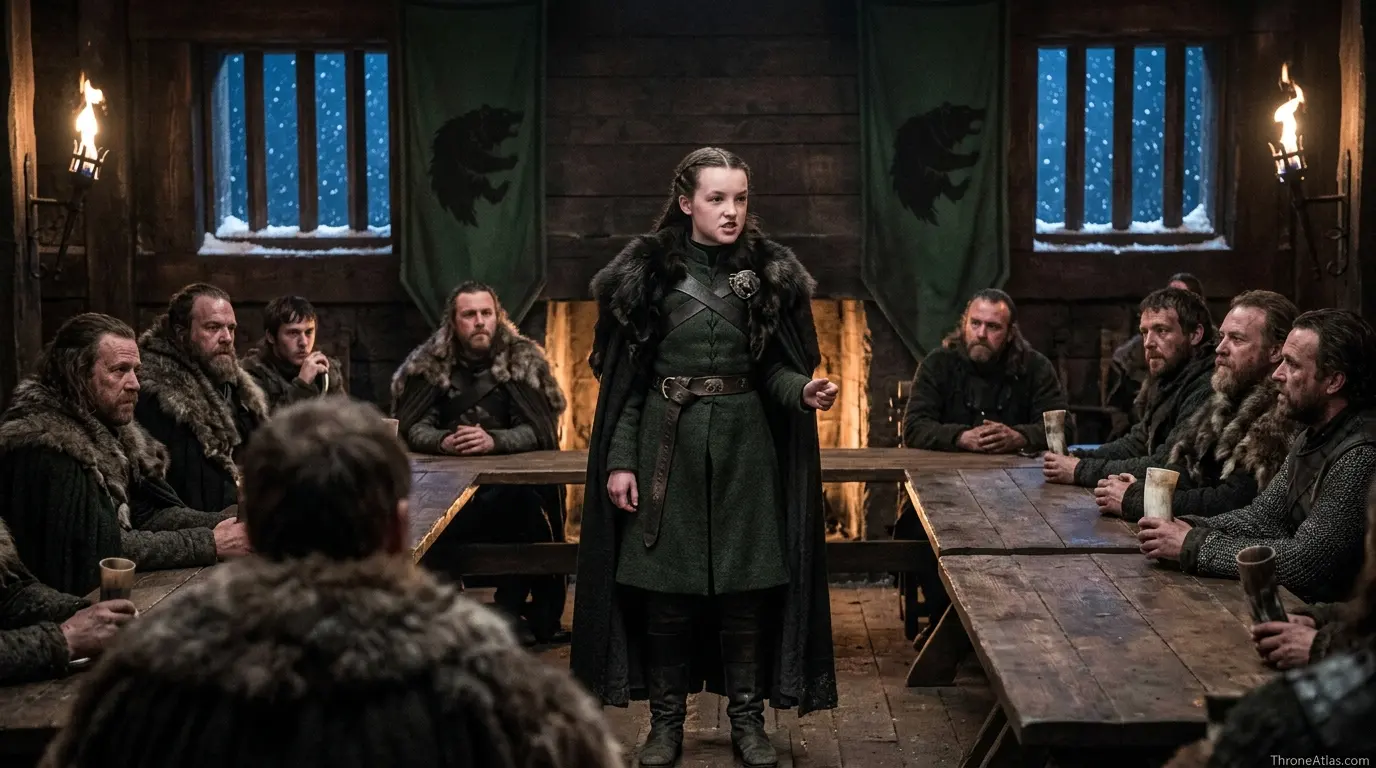
Lyanna Mormont makes Bear Island feel larger than it is. Her power comes from clarity. In northern councils, she speaks with the directness associated with her house’s geography: no court perfume, no southern softness, no wasted words.
Her role proves that small houses can shape legitimacy when they speak at the right moment. She does not need a vast army to alter the mood of a room. She needs credibility.
That credibility is why House Mormont deserves a dedicated map page even beside great houses. Its influence is moral and symbolic as much as military.
Detailed map reading for House Mormont Map
The fastest way to understand House Mormont Map is to treat every landmark as a pressure point. In this atlas style, a place is included only when it changes movement, loyalty, fear, command, identity, trade, religion, survival or memory. That is why the map below is not a flat list of names. It is a sequence of locations that explain how power moves through terrain.
Read the route from the first point to the final consequence. The early locations establish the map’s basic logic, the middle points show where control becomes unstable, and the final points explain how the location connects to the larger Westeros or Essos cluster. This gives the page more value than a short recap because it answers what happened, where it happened, why it happened there and what the next connected page should be.
1. Bear Island — House seat
Bear Island defines the family through isolation, toughness and scarce resources. In map terms, Bear Island belongs to The North, but its real function is relational: it tells the reader how the starting frame leads toward Northern Coast. That is the difference between a label and a useful atlas point.
This point also gives the page a stronger entity layer. It ties the route to houses, roads, coasts, gates, fields, walls, waters or halls that readers already associate with the world. When those connections are clear, the map feels handcrafted rather than generic.
2. Northern Coast — Harsh environment
The surrounding coast reinforces the house’s defensive, self-reliant culture. In map terms, Northern Coast belongs to The North, but its real function is relational: it tells the reader how Bear Island leads toward Winterfell Route. That is the difference between a label and a useful atlas point.
This point also gives the page a stronger entity layer. It ties the route to houses, roads, coasts, gates, fields, walls, waters or halls that readers already associate with the world. When those connections are clear, the map feels handcrafted rather than generic.
3. Winterfell Route — Stark loyalty
Mormont allegiance runs toward Winterfell despite distance and danger. In map terms, Winterfell Route belongs to The North, but its real function is relational: it tells the reader how Northern Coast leads toward The Wall. That is the difference between a label and a useful atlas point.
This point also gives the page a stronger entity layer. It ties the route to houses, roads, coasts, gates, fields, walls, waters or halls that readers already associate with the world. When those connections are clear, the map feels handcrafted rather than generic.
4. The Wall — Jeor’s command
Jeor Mormont carries house honor into the Night’s Watch. In map terms, The Wall belongs to Far North, but its real function is relational: it tells the reader how Winterfell Route leads toward Longclaw Transfer. That is the difference between a label and a useful atlas point.
This point also gives the page a stronger entity layer. It ties the route to houses, roads, coasts, gates, fields, walls, waters or halls that readers already associate with the world. When those connections are clear, the map feels handcrafted rather than generic.
5. Longclaw Transfer — Legacy gift
The sword passing to Jon Snow makes Mormont memory part of another hero’s route. In map terms, Longclaw Transfer belongs to Castle Black, but its real function is relational: it tells the reader how The Wall leads toward Essos Exile. That is the difference between a label and a useful atlas point.
This point also gives the page a stronger entity layer. It ties the route to houses, roads, coasts, gates, fields, walls, waters or halls that readers already associate with the world. When those connections are clear, the map feels handcrafted rather than generic.
6. Essos Exile — Jorah’s shame route
Jorah’s exile sends the house name into Daenerys’s eastern story. In map terms, Essos Exile belongs to Essos, but its real function is relational: it tells the reader how Longclaw Transfer leads toward Lyanna’s Hall. That is the difference between a label and a useful atlas point.
This point also gives the page a stronger entity layer. It ties the route to houses, roads, coasts, gates, fields, walls, waters or halls that readers already associate with the world. When those connections are clear, the map feels handcrafted rather than generic.
7. Lyanna’s Hall — Fierce counsel
Lyanna Mormont turns blunt loyalty into political force. In map terms, Lyanna’s Hall belongs to Bear Island / Winterfell, but its real function is relational: it tells the reader how Essos Exile leads toward Winterfell Defense. That is the difference between a label and a useful atlas point.
This point also gives the page a stronger entity layer. It ties the route to houses, roads, coasts, gates, fields, walls, waters or halls that readers already associate with the world. When those connections are clear, the map feels handcrafted rather than generic.
8. Winterfell Defense — Final loyalty
The house’s small size does not stop it from standing in the final northern war. In map terms, Winterfell Defense belongs to The North, but its real function is relational: it tells the reader how Lyanna’s Hall leads toward the wider atlas cluster. That is the difference between a label and a useful atlas point.
This point also gives the page a stronger entity layer. It ties the route to houses, roads, coasts, gates, fields, walls, waters or halls that readers already associate with the world. When those connections are clear, the map feels handcrafted rather than generic.
Why this House Mormont Map deserves a dedicated atlas page
Some locations in the Thrones world work like background scenery, but this one works like a system. It organizes movement, determines who can reach whom, and often decides whether a character is protected, exposed, isolated or politically useful. A dedicated map page lets the reader see those hidden mechanics instead of only remembering a famous scene or family name.
The strongest way to read this page is through three layers. First is the physical layer: water, road, gate, island, field, wall, marsh, tower or castle. Second is the political layer: the house, commander, oath, religion, fleet, army or bloodline that claims the place. Third is the story layer: the decision, betrayal, test, alliance or survival moment that happens because of that geography.
That layered reading is why ThroneAtlas pages keep a consistent visual structure while giving each map its own voice. The hero gives orientation, the compass card restores the atlas identity, the quick answer gives the searcher an immediate answer, and the deeper guide explains the location’s real narrative function. The structure is familiar; the analysis stays unique.
For readers building a larger path through the site, this page can connect naturally to regional maps, noble house pages, battle maps, route guides and lore explainers. The page is meant to act as a useful bridge, not a dead-end article. After understanding this map, the next best step is to open the nearest region or house page and compare how that broader geography changes the meaning of the specific location.
The page also avoids repeating the same phrase until it feels mechanical. Instead, it uses related entities and natural language: controlling houses, nearby landmarks, route direction, strategic weakness, cultural memory, political consequence and character movement. That gives the content topical completeness without flattening it into keyword stuffing.
What readers usually want to know about House Mormont Map
Most readers arrive with one of three needs. Some want a quick location answer: where is it, what region does it belong to, and which nearby places matter? Some want story context: which characters, houses or armies are tied to it? Others want a clean route: how does this place connect to the next castle, coast, city, battlefield or sacred site?
This page is built to answer all three without forcing the reader through a long introduction. The quick answer gives the first answer. The fact cards organize the core signals. The route schematic shows movement. The deep sections explain why the map matters. The FAQ catches the short follow-up questions readers often search separately.
For a fan atlas, that balance matters. The page should feel useful to someone who only needs a fast answer, but it should also reward the reader who wants to understand the deeper geography of power. That is the 10/10 version of a ThroneAtlas map page: fast at the top, rich in the middle, and connected at the end.
Location order and story function
The table below condenses the map into a scanner-friendly format for readers who want quick orientation before moving into related maps.
| Location | Map role | Region / route | Story function |
|---|---|---|---|
| Bear Island | House seat | The North | Bear Island defines the family through isolation, toughness and scarce resources. |
| Northern Coast | Harsh environment | The North | The surrounding coast reinforces the house’s defensive, self-reliant culture. |
| Winterfell Route | Stark loyalty | The North | Mormont allegiance runs toward Winterfell despite distance and danger. |
| The Wall | Jeor’s command | Far North | Jeor Mormont carries house honor into the Night’s Watch. |
| Longclaw Transfer | Legacy gift | Castle Black | The sword passing to Jon Snow makes Mormont memory part of another hero’s route. |
| Essos Exile | Jorah’s shame route | Essos | Jorah’s exile sends the house name into Daenerys’s eastern story. |
| Lyanna’s Hall | Fierce counsel | Bear Island / Winterfell | Lyanna Mormont turns blunt loyalty into political force. |
| Winterfell Defense | Final loyalty | The North | The house’s small size does not stop it from standing in the final northern war. |
House Mormont Map Questions
House Mormont is based on Bear Island in the North.
Jeor Mormont, Jorah Mormont and Lyanna Mormont are the best-known members.
Longclaw is the Valyrian steel sword of House Mormont that is given to Jon Snow.
Bear Island explains the house’s rugged, loyal and self-reliant identity.
No. It is a smaller northern house, but it has major symbolic importance.
Related maps, houses, battles and lore routes
Essos & Wall cluster
ThroneAtlas is an independent fan-made atlas. Game of Thrones, House of the Dragon and related names belong to their respective rights holders. This page is for educational, lore-navigation and fan-reference purposes.