Criston Cole Journey MapDornish Marches, Red Keep, Green Council & Riverlands War
Dornish Marches, Red Keep, Dragonpit, Crownlands roads, Riverlands · Kingsguard route, court fracture, field command map
Criston Cole journey map — A Kingsguard and commander route following Criston Cole from borderland origins into court intimacy, Green Council force, coronation politics, and Riverlands campaign.
The Criston Cole journey map follows Criston Cole through Dornish Marches, Red Keep, Dragonpit, Crownlands roads, Riverlands. It explains the main locations, house connections, route pressure, turning points, and nearby ThroneAtlas pages that help readers understand the full character path.
Page Index
Criston Cole Journey Map at a Glance
Key route details before the full character map breakdown.
Criston Cole Journey Map: What the Route Really Shows
The Criston Cole journey map is more than a list of places visited by Criston Cole. It is a geographic reading of how power, loyalty, survival, ambition, and public reputation move across Westeros and Essos. A character route becomes useful when it explains why one place changes the next place. This page follows the route through Dornish Marches, Red Keep, Dragonpit, Crownlands roads, Riverlands, then connects those locations to nearby castles, houses, battles, and wider political pressure.
Criston is the map’s hinge between bedroom, throne room, sept, and battlefield. He begins as protection and becomes political violence moving on roads.
The most important thing to understand is that Criston Cole does not move through neutral space. Every stop has a ruler, a road, a gate, a debt, a witness, a rumor, or a cost. The route therefore works like a map of consequences. A decision made in one hall may echo at a castle hundreds of leagues away. A meeting in a court can change a battlefield. A crossing, prison, feast, sermon, council room, or harbor can become the hinge of the route.
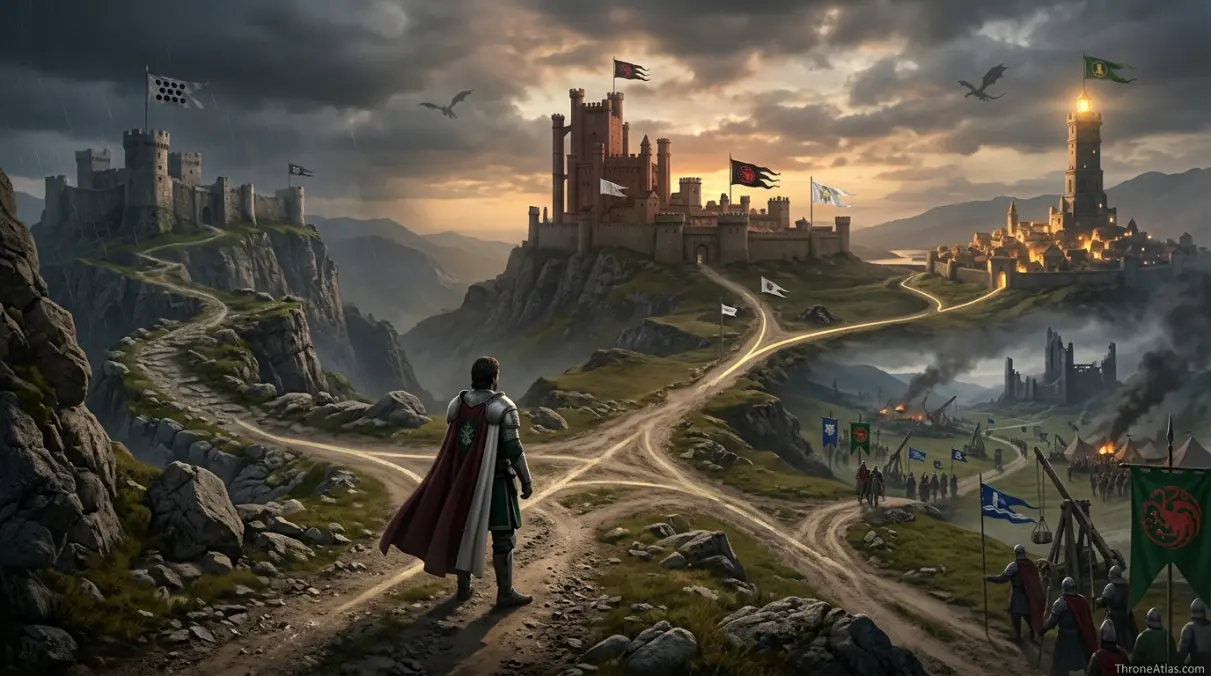
Visual Map Guide
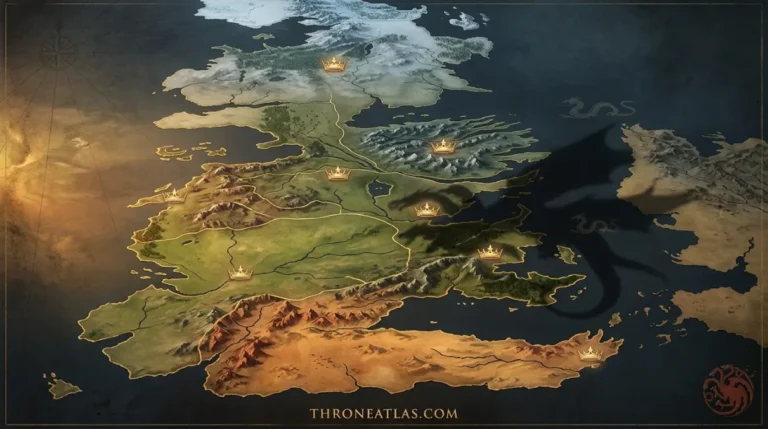
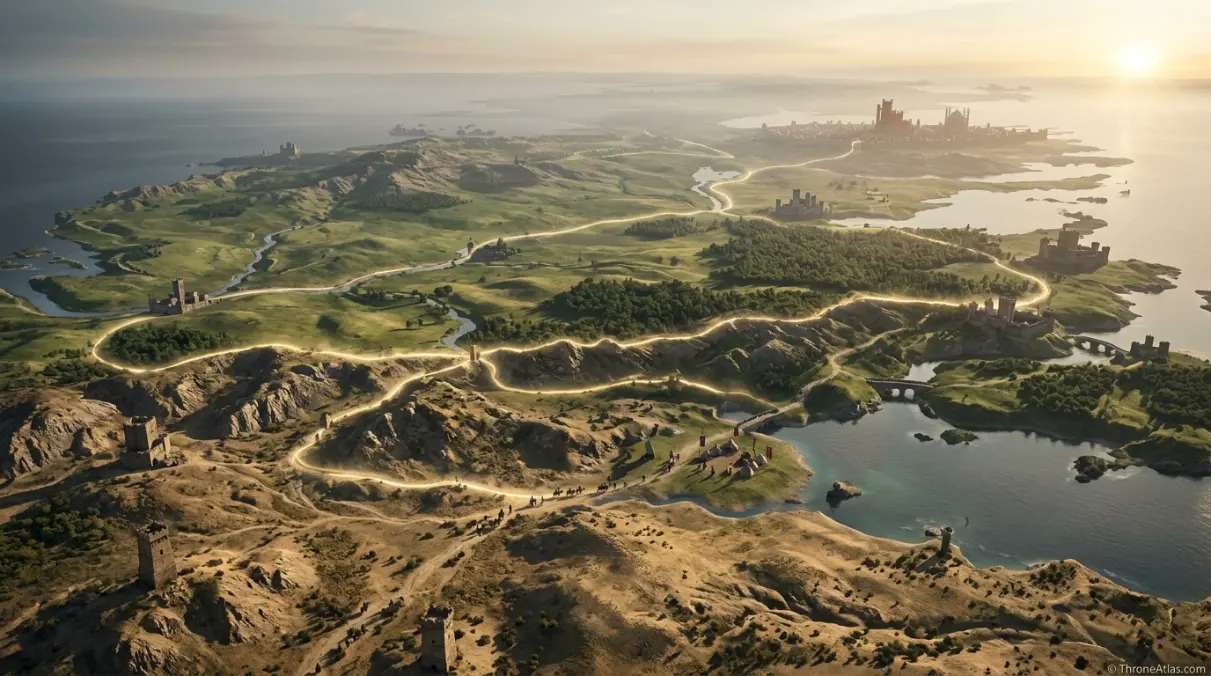
The visual guide below reduces the route to its clearest movement pattern. It is not meant to replace the full map; it shows the backbone of the journey so readers can understand the order of pressure. Start at the first stop, follow the curved route lines, and notice how each point changes the type of power available to Criston Cole.
A strong character map should answer four questions: where the character begins, which place changes the route, where the character gains or loses influence, and which location carries the consequence forward. For Criston Cole, those answers are tied to Dornish Marches, Red Keep, Green Council, Dragonpit, and the later route only makes sense when those early map pressures are understood.
Journey Route and Location Logic
The route moves through Dornish Marches, Red Keep, Dragonpit, Crownlands roads, Riverlands, but the deeper map question is how each place changes what Criston Cole can claim, hide, defend, or lose. Read the path as a sequence of doors opening and closing across castles, roads, ports, courts, and battlefields.
- Dornish Marches: Border Origin — The Marcher background frames his outsider rise into royal service.
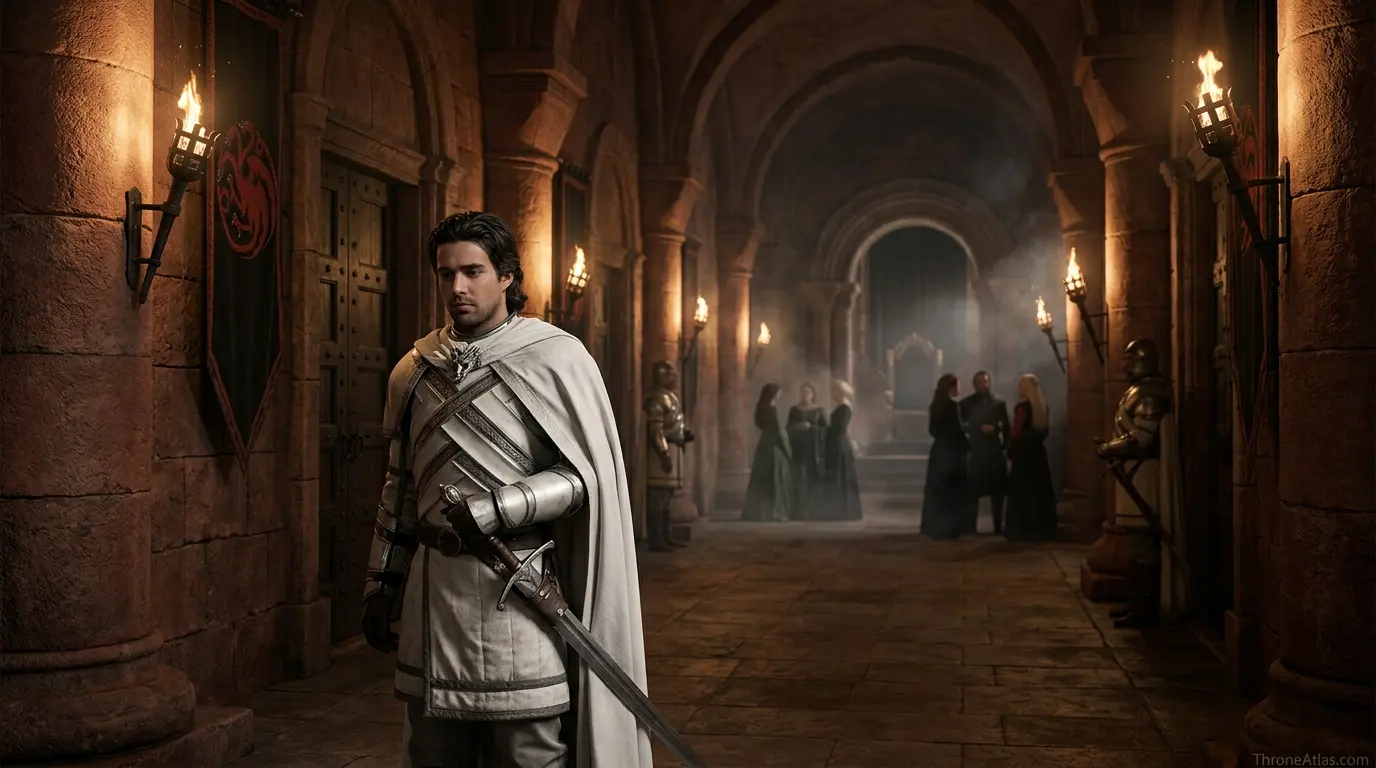
- Red Keep: Kingsguard Pressure — The capital places him near Rhaenyra, Alicent, and the emotional fracture of court politics.
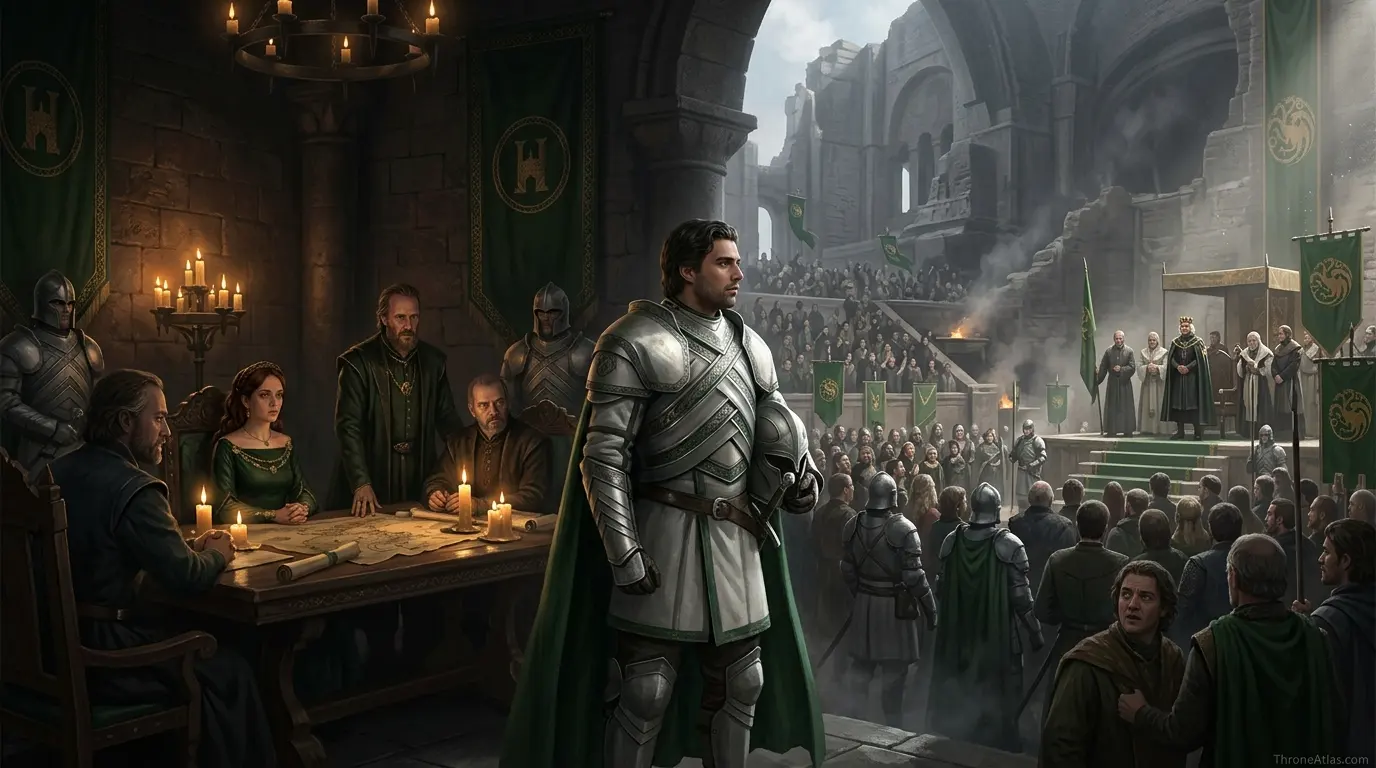
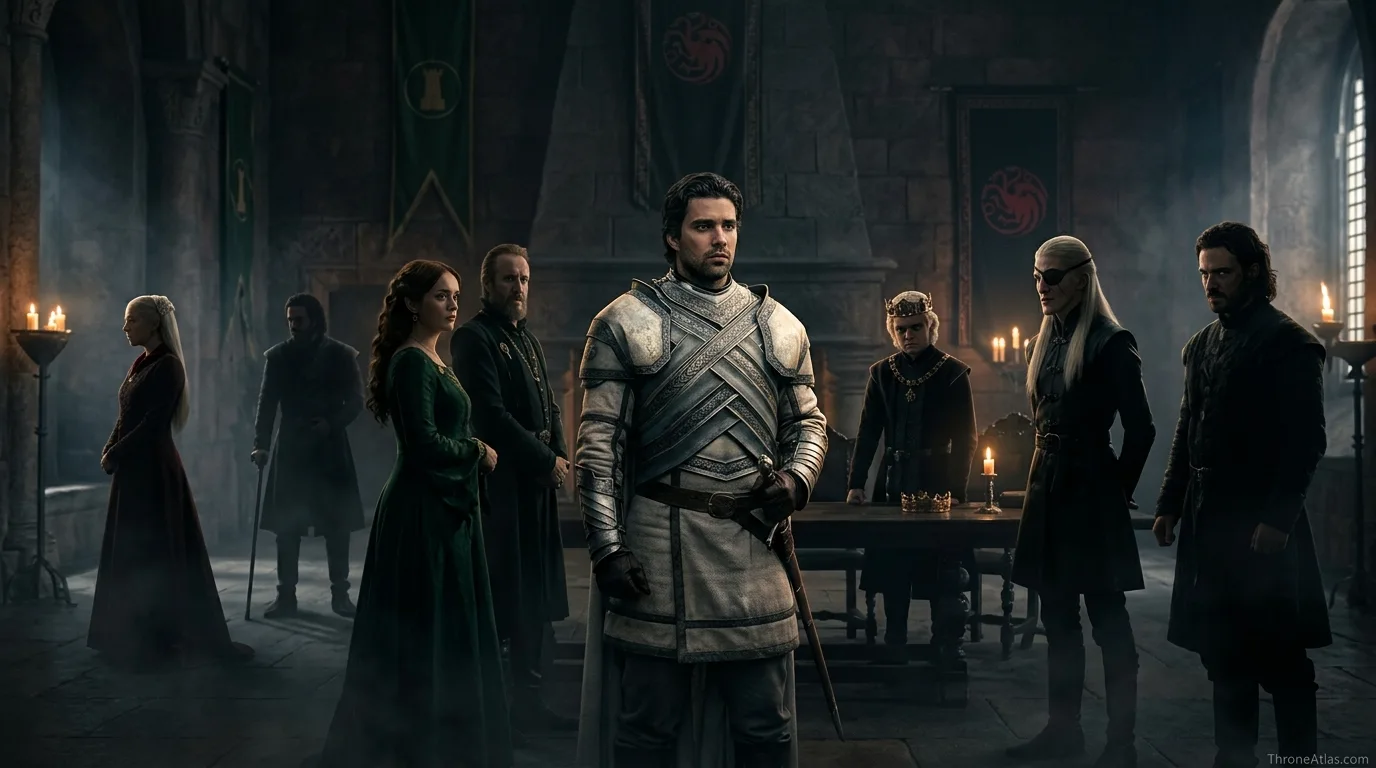
- Green Council: Kingmaker Turn — The council crisis turns sworn service into factional action.
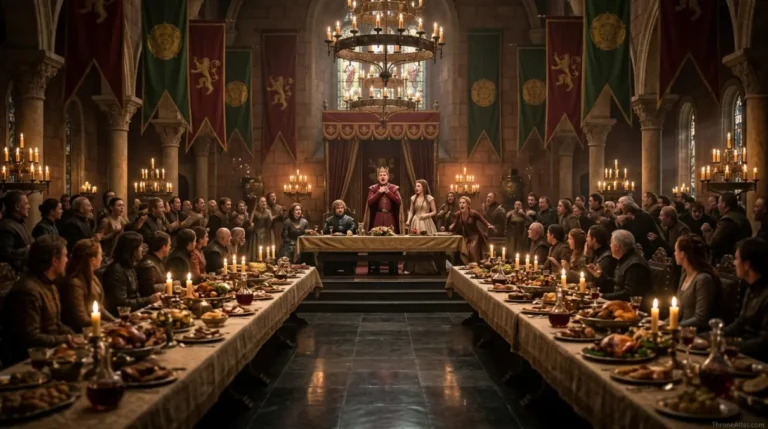
- Dragonpit: Coronation Force — Aegon’s public crowning shows Criston’s role in converting decision into spectacle.
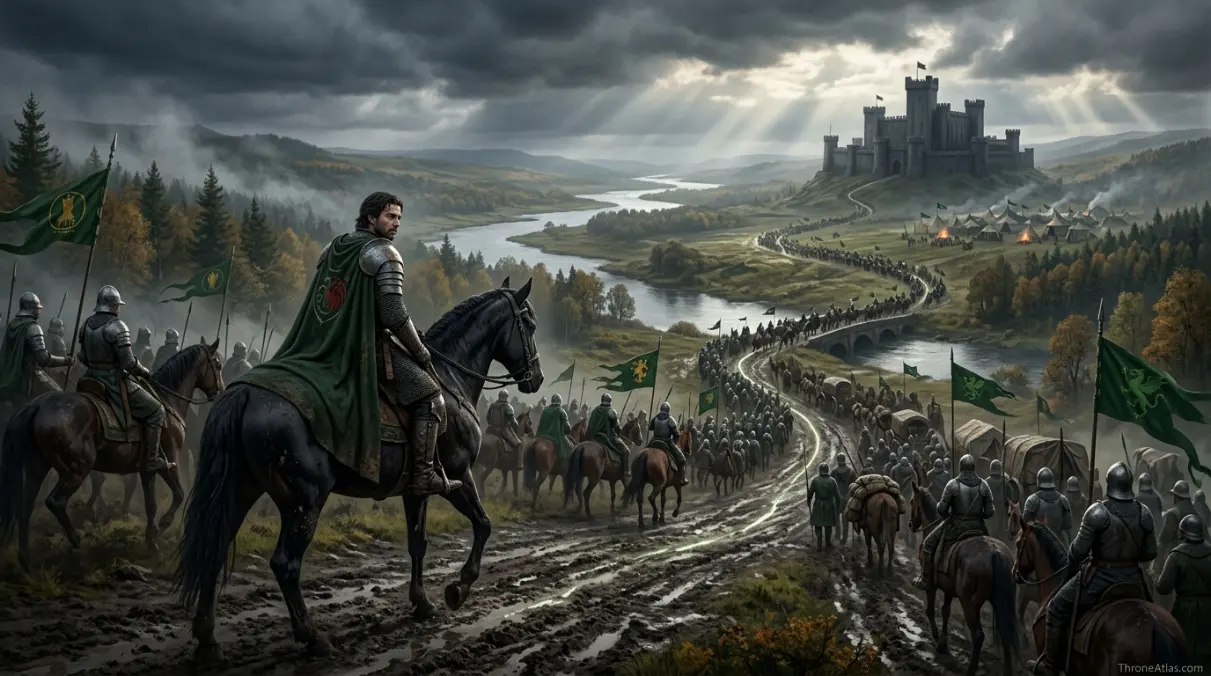
- Riverlands Roads: Commander’s Fate — The campaign route shows the cost of carrying court violence into the field.
These stops also show why this page belongs beside the location and house maps instead of standing alone. A route page explains motion, but the nearby maps explain why the motion matters. The castle pages show local power. The battle pages show what the movement causes. The house pages show why certain doors open or close. Together, they turn the route into a readable atlas path.
Route Sequence and Turning Points
The sequence below breaks the route into map stages. A stage may be a physical journey, a political rise, a loss of protection, a public victory, a hidden maneuver, or a retreat into a new alliance. Reading the sequence this way prevents the page from becoming a simple biography. It keeps geography at the center.
| Stage | Route Event | Map Meaning |
|---|---|---|
| 1 | Criston Cole begins at Dornish Marches, where the first map identity is formed and the later route gains its emotional starting point. | The first stop gives the route its origin and emotional frame. |
| 2 | The path changes at Red Keep, where family, title, oath, fear, or ambition becomes tied to physical geography. | The second stop begins the public or political version of the path. |
| 3 | Green Council widens the route into a political problem because the character can no longer be read only through origin. | The middle stop makes the route larger than private travel. |
| 4 | Dragonpit becomes the central pressure point where allies, enemies, and public meaning start to change. | The fourth stop creates the strongest map pressure. |
| 5 | Riverlands Roads gives the route its clearest consequence and connects it to nearby atlas pages. | The final major stop becomes the consequence point. |
| 6 | The aftermath keeps the route active through memory, inheritance, rivalry, or later conflicts that revisit the same places. | The route remains useful because connected places keep shaping later pages. |
Notice how the route changes whenever Criston Cole enters a new power environment. A northern castle, a royal capital, a free city, a river crossing, a war camp, a citadel, a harbor, or a sacred site all create different rules. Characters who survive the game do not only survive swords; they survive rooms, roads, courts, ships, and the political meaning attached to each place.
Power Network, Allies, and Rivals
A character map should identify the people around the route, because movement in Westeros rarely happens alone. Companions, patrons, informers, captors, rivals, sworn shields, advisors, priests, bankers, and family members all change the shape of the path. For this route, the strongest network figures are connected to access, trust, leverage, and regional pressure.
Alicent Hightower
Gives Criston a new loyalty frame after his break with Rhaenyra.
Rhaenyra Targaryen
Defines the early emotional and political fracture in his route.
Aegon II Targaryen
Receives the crown through a Green structure Criston helps enforce.
Aemond Targaryen
Links Criston to field command and the harsher military phase of the Dance.
Harwin Strong
Represents the rival court presence that intensifies resentment and factional meaning.
Otto Hightower
Embeds Criston’s loyalty inside the broader Green project.
The network also explains why the same location can mean different things at different times. King’s Landing can be a court, a prison, a stage, or a trap. Dragonstone can be a refuge, a claim, or a launch point. The Wall can be exile, duty, prophecy, or survival. A good route map shows those changing meanings without flattening them into simple travel pins.
Houses, Claims, and Regional Stakes
The houses most connected to this page are Kingsguard, House Hightower, House Targaryen, House Strong, Riverlands Houses, Stormlands Marchers. Their presence matters because noble houses are territorial engines. They control castles, roads, armies, titles, marriages, food, ships, wards, prisoners, and the social meaning of loyalty. When Criston Cole moves near one of these houses, the map becomes political.
Kingsguard
Kingsguard shapes this page because its territory, claim, patronage, marriage tie, or rivalry changes how Criston Cole moves through the map.
House Hightower
House Hightower shapes this page because its territory, claim, patronage, marriage tie, or rivalry changes how Criston Cole moves through the map.
House Targaryen
House Targaryen shapes this page because its territory, claim, patronage, marriage tie, or rivalry changes how Criston Cole moves through the map.
House Strong
House Strong shapes this page because its territory, claim, patronage, marriage tie, or rivalry changes how Criston Cole moves through the map.
Riverlands Houses
Riverlands Houses shapes this page because its territory, claim, patronage, marriage tie, or rivalry changes how Criston Cole moves through the map.
Stormlands Marchers
Stormlands Marchers shapes this page because its territory, claim, patronage, marriage tie, or rivalry changes how Criston Cole moves through the map.
The house network around Criston Cole shows how territory, birth, marriage, office, sworn service, rivalry, and memory shape the route. Kingsguard provides one key anchor, while House Hightower and House Targaryen explain why the character cannot be separated from regional power. The remaining houses and factions add the pressure that makes the route more than a line between famous scenes.
Major Turning Points on the Map
The turning points in this route are not only dramatic scenes. They are changes in access. A gate opens, a title is granted, a ruler dies, a secret becomes dangerous, a ship leaves port, a battle redirects loyalty, or a powerful person loses the protection of place. That is why maps are so useful for character pages: they show when the world around the character changes shape.
The turning points happen when Criston Cole gains or loses access: a gate opens, a court changes, a title becomes dangerous, a family secret matters, a ship leaves harbor, a dragon changes the balance, or a battlefield turns private choices into public memory. That is why this route should be read through consequence rather than mileage.
For readers building a mental map, the important move is to connect each turning point to a location. Once the event is tied to a place, the wider network becomes easier to follow. The route can then be compared with nearby battle maps, house maps, and castle pages.
Book and Show Map Notes
The book and show traditions may emphasize different moments, but the stable atlas anchors remain Dornish Marches, Red Keep, Green Council, Dragonpit. A clear ThroneAtlas map keeps those anchors visible while explaining when the meaning of a place changes between versions or between historical retellings.
The atlas approach keeps those differences clear by focusing on stable location logic: which places are essential to the route, which places are emphasized differently, and which movements change the reader’s understanding of power. That method lets book readers and show viewers share the same map without pretending every version uses the same pacing.
Common Map Mistakes
Common mistakes usually happen when a reader remembers a famous quote, a single scene, or a final title and forgets the route that made it possible. The points below help keep the map accurate when adding image captions, building route diagrams, or linking this page to nearby atlas entries.
- Treating Criston Cole as if one famous location explains the whole route instead of following the pressure between stops.
- Remembering a final title, duel, death, or alliance while missing the castle, island, port, court, or road that made it possible.
- Linking only to character pages and ignoring the house maps, battle maps, and location guides that complete the route.
A reliable route map should make these mistakes harder to repeat. It should show beginning, pressure, turning point, and consequence in one readable path. That is the difference between a decorative map and a useful ThroneAtlas route guide.
Cartographer Reading Notes
The best way to read this page is to separate movement into three layers. The first layer is physical geography: roads, seas, castles, gates, districts, rivers, islands, camps, and borders. The second layer is political geography: who controls those places and what the character can or cannot do there. The third layer is memory: how later characters remember that movement and use it to judge loyalty, guilt, claim, wisdom, or betrayal.
For Criston Cole, all three layers matter. The physical route explains the visible journey. The political route explains which doors open or close. The memory route explains why the character remains important after leaving a place. That is why this guide includes both route sequence and network analysis.
When final page images are selected, the best visual set should include one wide route map, one close-up of the most important castle or city, one symbolic image for the character’s power shift, and one related-location image that sends readers deeper into the atlas. This gives the page visual clarity without repeating the same scene.
The final test is simple: after reading this page, a visitor should be able to explain where Criston Cole begins, which location changes the route, which houses shape the choices, and which page to open next. If those four answers are clear, the map is doing real atlas work.
Location Deepening: How to Read Each Stop
A high-value route page should never treat a stop as a dot with a label. A stop has at least four layers: the visible place, the authority that controls it, the emotional pressure attached to it, and the consequence that leaves with the character. This is especially important for Criston Cole, because the route is shaped by changing access. The same road can feel like escape in one chapter and duty in another. The same castle can be a sanctuary, a prison, a court, or a battlefield depending on who controls the gate.
The first layer is the visible place. This includes the castle, road, harbor, district, island, camp, field, or institution a reader can identify on a map. The second layer is authority: who has guards, ravens, ships, coin, oaths, food, or legal command in that place. The third layer is emotional pressure, because characters do not arrive as empty travelers. They bring fear, debt, ambition, love, grief, shame, faith, or loyalty. The fourth layer is consequence, which is the reason the route continues after the scene ends.
For Criston Cole Journey Map, the most useful reading is to follow those four layers in order. Begin with the physical stop. Ask who controls it. Ask what Criston Cole needs there. Then ask what changes after departure. If nothing changes, the stop is decorative. If a title, secret, alliance, grief, rescue, betrayal, or public image leaves with the character, the stop belongs on the main route.
This method also helps separate major route anchors from minor travel references. A map can include many places, but the article should prioritize locations that change the route. That keeps the page focused and prevents the reader from getting lost in every possible movement. The aim is not to list every road; the aim is to show the places that explain the character’s power.
Best Reading Path After This Page
After finishing this route, the strongest next step is to open one location page, one house page, one battle or event page, and one related character route. That four-page path gives the reader a complete atlas loop. The location page explains ground. The house page explains authority. The battle or event page explains conflict. The related route explains how another character experiences the same map from a different angle.
For Criston Cole, the route is especially useful when compared with the people listed in the power network section. Allies and rivals often pass through the same regions but read them differently. One person may see King’s Landing as opportunity while another sees danger. One person may see the Wall as exile while another sees duty. Comparing those readings makes the wider ThroneAtlas structure stronger because it turns separate pages into a shared geography.
The page also works as a bridge for readers who arrive from search, social posts, Pinterest images, or a direct map query. A visitor may only want to know where the route goes, but the guide should gently show why the route matters. That is why the quick answer, fast facts, route board, image captions, network cards, and related links all point toward the same goal: clearer map understanding.
When the page is published with final artwork, image captions should stay specific. A useful caption names the route, the place, and the reason the image matters. A weak caption only repeats the title. For this page, the best image set should help readers understand sequence: beginning, pressure, turning point, consequence, and next route.
That final image strategy matters because ThroneAtlas is a map-first site. Readers come for place clarity, not just lore retelling. The content should therefore reward scanning, support deep reading, and make every internal link feel like a sensible next step in the atlas.
Follow the Wider Character Map
Use these related maps to move from this route into nearby locations, houses, battles, and lore paths.
Criston Cole Journey Map Questions
Clear answers to common reader questions about the character route, key locations, and connected houses.
The Criston Cole journey map follows Criston Cole through Dornish Marches, Red Keep, Dragonpit, Crownlands roads, Riverlands, showing the places, alliances, reversals, and power centers that define the route.
Criston Cole’s map matters because he connects intimate court space to armed force. His route shows how a sworn shield can become a factional commander and how a palace conflict can travel into open war.
The most important stops are Dornish Marches, Red Keep, Green Council, Dragonpit, Riverlands Roads. Each stop changes the route from travel into political meaning.
The strongest house links are Kingsguard, House Hightower, House Targaryen, House Strong, Riverlands Houses, Stormlands Marchers. These houses explain why the route affects more than one region.
Different versions may emphasize different scenes, but the core route anchors and political geography remain clear.
Treating Criston Cole as if one famous location explains the whole route instead of following the pressure between stops.
Explore the Full Westeros Route Atlas
Place this character route beside the main map hub, related locations, house pages, and battle maps to follow how movement turns into power across the realm.
ThroneAtlas is an independent fan-made atlas resource. It is not affiliated with HBO, Warner Bros., or George R. R. Martin. All names and references are used for commentary, research, and educational fan mapping.