House of the Dragon Season 1 MapKing’s Landing, Dragonstone, Driftmark & Storm’s End
HOTD season map • ThroneAtlas map guide
A House of the Dragon Season 1 atlas tracking the Viserys succession map, Rhaenyra’s Dragonstone claim, Driftmark alliances, Stepstones pressure, and Storm’s End trigger. This guide follows House of the Dragon Season 1 Map through its locations, sequence, power connections, common map mistakes, and related atlas pages.
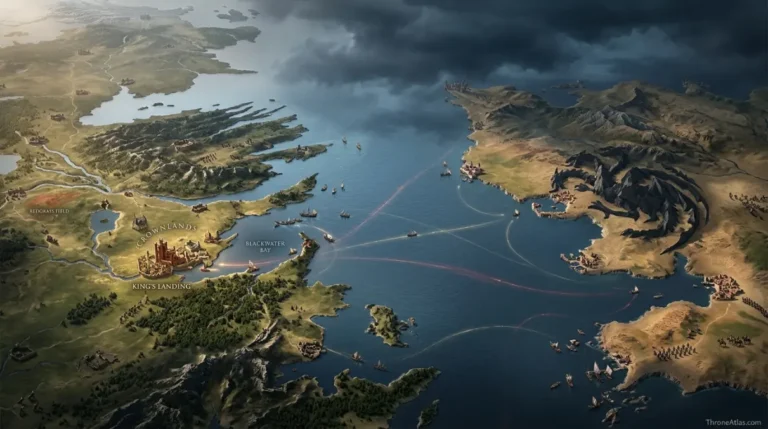
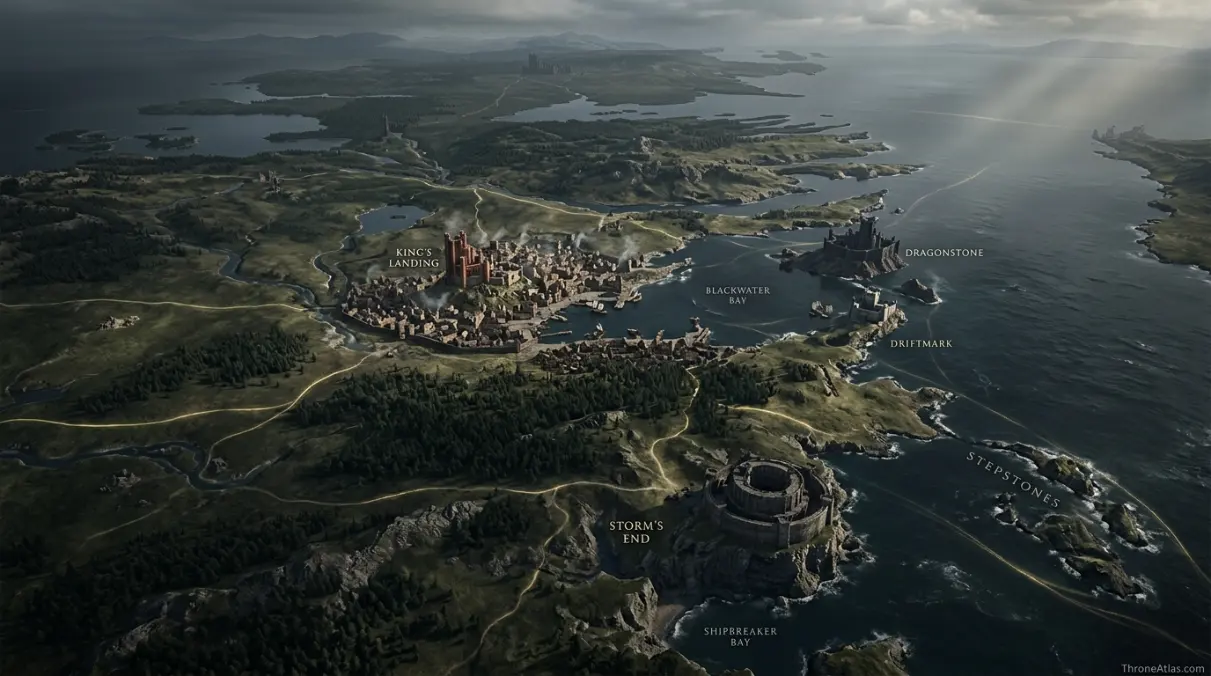
The House of the Dragon Season 1 Map is a succession map before it becomes a war map. King’s Landing controls ceremony, council, inheritance, and public legitimacy. Dragonstone holds Rhaenyra’s claim and the older Targaryen island identity. Driftmark carries Velaryon sea power, marriage politics, and the next generation of riders. The Stepstones show Daemon and Corlys pushing war beyond court walls. Storm’s End closes the season by turning rivalry into blood. Season 1 matters because it shows how a family conflict becomes geographic: each castle chooses, waits, watches, or burns.
Page Index
House of the Dragon Season 1 Map Key Details
A quick reference for the regions, central locations, and strongest linked pages.
House of the Dragon Season 1 Map: What This Map Explains
The House of the Dragon Season 1 Map is built for readers who want more than a list of names. It explains how locations connect to consequence. A season, hub, timeline, or rider map becomes useful when the reader can see why one place leads to another and why certain castles, roads, harbors, rivers, council rooms, and battlefields keep returning to the story.
The House of the Dragon Season 1 Map is a succession map before it becomes a war map. King’s Landing controls ceremony, council, inheritance, and public legitimacy. Dragonstone holds Rhaenyra’s claim and the older Targaryen island identity. Driftmark carries Velaryon sea power, marriage politics, and the next generation of riders. The Stepstones show Daemon and Corlys pushing war beyond court walls. Storm’s End closes the season by turning rivalry into blood. Season 1 matters because it shows how a family conflict becomes geographic: each castle chooses, waits, watches, or burns.
House of the Dragon Season 1 uses fewer continents than Game of Thrones, but every location is politically dense. This scope matters because the world of Westeros and Essos is not organized like a modern road atlas. Power moves through castles, old oaths, sea lanes, bloodlines, dragon access, marriages, hostage routes, religious institutions, and remembered wars. A reader who understands those layers will understand why the same location can change meaning from one season or era to the next.
Read Season 1 as a map of inheritance. Every place asks who has the right to stand there, speak there, inherit there, marry there, or command a dragon from there.

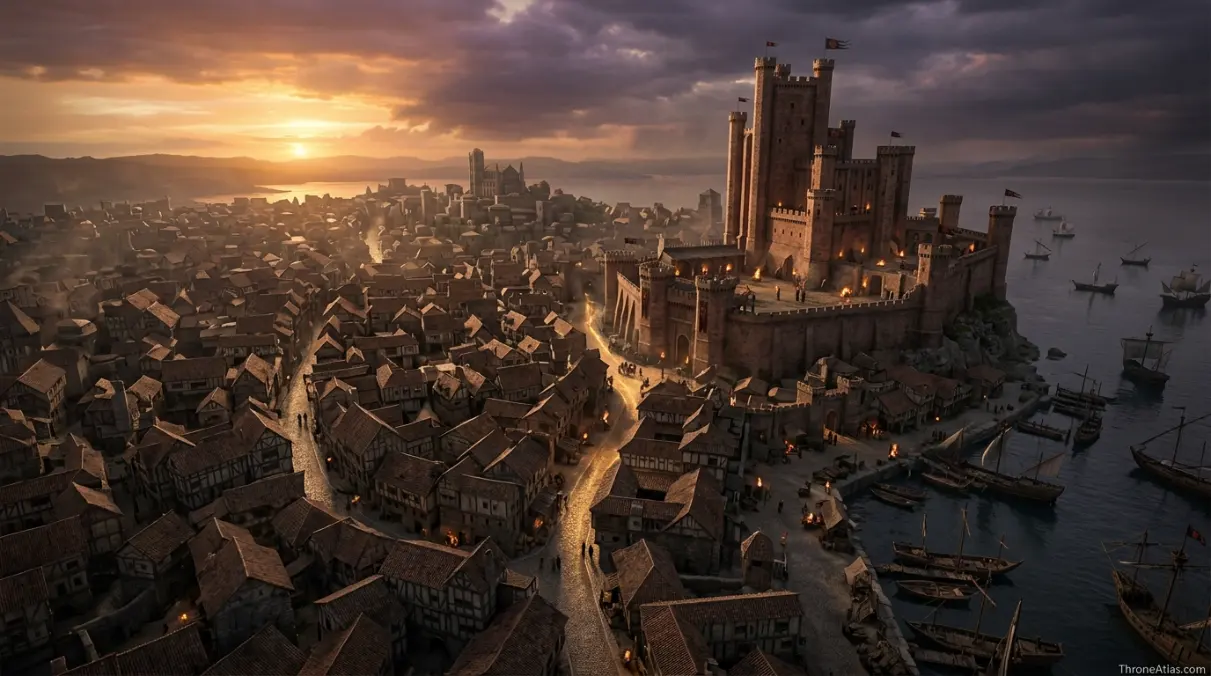
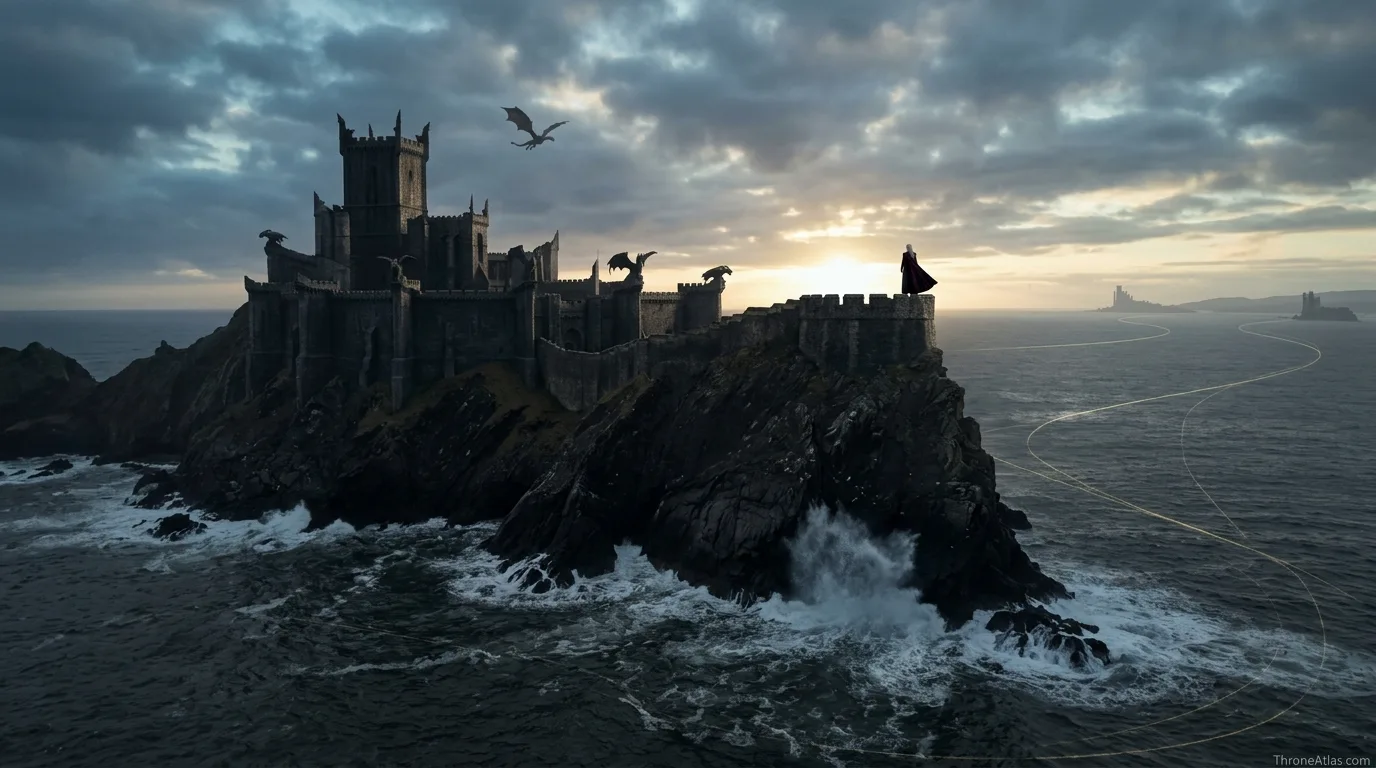
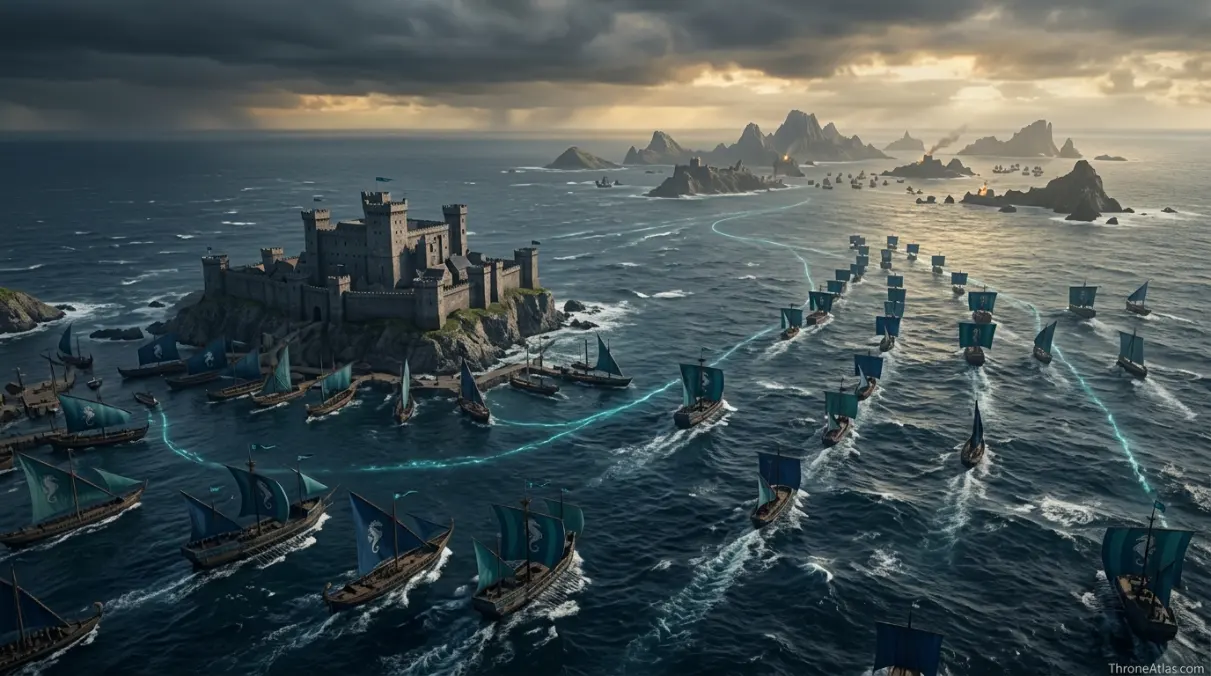
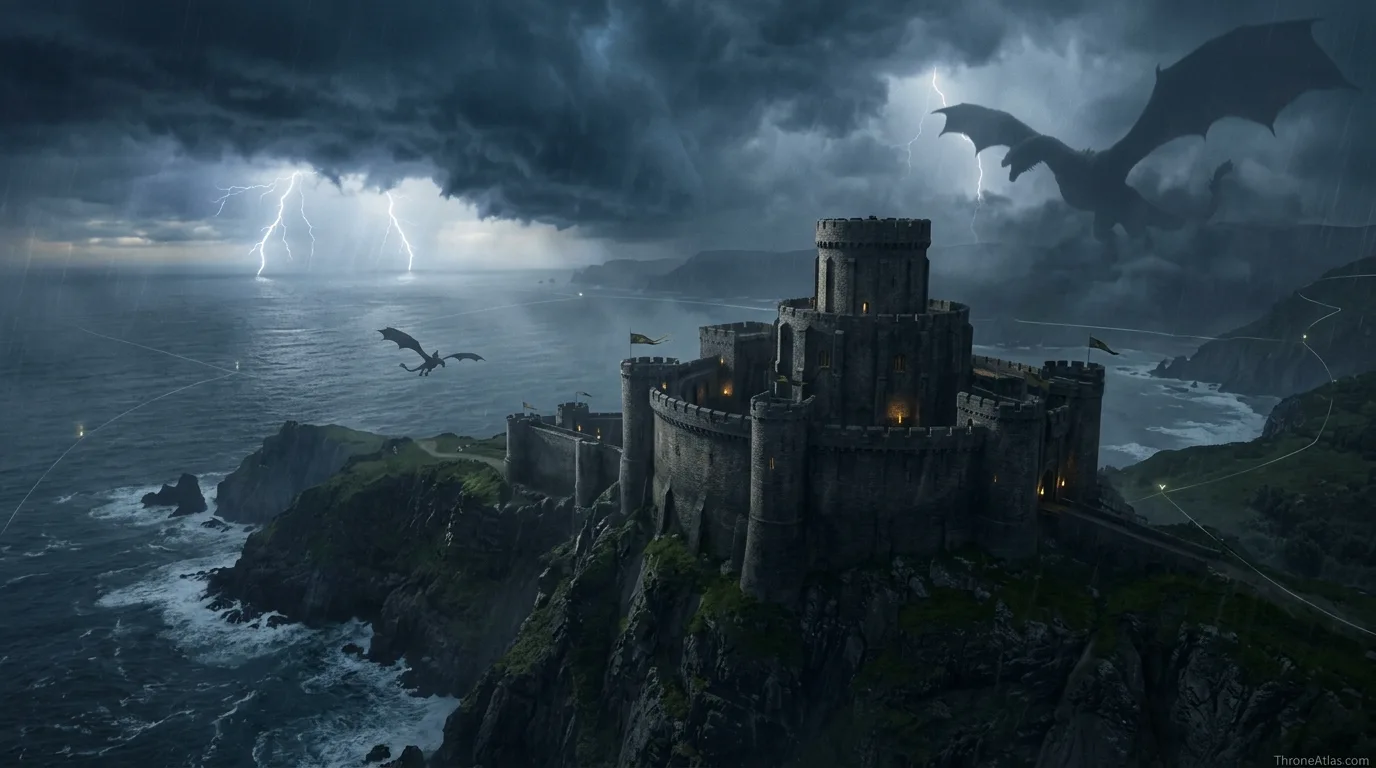
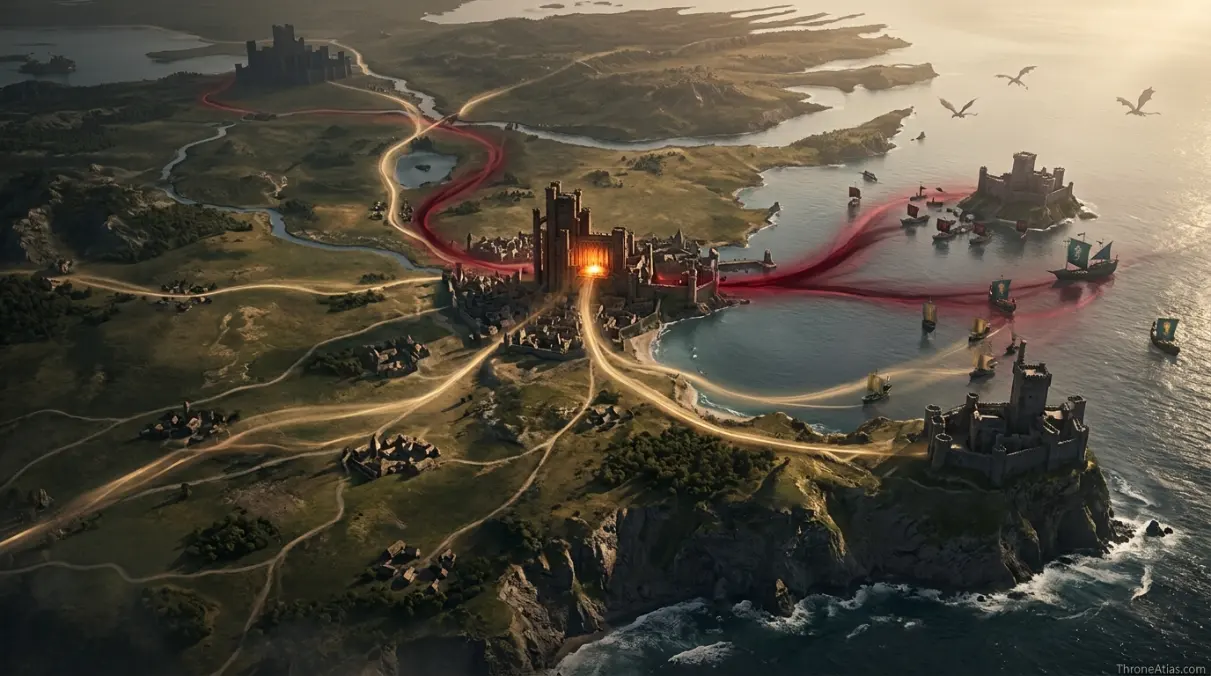
Visual Map Guide
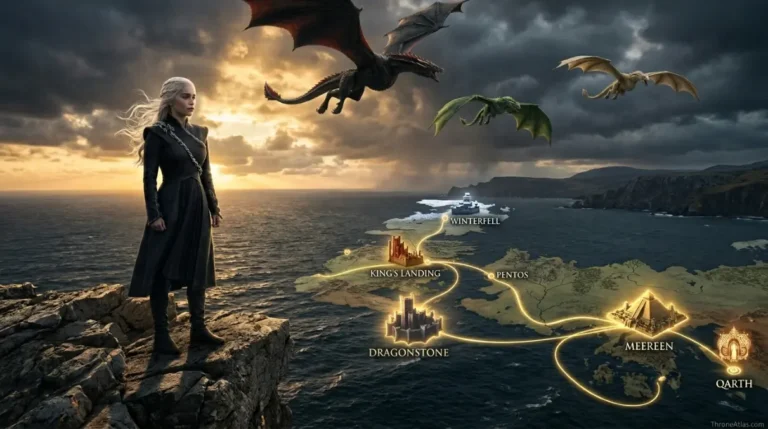
The visual guide below reduces the page to its clearest map anchors. It does not replace the complete Westeros map; it gives readers a fast route board so the order of locations is easier to follow. Begin on the left, follow the route line, and notice how the meaning of the map changes with each stop.
For House of the Dragon Season 1 Map, the key reading method is to separate location from consequence. A castle may appear on the map for only one event, but if that event changes a claim, alliance, battle, or future route, the castle belongs in the main sequence. A city may return many times, but each return should have a different reason. This is how the page avoids becoming a flat list.
Location Sequence and Map Logic
The location sequence is the spine of the page. Each stop below has a region, a map function, and a reason it matters. This makes the page useful for readers who are trying to follow the story visually, for editors building internal links, and for fans comparing season routes with house territories and battle locations.
| Location | Region | Map Function | Why It Matters |
|---|---|---|---|
| King’s Landing | Crownlands | Succession court | The Red Keep turns family tension into council politics and public legitimacy. |
| Dragonstone | Crownlands island | Rhaenyra claim seat | The island becomes the emotional and legal center of the Black claim. |
| Driftmark | Blackwater Bay island | Velaryon alliance seat | Velaryon marriages, funerals, claims, and dragon access shape the succession network. |
| Stepstones | Narrow Sea | Daemon and Corlys war zone | The sea lanes prove that power exists beyond court ceremony. |
| Harrenhal memory | Riverlands | Tournament and prophecy shadow | The great council and earlier choices haunt the succession map. |
| Storm’s End | Stormlands | War trigger | The final envoy route turns political rivalry into dragon death. |
Read the sequence as a chain of pressure. The first location establishes the map frame. The middle locations widen the conflict. The final locations carry the consequence into another page. That chain is what turns the atlas into a connected reading system rather than a collection of isolated articles.
- King’s Landing: The Red Keep turns family tension into council politics and public legitimacy. This location also connects to Crownlands and works as a succession court inside the page.
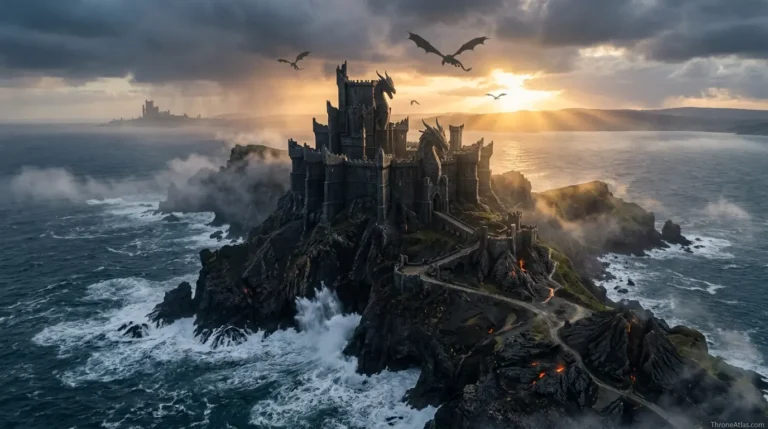
- Dragonstone: The island becomes the emotional and legal center of the Black claim. This location also connects to Crownlands island and works as a rhaenyra claim seat inside the page.
- Driftmark: Velaryon marriages, funerals, claims, and dragon access shape the succession network. This location also connects to Blackwater Bay island and works as a velaryon alliance seat inside the page.
- Stepstones: The sea lanes prove that power exists beyond court ceremony. This location also connects to Narrow Sea and works as a daemon and corlys war zone inside the page.
- Harrenhal memory: The great council and earlier choices haunt the succession map. This location also connects to Riverlands and works as a tournament and prophecy shadow inside the page.
- Storm’s End: The final envoy route turns political rivalry into dragon death. This location also connects to Stormlands and works as a war trigger inside the page.
Timeline and Chronology Notes
Chronology matters because maps change over time. A place that begins as a refuge may become a command center. A court may become a prison. A road may become a military corridor. A bay may become a blockade. A castle may become symbolic long after the event has ended. The table below keeps the major moments in sequence.
| Moment | Timeframe | Map Anchor | Reading Note |
|---|---|---|---|
| Great Council memory | Opening frame | Harrenhal | Succession precedent shapes everything that follows. |
| Rhaenyra named heir | Early season | Red Keep | The court map recognizes a new line of succession. |
| Stepstones war | Early to mid-season | Stepstones | Daemon and Corlys show military power outside the capital. |
| Driftmark funeral | Late season | Driftmark | Family grief, dragon claim, and injury deepen the division. |
| Viserys dies | Final arc | King’s Landing | The capital becomes the site of succession seizure. |
| Storm’s End tragedy | Finale | Storm’s End | Aemond and Luke’s encounter turns cold war into open war. |
The most reliable way to read chronology is to ask what each event leaves behind. Does it change a ruler, a border, a family relationship, a military route, a dragon balance, a public reputation, or a survival strategy? If it does, the event is not only a plot point. It is a map point.
Characters, Houses, and Power Connections
No major ThroneAtlas page stands alone. A season map needs character routes. A timeline map needs house pages. A dragon-rider map needs battle maps. A regional hub needs castles and roads. The connections below show how this page joins the wider atlas.
Rhaenyra Targaryen
Her route moves from named heir to island claimant.
Alicent Hightower
Her power is tied to the Red Keep, the council, and the Green court.
Daemon Targaryen
His map runs through Dragonstone, Stepstones, Driftmark, and war readiness.
Corlys Velaryon
Sea power makes Driftmark impossible to ignore.
Aemond Targaryen
The Vhagar claim and Storm’s End chase alter the whole war map.
Viserys I
His body, throne, and chambers hold the fragile peace together until they do not.
These connections also help readers choose the next page. One reader may follow a location, another may follow a battle, and another may follow a house claim. A good page supports all three paths without forcing the same route on everyone. That is why internal links appear naturally near the section where they help the reader most.
Book and Show Map Notes
House of the Dragon Season 1 uses deliberate location concentration. The show keeps returning to the same courts and islands so viewers can feel how a small number of places divide the realm.
When versions differ, the safest atlas method is to preserve the shared anchors first. The page should make clear which places are essential, which places are emphasized differently, and which routes are compressed or expanded. This lets a viewer and a book reader use the same page without losing the map logic.
The goal is not to force every version into one identical path. The goal is to explain why a location matters across versions and how that location connects to nearby pages. If a scene is moved, shortened, expanded, or implied, the map should still help the reader understand the power structure behind it.
Common Map Mistakes
Most map mistakes happen when readers remember a famous scene but forget the geography around it. These are the mistakes to avoid when reading, illustrating, or linking this page.
- Treating Season 1 as only palace drama and missing the sea-power triangle of Dragonstone, Driftmark, and Stepstones.
- Forgetting Storm’s End as the place where envoy politics becomes dragon war.
- Ignoring Harrenhal’s opening memory when reading the succession rules.
The easiest correction is to keep every event attached to three details: the place, the controlling power, and the consequence. Once those three details are clear, the page becomes much harder to misread.
Best Reading Path After This Page
After this page, the best route is to open one major location map, one character or house page, one battle or event map, and one broader hub. That pattern gives readers a complete atlas loop. The location page explains where the action sits. The character or house page explains why a person or family matters. The battle or event page explains what changed. The hub places everything back into a larger structure.
For House of the Dragon Season 1 Map, begin with King’s Landing Map, then continue to Red Keep Map and Dragonstone Map. This creates a strong reading path because it moves from core geography into adjacent consequence.
The page is also useful for image planning. The best images should show the broad map, the central location, the route sequence, one political detail, and one related atlas direction. A weak image only repeats the title. A strong image teaches the reader where to look next.
ThroneAtlas works best when each page is treated as a doorway. This page opens into nearby routes, battles, houses, and lore pages so the reader can keep moving through the map without losing the thread.
Deep Atlas Notes for Careful Readers
A careful map reading should look at scale, access, and consequence. Scale asks whether the page is operating at the level of a room, a castle, a city, a road, a region, a sea lane, or an entire continent. Access asks who can enter that place, who controls the gate, who has ships, who sends ravens, who commands riders, and who can survive the journey. Consequence asks what the map looks like after the scene is over. If a location changes a claim, a loyalty, a border, a fear, or a future route, it belongs in the core reading.
For House of the Dragon Season 1 Map, scale changes constantly. Some moments are intimate, such as a chamber, council, trial, godswood, throne room, or family conversation. Other moments are regional, such as an army road, a coastline, a river crossing, a northern border, or a dragon flight path. The strongest pages keep both scales visible. They let the reader understand the close human decision while still seeing the wider geography that makes the decision dangerous.
Access is just as important as distance. In Westeros, two places may look close on a map but feel far apart because a mountain pass, hostile house, royal order, fleet blockade, winter road, or broken bridge blocks the route. A page that ignores access can make movement look too easy. A page that explains access shows why a character may need a marriage, hostage, ship, dragon, army, raven, disguise, coin, or oath before the next location becomes possible.
Consequence is the final test. A decorative location appears and disappears. A true atlas location changes the next page. It may create a battle, reveal a secret, end a dynasty, restore a house, move a fleet, split a family, expose a threat, or redirect a route. That is why the best ThroneAtlas pages connect location reading with timeline reading. They do not only ask where something happened; they ask what the map became afterward.
This deeper method also helps with internal navigation. A reader who finishes the page can choose the next map based on the question still open in their mind. If the question is about place, open a location guide. If the question is about power, open a house map. If the question is about movement, open a route page. If the question is about consequence, open a battle, war, or timeline page. That is how a single page becomes part of a larger atlas journey.
The final check is clarity. A reader should be able to leave the page knowing the main locations, why those locations matter, what order to read them in, and which connected page should come next. If the page answers those questions without forcing the reader to remember every minor detail, the map has done its job. It becomes a guide through geography, not just a decoration around lore.
That is why the page keeps returning to routes, borders, ships, roads, gates, courts, and memory. Those details make the world feel usable. They let a reader compare this map with nearby pages and immediately understand what has changed.
For long atlas sessions, this consistency matters. The same reading habits can be reused from season maps to house maps, from battle maps to dragon routes, and from timeline pages to individual location guides.
A reader should also know what not to overvalue. Exact mileage is less useful than control, access, and consequence. The story rarely turns because two places are a neat number of leagues apart. It turns because someone can reach a gate, block a harbor, cross a river, hold a pass, command a raven, reveal a secret, or arrive with a dragon before rivals are ready. That is the map logic this guide keeps in view.
House of the Dragon Season 1 Map Questions
Clear answers to common reader questions about this map and its connected atlas pages.
The House of the Dragon Season 1 Map shows House of the Dragon Season 1 uses fewer continents than Game of Thrones, but every location is politically dense.. It connects the main locations, sequence, political pressure, and related ThroneAtlas maps in one readable guide.
The most important map anchors are King’s Landing, Dragonstone, Driftmark, Stepstones. These places explain the route, conflict, and wider political meaning of the page.
The House of the Dragon Season 1 Map is a succession map before it becomes a war map. King’s Landing controls ceremony, council, inheritance, and public legitimacy. Dragonstone holds Rhaenyra’s claim and the older Targaryen island identity. Driftmark carries Velaryon sea power, marriage politics, and the next generation of riders. The Stepstones show Daemon and Corlys pushing war beyond court walls. Storm’s End closes the season by turning rivalry into blood. Season 1 matters because it shows how a family conflict becomes geographic: each castle chooses, waits, watches, or burns.
Start with the quick answer and fast facts, then use the visual guide, location sequence, timeline table, and related links to follow the page across the wider atlas.
Yes. It links to pages such as King’s Landing Map, Red Keep Map, and Dragonstone Map so readers can continue into connected regions, houses, battles, and character routes.
Treating Season 1 as only palace drama and missing the sea-power triangle of Dragonstone, Driftmark, and Stepstones.
House of the Dragon Season 1 uses deliberate location concentration. The show keeps returning to the same courts and islands so viewers can feel how a small number of places divide the realm.
Explore House of the Dragon Maps
Follow the related maps to compare regions, routes, battles, houses, and timelines across the wider ThroneAtlas archive.
ThroneAtlas is an independent fan-made atlas resource. It is not affiliated with HBO, Warner Bros., or George R. R. Martin. Names and references are used for commentary, research, and educational fan mapping.