Water Gardens Map Dorne Palace Retreat, Martell Children, Myrcella & Peace Symbol
Palace Retreat · Martell Children · Myrcella · Sunspear · Peace Memory
Explore the Water Gardens map with a premium ThroneAtlas breakdown of geography, routes, landmarks, house power, character movement, and story meaning. This page is designed as a SERP-ready atlas guide for readers who want the fast answer first and the deeper map logic after.
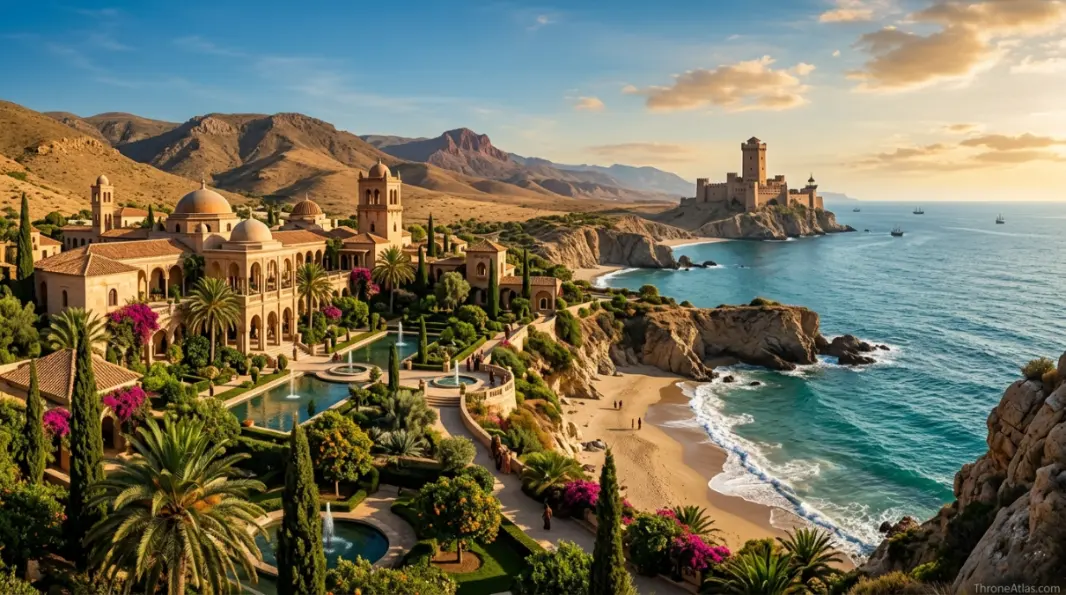
The Water Gardens map points to a Dornish palace retreat near Sunspear, remembered as a place for royal children, shade, pools, and political calm. In lore, the Water Gardens carry the memory of Martell-Targaryen peace through Princess Daenerys Targaryen, while in the show they are tied strongly to Myrcella Baratheon and the Dornish revenge plot.
Water Gardens Map at a Glance
Use these fast facts before diving into the full route breakdown and location analysis.
How to Read the Water Gardens Map
The Water Gardens are not important because of military strength. They matter because they interrupt Dorne’s harsher symbols. Sunspear is court. The desert is endurance. The Water Gardens are shade, water, children, and the possibility that politics might serve peace rather than revenge. A map of this place should therefore feel different from a battle map or castle diagram.

The Peace Symbol Behind the Location
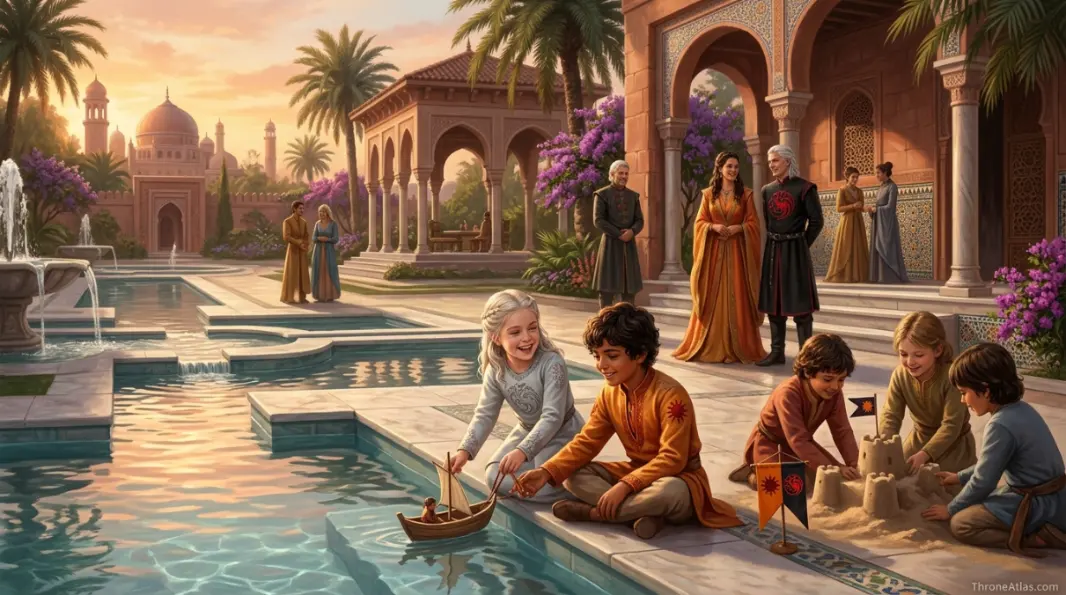
In the broader lore, the Water Gardens are connected to the memory of Princess Daenerys Targaryen and the attempt to bind Dorne and the Targaryens through marriage and shared childhood. The location becomes a symbolic answer to blood feud. It says that noble children should swim together before they learn the inherited grudges of their parents.
Myrcella and the Show’s Dornish Route
The show uses the Water Gardens as a stage for Myrcella’s time in Dorne and the political danger around her. That version compresses much of Dornish complexity, but the setting still works because the peaceful appearance clashes with hidden vengeance. The more beautiful the garden, the sharper the betrayal feels.

Why This Page Belongs in a Map Atlas
Many viewers remember castles and battlefields first, but peaceful locations shape the story too. The Water Gardens show what Dorne might be without endless retaliation. They also show why violence against guests, children, or betrothed heirs feels especially damaging in a place built to remember reconciliation.
Location Logic: Access, Authority and Memory
A normal wiki-style entry can tell you what Palace pools is, who rules the area, or which episode made the location memorable. A proper atlas page has to do more. It must explain why the place sits where it sits, what kind of movement the terrain allows, and how the setting changes the behavior of characters who enter it. That is the reason this page separates the Water Gardens map into landmarks, route stages, political pressure, and reader-useful search answers.
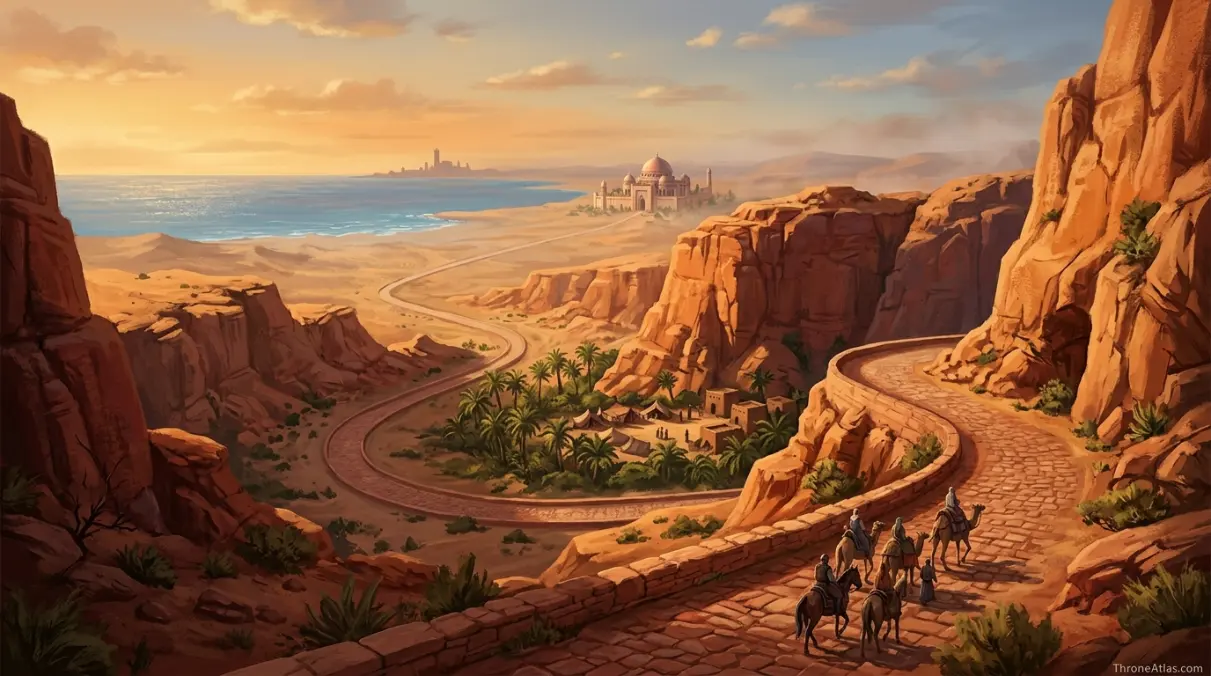
The first layer is access. If a character or army cannot easily reach a place, the location gains power even before any dialogue begins. On this page, the access story starts with Sunspear departure and continues through Garden road. Those points explain the difference between a location that can be visited casually and a location that must be earned, negotiated, crossed, or survived.
The second layer is authority. Every major place in the world of ice and fire has a public face: a throne room, a court, a gate, a harbor, a temple, a market, a tower, or a symbolic road. For the Water Gardens map, that authority becomes visible through landmarks such as Palace pools, Garden courts, Children’s spaces. These places tell the reader who controls the setting and what kind of control they prefer: military control, social control, financial control, religious control, or emotional control.
The third layer is memory. Locations survive because stories attach themselves to them. A reader may search for a map because they forgot where something happened, but they stay because the map reminds them why it mattered. That is why the content here does not treat Dorne as a blank backdrop. It treats the region as a living archive of decisions, routes, losses, bargains, and inherited identity.
Step-by-Step Reading Path for This Map
Start with Sunspear departure, because this is the first practical point in the route logic. It tells you how a traveler enters the setting and what kind of danger or permission defines the beginning of the journey. In a strong map page, the first point is rarely random. It sets the tone for the whole location.
Move next to Garden road. This is the place where the map begins to narrow or reveal power. Sometimes it is a gate; sometimes it is a harbor, road, court, or political threshold. The important thing is that the route no longer feels abstract. The reader can now see who is being filtered, tested, watched, welcomed, or trapped.
The middle of the map runs through Water courts and Royal children. These points usually hold the core story tension. They explain where characters make decisions, where rulers display authority, where hidden danger appears, or where the setting shifts from safe to unsafe. When you rewatch a scene, these middle points are the ones that make blocking, dialogue, and political pressure easier to understand.
Finally, end at Return to politics. The last point shows what the location changes. A good atlas route should not finish with the same emotional state it began with. Someone has gained leverage, lost safety, accepted identity, rejected a claim, survived a trial, or carried new knowledge toward the next map page.
Scale, Sequence and Comparison
The most important missing piece is often scale. A place can look small on a continent map and still control a huge amount of narrative meaning. Another missing piece is sequence. Readers do not only need a dot; they need the order of movement. The route from Sunspear departure to Return to politics gives that order and makes the location easier to remember.
The final missing piece is comparison. The Water Gardens map becomes clearer when compared with other ThroneAtlas pages. If another location rules by walls, this one may rule by distance. If another region is wealthy, this one may be dangerous because it is poor but mobile. If another city is open and public, this one may be powerful because it hides its true decisions behind doors, canals, courts, or cliffs.
Key Landmarks to Mark on the Water Gardens Map
The most useful version of a Water Gardens map does not overload the reader with every minor room, road, alley, or coastal bend. It highlights the locations that explain the story: Palace pools, Garden courts, Children’s spaces, Sunspear road, and the routes that connect them. These are the points that change who has leverage, who is trapped, who can escape, and who can turn distance into authority.
- Palace pools
- Garden courts
- Children’s spaces
- Sunspear road
- Dornish coast
- Martell retreat
- Myrcella route
When these points are read together, the page becomes more than a glossary. It becomes an atlas of pressure. A castle can protect a family, but it can also isolate them. A harbor can bring trade, but it can also bring invasion. A gate can defend a realm, but it can also decide who is allowed into the story at all.

How Movement Works on the Water Gardens Map
The route sequence below turns the location into a readable story path.
Why This Place Matters
Three ways this place shapes the story.
Political leverage
Dorne geography decides who can negotiate from safety, who must travel, and who can threaten the wider map.
Character pressure
The Water Gardens map is useful because it turns movement into emotion: exile, return, refuge, ambition, or entrapment.
Route clarity
Each route point makes the location readable as a sequence instead of a flat label.
| Reader Question | Best Answer on This Page |
|---|---|
| Where is it? | Dorne, connected through the route points listed above. |
| Why does it matter? | It changes power, movement, safety, identity, or political leverage in the story. |
| What should I remember? | The main landmarks are Palace pools, Garden courts, Children’s spaces, Sunspear road, Dornish coast. |
| What should I read next? | Continue into the linked region, house, and journey maps for the full atlas cluster. |
Water Gardens Map Questions
Quick answers to the most common questions.
The Water Gardens are in Dorne near Sunspear.
They symbolize peace, childhood, shade, and Martell-Targaryen memory rather than military strength.
Myrcella Baratheon is strongly associated with the Water Gardens in the show’s Dornish storyline.
They are better understood as a palace retreat and garden complex rather than a conventional fortress.
Primary Links
ThroneAtlas is an independent fan-made atlas and lore reference. It is not affiliated with HBO, Warner Bros., George R. R. Martin, or the official publishers. Images are used as atmospheric, non-official visual references with descriptive alt text for map-style educational context.