House Blackwood MapRaventree Hall, the old gods, and the Blackwood-Bracken fault line
The Riverlands · Raventree Hall · House Territory Guide
The House Blackwood map explains where House Blackwood sits, why Raventree Hall matters, and how nearby roads, castles, rivers, seas, overlords, and wars shape the house’s place in Westerosi history.
House Blackwood is associated with Raventree Hall in The Riverlands. A useful House Blackwood map should show the seat, the surrounding region, nearby routes, connected houses, and the political pressure created by old gods south of the Neck, ancient rivalry, riverland instability, and battlefield alignment.

Maester Aldric
Maester Aldric prepares ThroneAtlas map guides by reading the geography first: where a house sits, what it can reach, what threatens it, and which castles, roads, coasts, rivers, and oaths turn a name on a banner into a working political force. This page is written as an independent fan atlas entry for readers who want clear location logic, house context, and reliable connections to the wider Westeros map.
House Blackwood at a Glance
The key details below give readers a clean map-first summary before moving into history, routes, and connected story events.
Visual Map Guide
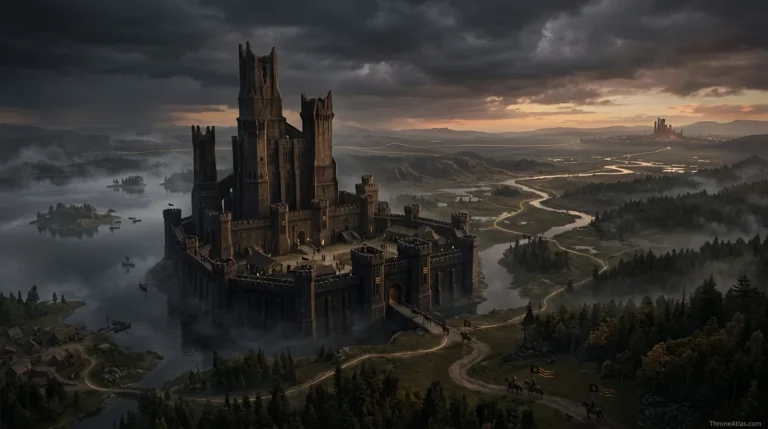
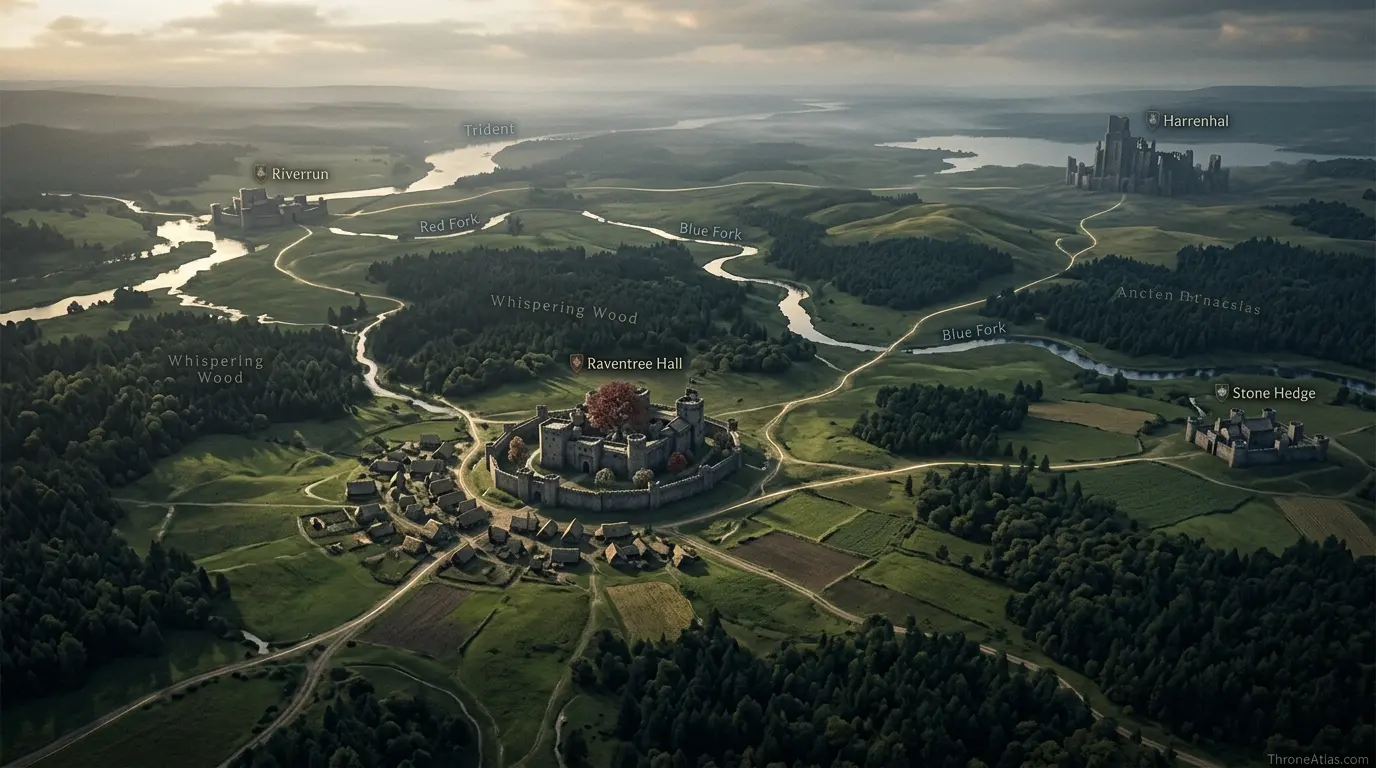
House Blackwood is one of the richest small-house map subjects because it combines religion, family rivalry, riverland politics, and repeated civil-war importance. Raventree Hall is not just a point on the map. It represents a cultural island of old-gods memory inside the politically exposed Riverlands.
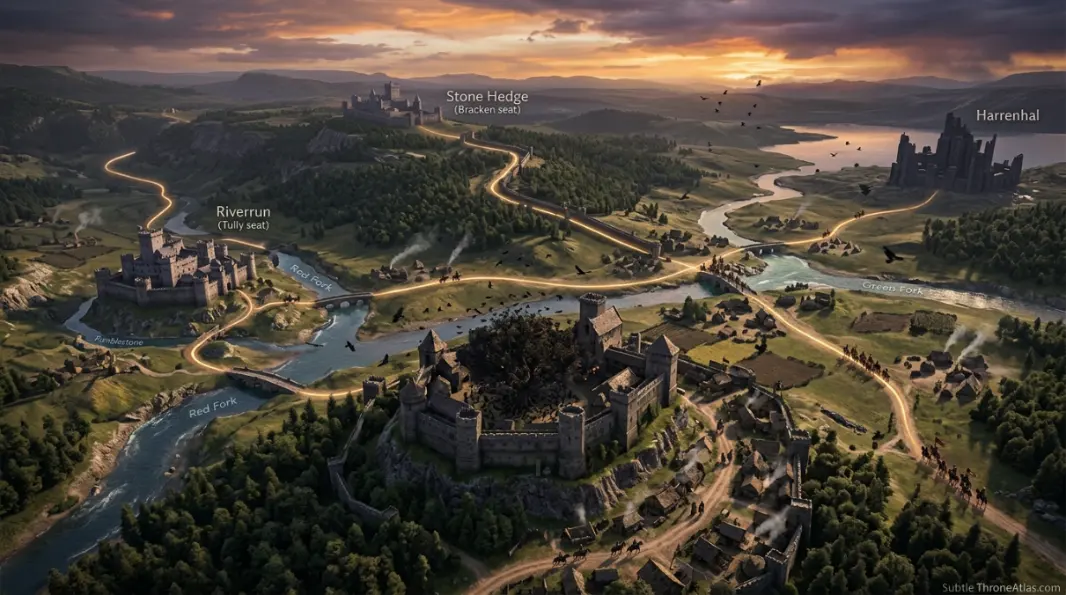
A House Blackwood map should center the tension between Raventree Hall and Stone Hedge. The distance between the two seats is less important than the story pressure between them: old wounds, shifting kings, and rival claims that turn a local feud into a regional marker.
A strong map page should not only answer “where is it?” It should also answer “what can this house reach?” and “what can reach this house?” For House Blackwood, those questions point toward Stone Hedge, Riverrun, the Trident, Harrenhal, and the central Riverlands road network. Every one of those connections changes the page from a flat location note into a useful atlas entry.
Location Logic: Why Raventree Hall Matters
The seat of House Blackwood, Raventree Hall, is best understood as Raventree Hall, marked by its ancient dead weirwood and black ravens. Its importance comes from the practical shape of the surrounding land and the alliances that must pass through it. When a house controls a point like this, it does more than hold walls. It controls messages, food, retreat paths, family marriages, oath networks, and the local memory of who once ruled.
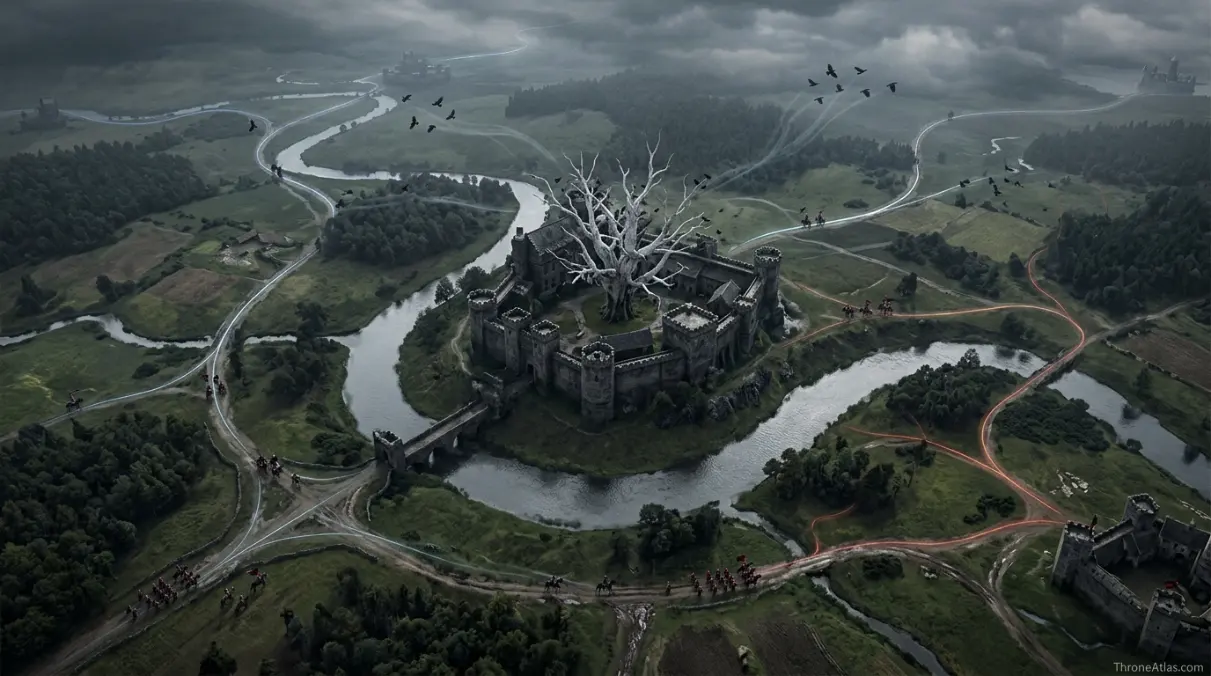
In map terms, Raventree Hall functions as the reader’s first pin. From that pin, the eye should move outward to the region, then to neighboring seats, then to roads, rivers, bays, islands, forests, or passes. This outward reading keeps the page useful for both casual viewers and serious lore readers because it turns geography into cause and effect.
Reading the House Through Distance
Distance is one of the most underrated parts of a house map. A castle that looks close on a simplified fan map may still be separated by mountains, forests, rivers, dangerous coasts, or hostile lordships. That is why the House Blackwood map should be read with terrain in mind rather than only with straight lines.
For House Blackwood, distance matters because the house sits within a chain of obligations. It must answer upward to regional powers, sideways to neighbors, and outward to larger conflicts. When a war begins, the house’s options are shaped by which roads remain open, which ports can be used, which allies are near enough to help, and which enemies can move quickly toward the seat.
History and Timeline
The history of House Blackwood is easiest to follow when each moment is tied to a map position. Instead of treating the house as a list of names, ThroneAtlas reads it as a place that repeatedly meets pressure from rulers, neighbors, wars, and old memory.
This timeline shows why the house cannot be reduced to a single castle marker. The map changes meaning when the same seat appears in different periods: peace, rebellion, civil war, occupation, court intrigue, or restoration. A house map becomes stronger when it shows those layers together.
Political Network and House Stakes
Regional Pressure
The Riverlands shapes House Blackwood more than any single ruler. Geography decides whether the house looks toward rivers, forests, ports, mountain roads, or royal courts.
House Identity
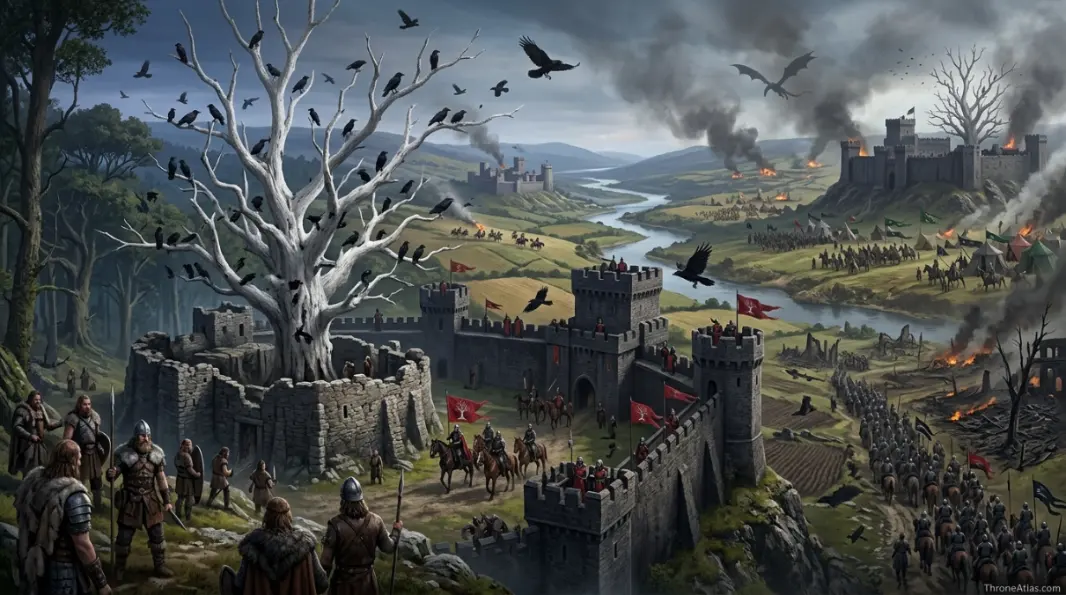
The sigil — a flock of black ravens on a scarlet field surrounding a dead weirwood — gives the page a visual anchor, but the deeper identity comes from old gods south of the Neck, ancient rivalry, riverland instability, and battlefield alignment and the way those themes appear on the map.
Route Value
The strongest routes to show are the practical ones: roads to overlords, paths toward battle sites, sea lanes or river movement, and the corridors that connect Raventree Hall to larger wars.
The Blackwoods often matter because they give the Riverlands a memory older than current rulers. They make the map feel layered: Andal houses, First Men traces, Tully overlordship, and Targaryen civil wars all meet in the same river-crossed zone.
The political stakes around House Blackwood become clearer when the page is linked to nearby atlas entries. A reader may arrive looking only for Raventree Hall, but the full story often requires moving to connected hubs: the regional map, the ruling house, nearby castles, major battles, and character journeys that pass through the same ground.
| Map Element | What to Show | Why It Matters |
|---|---|---|
| Primary seat | Raventree Hall | Anchor point for the page and the safest first map marker. |
| Regional lens | The Riverlands | Shows which overlord, border, or road system controls the house story. |
| Nearby network | Stone Hedge, Riverrun, the Trident, Harrenhal, and the central Riverlands road network | Prevents the page from feeling like an isolated castle entry. |
| Story function | old gods south of the Neck, ancient rivalry, riverland instability, and battlefield alignment | Explains why readers should care about the map beyond the name of the house. |
| Best internal path | House hub → region map → battle or character route | Creates a useful reading journey across ThroneAtlas. |
Territory Reading: What the House Actually Controls
A house map becomes much more useful when control is read as layers instead of a single colored border. House Blackwood controls a seat, but it also influences approaches, harvest zones, oath networks, marriage paths, and the smaller households that depend on its protection. The first layer is the visible stronghold: Raventree Hall. The second layer is the local land around it. The third layer is the route system that connects the seat to Stone Hedge, Riverrun, the Trident, Harrenhal, and the central Riverlands road network. The fourth layer is memory: old oaths, old rivalries, and the stories that make people accept or resist the house’s authority.
This layered reading is especially important for House Blackwood map because a flat map can make every noble house look equal. They are not equal. Some houses sit beside ports. Some guard passes. Some hold fertile fields. Some survive in forests or on islands. Some are dangerous because they sit near the capital. Others matter because their seat is close to a famous battlefield or because a marriage tie makes a local castle suddenly relevant to royal politics. House Blackwood should be read through the pressure created by old gods south of the Neck, ancient rivalry, riverland instability, and battlefield alignment.
The practical question is not only where Raventree Hall stands, but what happens when messengers, armies, ships, or claimants begin moving across the map. If a rider leaves the seat, which major road does he try to reach first? If an enemy marches toward the region, which nearby castle becomes the warning point? If a lord needs allies, which neighboring house receives the first raven? These questions turn the page into a working atlas guide rather than a simple name-and-sigil entry.
Military Value
Military value does not always mean a castle can defeat a royal host by itself. In many cases, value comes from delaying movement, warning an overlord, holding food, guarding a crossing, anchoring a coastline, or forcing an enemy to choose a slower route. A proper House Blackwood map should therefore mark Raventree Hall as a strategic node. The seat is the point where local strength becomes useful to a wider campaign.
For House Blackwood, the surrounding map shows why small houses can matter in large wars. Great houses need bannermen, supplies, scouts, ships, fortresses, and safe roads. A powerful claimant may own a crown, but he still needs regional houses to turn that claim into movement. That is why a house like House Blackwood deserves its own page: it helps explain the mechanics behind the larger wars already shown on ThroneAtlas.
Political Value
Political value is different from military value. It depends on reputation, marriage, inheritance, debts, hostages, old wounds, and the confidence other lords place in a house. A seat may be small but politically sensitive if it lies between rivals or if its lord has a claim, a grievance, or a useful blood connection. The House Blackwood map should make those invisible forces easier to see.
The best way to understand House Blackwood is to read its position in relation to stronger neighbors and older loyalties. The house’s choices rarely happen in empty space. They are shaped by overlords, nearby seats, religious memory, regional pride, court politics, and whatever conflict is currently pulling the realm apart. When the map is read this way, even a short mention of the house in the story gains weight.
Reader Route Through ThroneAtlas
A good reading route begins on this page, then moves outward. First, study Raventree Hall and its region. Second, open the wider Westeros map to see where the region sits compared with the capital, the Wall, Dorne, the Reach, the Riverlands, the Iron Islands, and the Narrow Sea. Third, follow the related house or battle pages that touch the same ground. Fourth, return to this page and the house will feel less isolated because its role in the wider atlas will be clearer.
That reading route is useful for both new viewers and deep lore readers. New viewers get a clean answer to the location question. Lore readers get a stronger explanation of why the house belongs in the atlas. For House Blackwood, the most useful path is to move from the seat to The Riverlands, then toward Stone Hedge, Riverrun, the Trident, Harrenhal, and the central Riverlands road network, then into the wars and character routes linked in the related atlas network.
Visual Clarity Notes
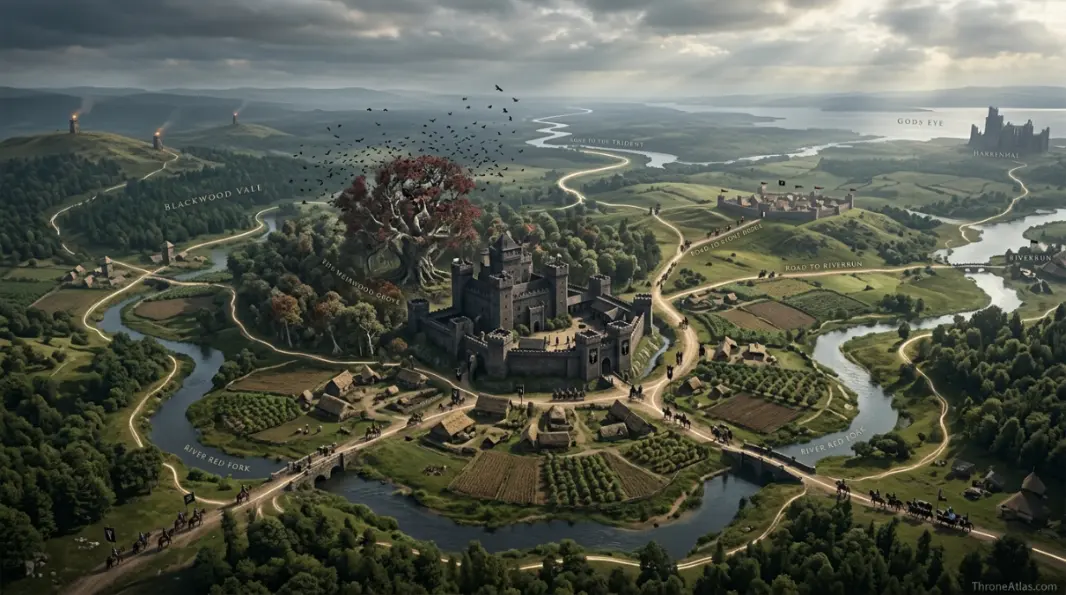
The clearest visual reading of this house uses five layers: the wide regional map, the closer seat map, the route overlay, the house banner, and the terrain view. A wide map explains where The Riverlands sits in Westeros. A seat map explains why Raventree Hall is the anchor. A route overlay explains movement. A banner view gives the house identity. A terrain view explains why the surrounding land, water, forest, fields, mountains, or roads create the political story.
Good map visuals should never force the reader to guess what is being shown. Labels should be readable, route lines should be simple, and every image should support the page question: where is House Blackwood, what does it control, and why does it matter? This is especially important for lesser-known houses because the visual guide often teaches the reader faster than a long family list.
Comparison with Greater Houses
House Blackwood should also be compared with the great houses around it. Great houses usually control a whole region, but supporting houses control the practical details that make regional power work. They guard harbors, ride through forests, hold road junctions, manage food routes, reinforce armies, or carry old claims that a great lord cannot ignore. On a map, that makes a secondary house valuable even when it does not sit on the Iron Throne or rule an entire kingdom.
This comparison helps explain why the House Blackwood map belongs beside major maps for Winterfell, King’s Landing, Highgarden, Harrenhal, Dragonstone, Riverrun, and the Iron Islands. The great seats show who claims authority. The supporting houses show how authority actually travels across the land. Without them, the map becomes too simple and the politics lose their working machinery.
Cartographer’s Reliability Check
The safest atlas reading separates firm map logic from decorative certainty. Firm map logic includes the house seat, region, neighboring powers, named routes, nearby castles, and repeated story connections. Decorative certainty includes exact road shapes, exact building layouts, and travel measurements that the story does not define clearly. This page keeps those two categories separate so readers can understand House Blackwood without being misled by overdrawn borders.
For that reason, the House Blackwood map is presented as a house-territory guide rather than a modern survey map. It gives the location, political network, and route logic that a reader needs, while leaving room for the uncertainty that naturally exists in fictional medieval geography.
Book and Show Notes
Some houses are richly described in the books but only briefly shown or mentioned on screen. Others are visually present through banners, dialogue, marriage connections, or battlefield consequences. A careful House Blackwood map should respect both experiences. The book-focused reader wants family context, overlord chains, and geographic precision. The show-focused reader wants a direct explanation of why the name matters and which better-known locations it connects to.
For House Blackwood, the safest reading is to separate confirmed location logic from visual adaptation. The seat, region, neighboring powers, and major story connections should remain stable, while details about exact castle appearance, road width, or travel time should be treated with care unless the adaptation clearly shows them. This protects the page from overclaiming while still giving readers a complete map experience.
Travel and Route Reading
Travel time in Westeros is rarely simple. Weather, terrain, river crossings, naval access, horse supply, and army size all change movement. A lone rider may move differently from a host, and a raven may carry news faster than any road party. The House Blackwood map should therefore explain direction and connection without pretending that every route has one fixed modern measurement.
In practical terms, Raventree Hall should be shown with routes toward Stone Hedge, Riverrun, the Trident, Harrenhal, and the central Riverlands road network. These links help readers understand where armies might march, where messengers might travel, where ships might sail, and where political pressure would come from first.
Common Map Mistakes
House maps often become confusing when they copy a castle name without explaining the surrounding system. The mistakes below are the most common issues readers run into when trying to place House Blackwood correctly.
- Separating House Blackwood from House Bracken when the rivalry is the main map clue.
- Ignoring the old gods angle because the house is south of the Neck.
- Placing Raventree Hall as if it were a coastal or mountain seat rather than a Riverlands power point.
The fix is to map the house as a network. Begin with Raventree Hall, add the regional frame of The Riverlands, show nearby powers, then connect the page to the events that make the house matter. That is how a house map becomes useful rather than decorative.
Related Atlas Network
Use these related maps to follow nearby places, connected houses, character routes, battles, and lore events across ThroneAtlas.
Core Map Hubs
House and Region Links
Wars and Routes
Lore Context
House Blackwood Map FAQ
Clear answers to common questions about the house, its seat, and its place on the Westeros map.
Where is House Blackwood located?
House Blackwood is located in The Riverlands, with its main seat at Raventree Hall. The page map should show the seat, nearby routes, connected houses, and the regional pressure that explains why the house matters.
What is Raventree Hall?
Raventree Hall is Raventree Hall, marked by its ancient dead weirwood and black ravens. It works as the main anchor for reading House Blackwood on a political and geographic map.
Why do House Blackwood and House Bracken feud?
House Blackwood matters because it connects old gods south of the Neck, ancient rivalry, riverland instability, and battlefield alignment. Its map position explains why the house appears in larger conflicts rather than remaining only a local name.
Is House Blackwood connected to the old gods?
The best way to read the House Blackwood map is to place Raventree Hall beside Stone Hedge, Riverrun, the Trident, Harrenhal, and the central Riverlands road network. Those connections show the practical movement of armies, messengers, marriages, fleets, and claims.
How does House Blackwood fit into the Dance of the Dragons?
A strong House Blackwood map should include the seat, the region, major roads or sea lanes, neighboring powers, related battles, ruling alliances, and a clear note on book/show differences.
What should a House Blackwood map show?
Readers often confuse House Blackwood by treating it as isolated. The map becomes clearer when the house is shown as part of The Riverlands and linked to nearby castles, rivers, coastlines, and political centers.
Explore More of the Westeros Atlas
Move from this house map into the wider network of regions, castles, battles, routes, and noble family pages.