Rook’s Rest Map Dragon Battle, Meleys, Sunfyre, Vhagar, Aegon II, Aemond & Dance Turning Point
The Crownlands trap where dragon war stops being theory and becomes catastrophe
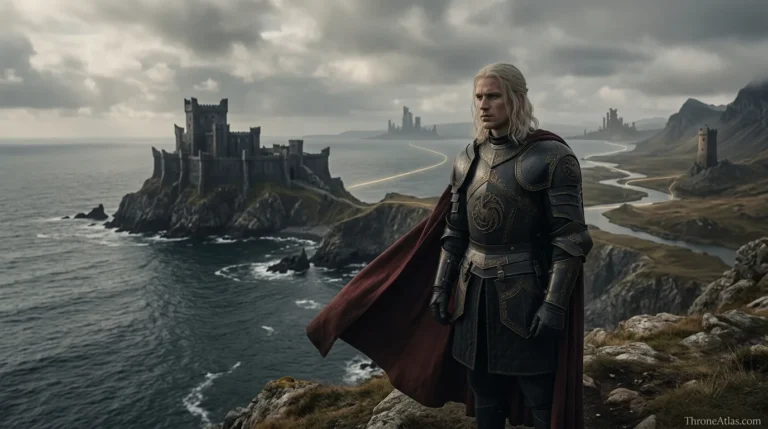
Rook’s Rest is a Dance of the Dragons turning point because it combines siege bait, Crownlands geography and the terrifying arrival of multiple dragons into one concentrated disaster.
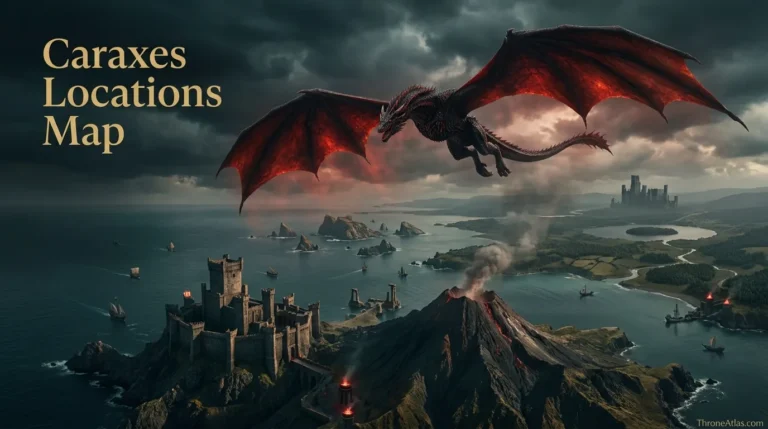
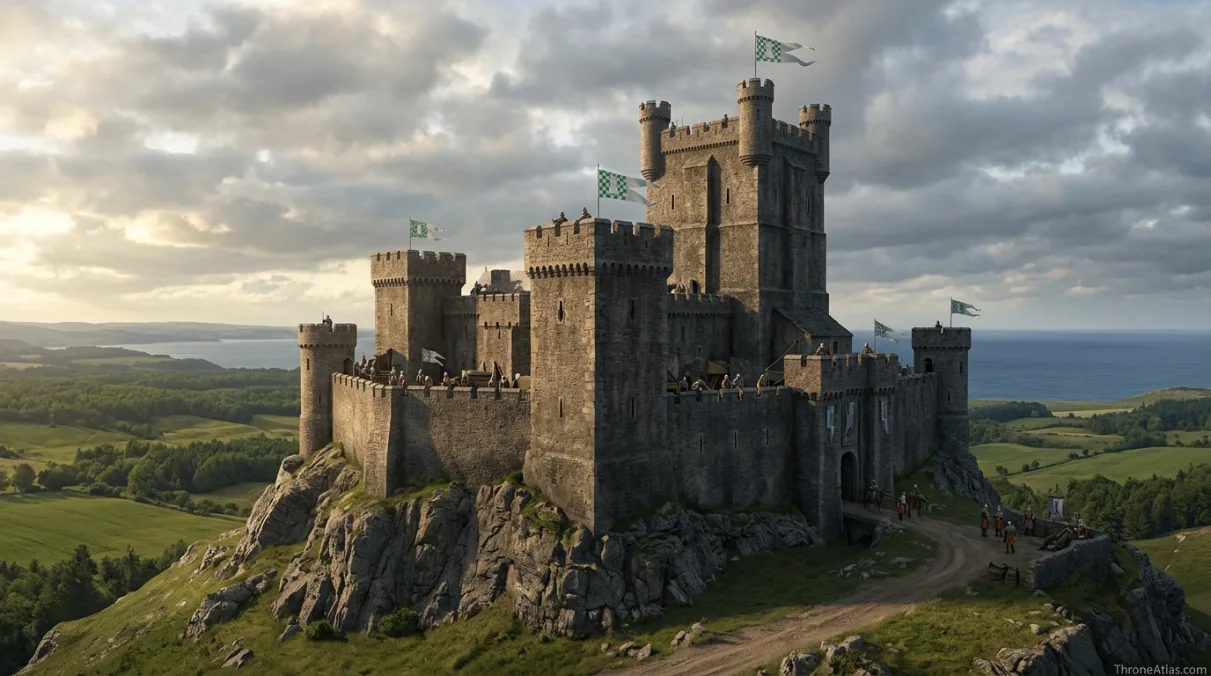
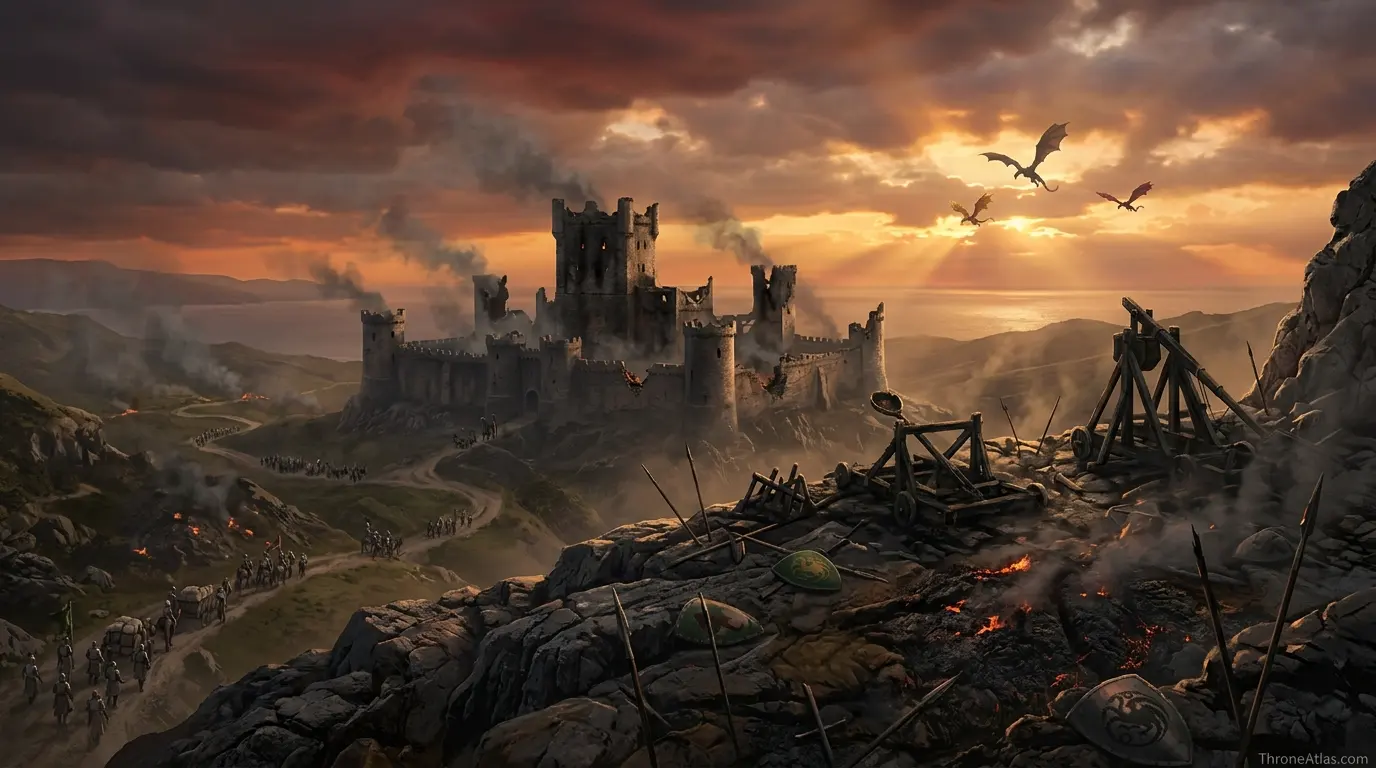
The Rook’s Rest map is centered on a Crownlands castle used as bait during the Dance of the Dragons. Criston Cole’s green forces pressure Rook’s Rest, drawing Princess Rhaenys and Meleys from the black side. The battle escalates when Aegon II arrives on Sunfyre and Aemond arrives on Vhagar. The key map points are King’s Landing, Dragonstone, the Crownlands march, Rook’s Rest castle, Meleys’s attack path, Sunfyre’s entry, Vhagar’s ambush zone and the battle aftermath that changes dragon strength on both sides.
What this Rook’s Rest Map explains
The cards below give the fast orientation before the deeper route, table and FAQ sections.
Main points on the Rook’s Rest Map
This simplified graphic is designed for reading flow, not exact geographic scale. Use it to understand order, pressure and consequence.
The greens project force outward from the capital.
The blacks must decide how to answer threats near their coastal power zone.
Criston Cole’s movement pressures smaller castles and draws response.
The castle becomes the visible target that hides the larger trap.
Rhaenys and Meleys enter to break the pressure on the castle.
Aegon II joins the fight and risks the king himself in the sky.
Vhagar turns the engagement from rescue mission to catastrophe.
The consequences ripple through dragon numbers, royal image and morale.
Complete Rook’s Rest Map Guide
A thin map page only lists names. A strong ThroneAtlas page explains how places create pressure, change decisions and connect to the wider atlas. This guide is built to help readers follow the route, understand the stakes at each stop, and continue into connected maps without losing context.
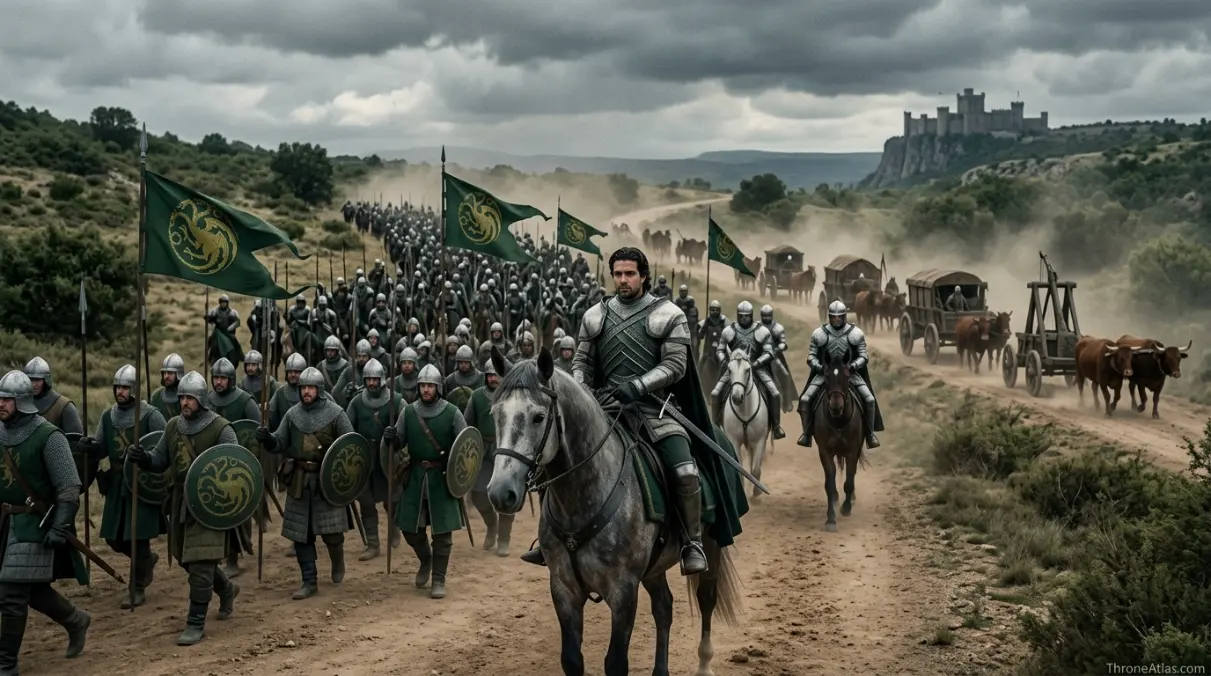
Rook’s Rest as a trap location
Rook’s Rest is not important because it is the largest castle in Westeros. It is important because it can be threatened in a way that forces the enemy to respond. In the Dance of the Dragons, smaller Crownlands sites become pressure points because they sit between King’s Landing, Dragonstone and the contested loyalties around the capital.
Criston Cole’s move works as bait geography. The visible siege creates an urgent problem for the blacks: ignore the castle and lose authority, answer it and risk dragon exposure. That is why Rook’s Rest needs a map page rather than a simple battle paragraph.
The page should help readers see the relationship between castle, road, capital, island base and airspace.
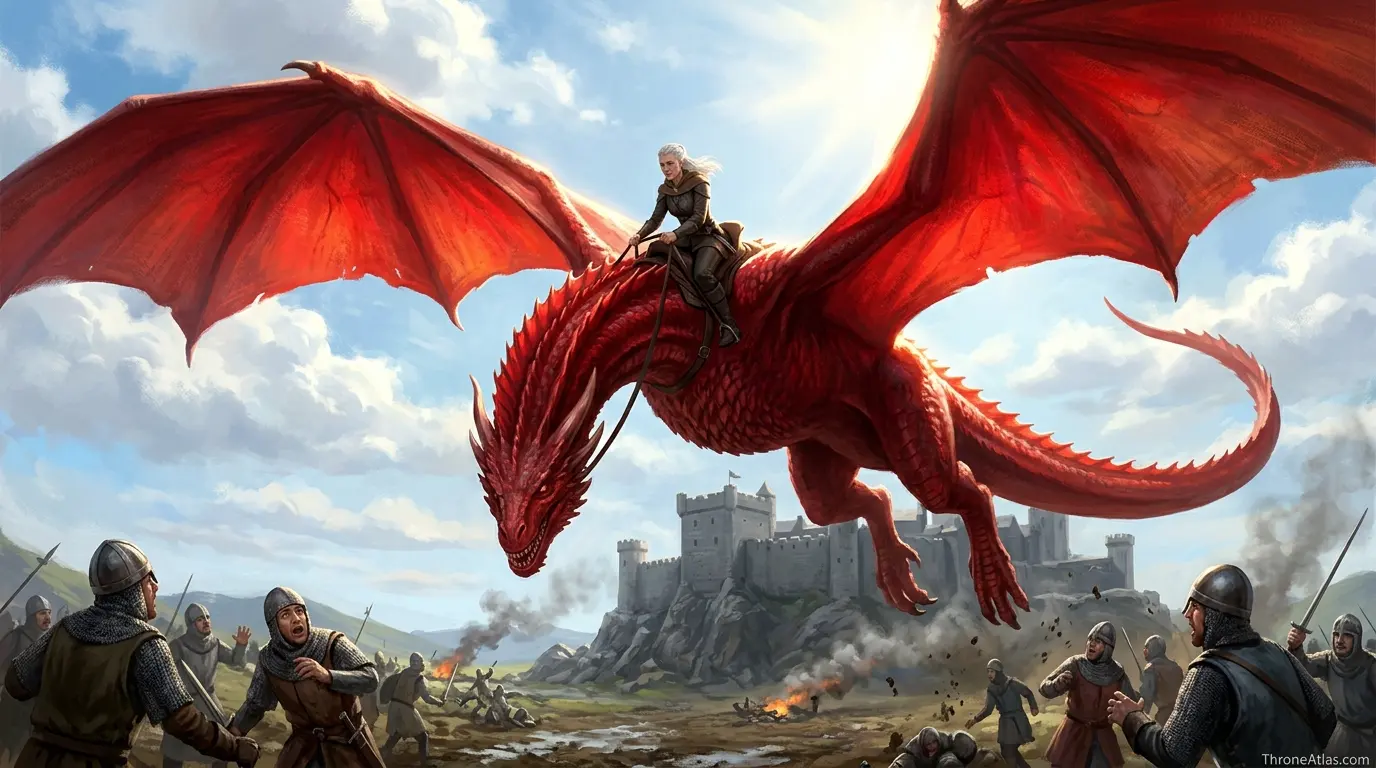
Meleys, Sunfyre and Vhagar in one battlefield
The battle’s unique value comes from the concentration of dragons. Rhaenys on Meleys enters as a powerful answer to ground pressure. Aegon II on Sunfyre turns the battlefield into a royal risk. Aemond on Vhagar gives the greens overwhelming destructive weight.
This is the difference between a normal siege and a Dance battle. Once dragons enter, the map becomes vertical. Ground lines still matter, but sky timing decides the outcome. A road trap becomes an air trap.
A strong Rook’s Rest map should therefore include separate route logic for Cole’s march, Meleys’s response, Sunfyre’s arrival and Vhagar’s position.
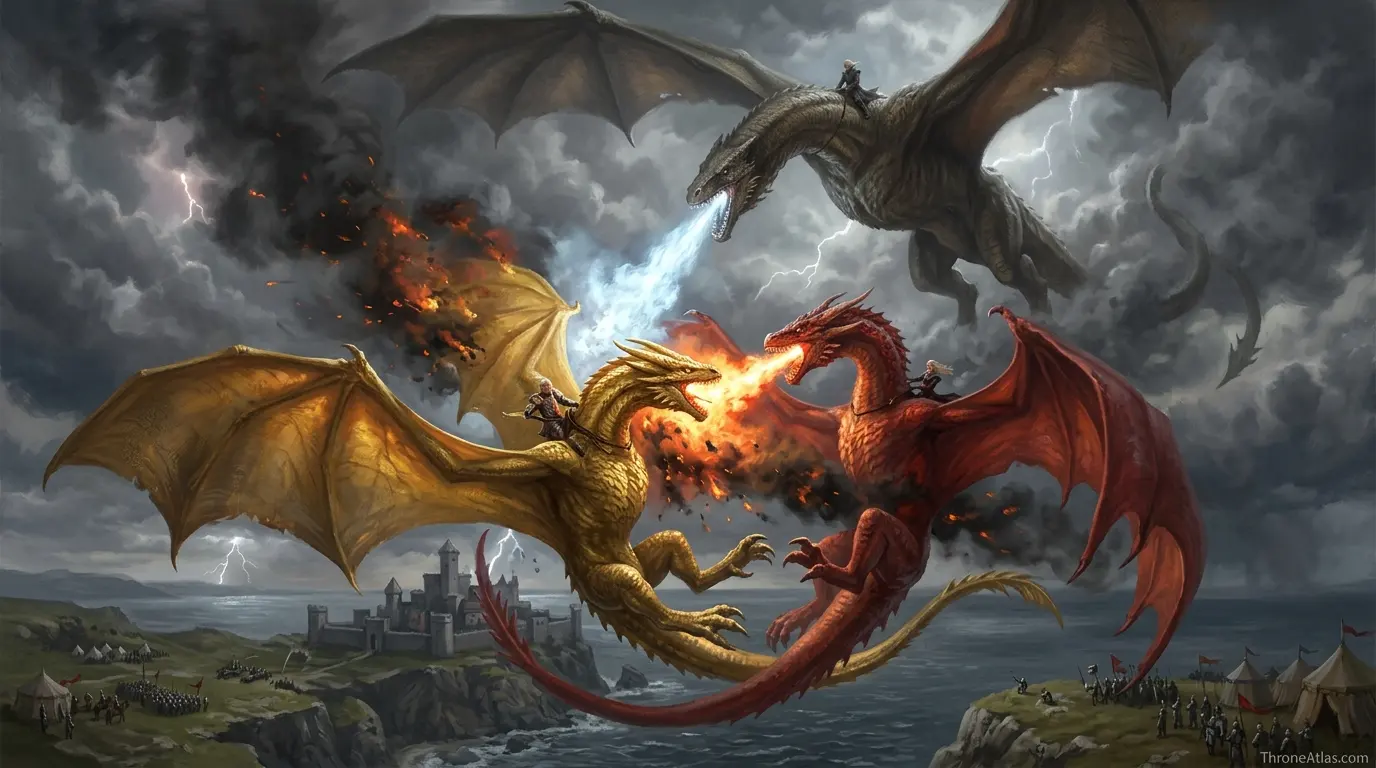
Why Rook’s Rest changes the Dance
Rook’s Rest changes the war because dragon damage cannot be replaced like ordinary soldiers. Each dragon is a strategic asset, a political symbol and a psychological weapon. When dragon riders fall or dragons are wounded, the whole balance of the Dance shifts.
The event also changes the image of kingship. Aegon II’s direct involvement places the crown inside the battle rather than above it. That choice has enormous consequences for green power and Aemond’s later role.
For 2026 search freshness, Rook’s Rest remains one of the major House of the Dragon battle locations readers look for because it visualizes dragon civil war at full scale.
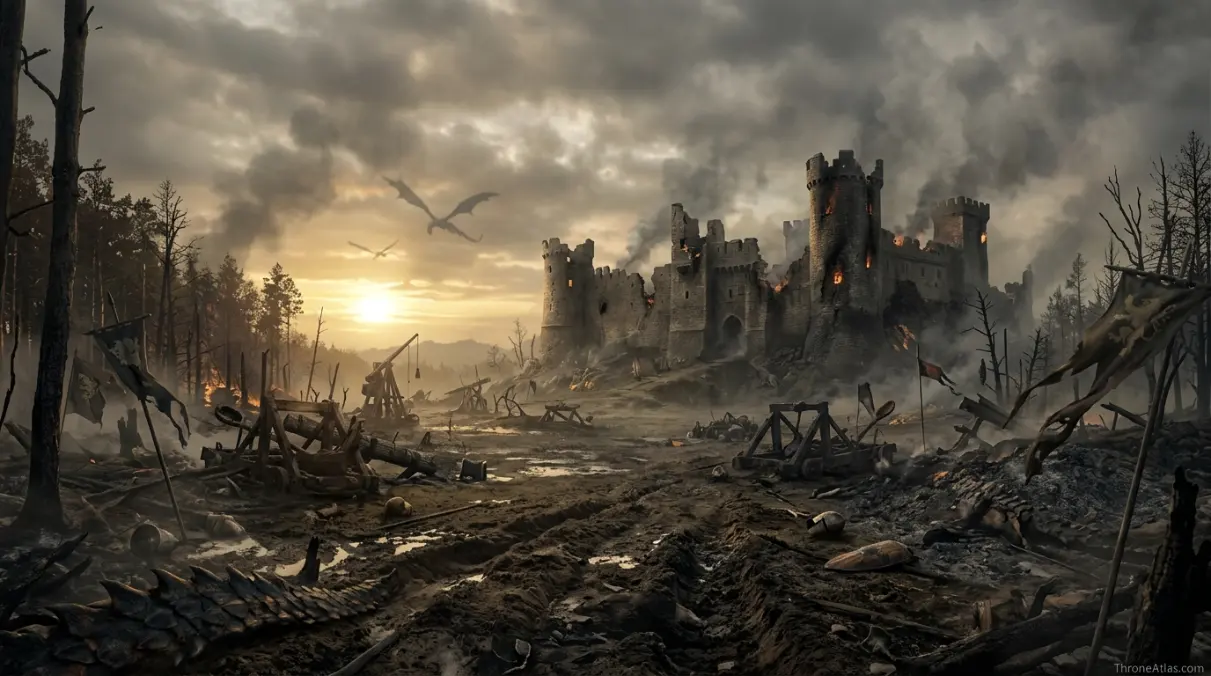
How to link Rook’s Rest inside ThroneAtlas
This page should sit between Dragonstone Map, King’s Landing Map, Dance of the Dragons Map, Aemond Targaryen route, Rhaenys Targaryen route and Vhagar dragon lore. It is a connector page for both character and battle clusters.
Anchor text should be specific: “Rook’s Rest dragon battle map,” “Meleys and Vhagar battle route,” “Crownlands Dance of the Dragons map.” That helps search engines understand the page as battle geography, not just episode recap.
The final reader takeaway is that Rook’s Rest is the moment the Dance stops being a succession argument and becomes an aerial extinction machine.
Detailed map reading for Rook’s Rest Map
The quick route above gives the order, but the real value of this page is the cause-and-consequence logic between map points. A normal recap tells you what happened. A ThroneAtlas map explains why the location made that outcome possible, why the next route opened, and why some choices became almost impossible once characters entered the wrong room, road, crossing or battlefield.
For Rook’s Rest Map, each stop should be read as a pressure point. Roads control timing, castles control access, rivers control movement, halls control sightlines, islands control isolation, and sacred places control memory. That is why this page is structured as an atlas guide instead of a thin summary.
1. King’s Landing — Green command
The greens project force outward from the capital. In map terms, this point belongs to Crownlands, but its function is larger than place-labeling. It changes leverage, visibility, safety or legitimacy. From here the reader naturally moves toward Dragonstone, carrying the previous consequence forward instead of treating the event as a disconnected scene.
2. Dragonstone — Black base
The blacks must decide how to answer threats near their coastal power zone. In map terms, this point belongs to Narrow Sea, but its function is larger than place-labeling. It changes leverage, visibility, safety or legitimacy. From here the reader naturally moves toward Crownlands Road, carrying the previous consequence forward instead of treating the event as a disconnected scene.
3. Crownlands Road — Cole’s march
Criston Cole’s movement pressures smaller castles and draws response. In map terms, this point belongs to Crownlands, but its function is larger than place-labeling. It changes leverage, visibility, safety or legitimacy. From here the reader naturally moves toward Rook’s Rest Castle, carrying the previous consequence forward instead of treating the event as a disconnected scene.
4. Rook’s Rest Castle — Bait site
The castle becomes the visible target that hides the larger trap. In map terms, this point belongs to Crownlands, but its function is larger than place-labeling. It changes leverage, visibility, safety or legitimacy. From here the reader naturally moves toward Meleys Attack Path, carrying the previous consequence forward instead of treating the event as a disconnected scene.
5. Meleys Attack Path — Black response
Rhaenys and Meleys enter to break the pressure on the castle. In map terms, this point belongs to Battle airspace, but its function is larger than place-labeling. It changes leverage, visibility, safety or legitimacy. From here the reader naturally moves toward Sunfyre Entry, carrying the previous consequence forward instead of treating the event as a disconnected scene.
6. Sunfyre Entry — Aegon exposed
Aegon II joins the fight and risks the king himself in the sky. In map terms, this point belongs to Air battle, but its function is larger than place-labeling. It changes leverage, visibility, safety or legitimacy. From here the reader naturally moves toward Vhagar Ambush, carrying the previous consequence forward instead of treating the event as a disconnected scene.
7. Vhagar Ambush — Aemond’s power
Vhagar turns the engagement from rescue mission to catastrophe. In map terms, this point belongs to Air battle, but its function is larger than place-labeling. It changes leverage, visibility, safety or legitimacy. From here the reader naturally moves toward Aftermath Field, carrying the previous consequence forward instead of treating the event as a disconnected scene.
8. Aftermath Field — War balance shifts
The consequences ripple through dragon numbers, royal image and morale. In map terms, this point belongs to Crownlands, but its function is larger than place-labeling. It changes leverage, visibility, safety or legitimacy. From here the reader naturally moves toward King’s Landing, carrying the previous consequence forward instead of treating the event as a disconnected scene.
Why this page is built for search intent
People searching for Rook’s Rest Map usually want a fast answer first: the main location, the correct order, the central turning point and the final consequence. After that, they want context that a short wiki paragraph cannot provide. This page supports both needs with a quick answer, fact cards, route schematic, location cards, deep explanations, table and FAQ.
The stronger SEO angle is topical completeness rather than repetition. The content uses natural entity coverage: region names, castles, houses, battles, characters, terrain and route logic. That helps the page work as a map hub and not just an isolated article.
How to use this Rook’s Rest Map on ThroneAtlas
Use this page as the orientation layer before opening the deeper location pages. Start with the quick answer to confirm the place, then use the route schematic to understand order, then scan the table if you only need the map role of each point. If you are building a full reading path, follow the related links into the houses, regional maps and battle or lore pages connected to this event.
The page is intentionally written for map-first readers. That means it avoids treating geography as decoration. Every location is included because it changes the balance of power, the available route, the safety of a character, the meaning of a battle, or the historical memory of Westeros. This is the difference between a normal recap and a useful atlas entry.
For best internal SEO, publish this page with a short URL, descriptive image alt text, one H1, and related links using exact but natural anchors such as “Rook’s Rest Map,” “Riverlands map,” “King’s Landing map,” “Dragonstone map,” “House Targaryen map,” or the specific battle/location phrase that matches the page topic.
Topical authority notes for Rook’s Rest Map
The page is also designed to answer the follow-up questions readers usually ask after the first map answer. They want to know how the event connects to nearby regions, which houses gain or lose power, which characters move because of the event, and which later routes are changed by the outcome. For Rook’s Rest Map, that means the map should not stop at King’s Landing or Aftermath Field. It should show how the consequence travels through surrounding castles, roads, rivers, courts, islands or sacred places.
This is especially important for ThroneAtlas because map pages work best as clusters. A reader who lands on this page should be able to continue naturally into a regional guide, a house guide, a battle guide, a character route or a lore explanation. That internal path increases usefulness for humans and gives search engines clearer entity relationships around Westeros geography.
The content also avoids the common thin-page mistake of repeating the title in every sentence. Instead, it uses supporting entities: the relevant kingdom, controlling house, nearby castle, route pressure, battlefield condition, political consequence and memory layer. These supporting terms make the page feel complete without sounding forced.
For final publication, keep the hero image near the top, retain the round compass card, and do not remove the boxed quick answer. That combination gives the page the same visual identity as the master Westeros page while still allowing each event or lore location to have its own voice. The design rhythm should feel familiar across the site, but the analysis should feel unique to the map.
If this page is being used for programmatic publishing, pair it with two to four exact internal links in the first half of the article and several broader atlas links near the end. The safest anchor style is descriptive rather than generic: “Rook’s Rest Map route,” “King’s Landing location,” “Aftermath Field consequence,” and the specific region or house name. That keeps the page helpful and prevents the internal link block from feeling pasted on.
Before publishing, compare the page against the surrounding cluster and make sure the opening answer, the first image alt text, the first two H2s, and the related-link anchors all reinforce the same search intent. That final pass is what makes the page feel handcrafted rather than generated in bulk. For Rook’s Rest Map, the reader should leave with a clear route, a clear consequence, and a clear next page to open.
Location order and story function
The table below condenses the event into a scanner-friendly format for readers who want quick orientation before moving into related maps.
| Location | Map role | Region / route | Story function |
|---|---|---|---|
| King’s Landing | Green command | Crownlands | The greens project force outward from the capital. |
| Dragonstone | Black base | Narrow Sea | The blacks must decide how to answer threats near their coastal power zone. |
| Crownlands Road | Cole’s march | Crownlands | Criston Cole’s movement pressures smaller castles and draws response. |
| Rook’s Rest Castle | Bait site | Crownlands | The castle becomes the visible target that hides the larger trap. |
| Meleys Attack Path | Black response | Battle airspace | Rhaenys and Meleys enter to break the pressure on the castle. |
| Sunfyre Entry | Aegon exposed | Air battle | Aegon II joins the fight and risks the king himself in the sky. |
| Vhagar Ambush | Aemond’s power | Air battle | Vhagar turns the engagement from rescue mission to catastrophe. |
| Aftermath Field | War balance shifts | Crownlands | The consequences ripple through dragon numbers, royal image and morale. |
Rook’s Rest Map Questions
Rook’s Rest is in the Crownlands, strategically placed between King’s Landing influence and Dragonstone response routes.
It becomes the bait site for a major dragon battle during the Dance of the Dragons.
Meleys, Sunfyre and Vhagar are central to the battle.
Princess Rhaenys Targaryen rides Meleys.
It damages dragon strength, royal confidence and the balance between the greens and blacks.
Related maps, houses, battles and lore routes
ThroneAtlas is an independent fan-made atlas. Game of Thrones, House of the Dragon and related names belong to their respective rights holders. This page is for educational, lore-navigation and fan-reference purposes.