Braavos Map Titan, House of Black and White, Iron Bank, Canals & Arya’s Faceless Men Route
Titan · Canals · Iron Bank · House of Black and White · Arya’s Route
Explore the Braavos map with a premium ThroneAtlas breakdown of geography, routes, landmarks, house power, character movement, and story meaning. This page is designed as a SERP-ready atlas guide for readers who want the fast answer first and the deeper map logic after.
The Braavos map shows the northern Free City built around hidden origins, canals, harbors, the Titan of Braavos, the Iron Bank, and the House of Black and White. For Arya Stark, Braavos is not simply a foreign city; it is the place where identity becomes training ground, disguise, debt, and choice.
Braavos Map at a Glance
Use these fast facts before diving into the full route breakdown and location analysis.
How to Read the Braavos Map
Braavos is not a straight-road city. It is a canal city, which means power moves through water, doors, and hidden networks. A map of Braavos should feel like a maze of routes rather than a simple capital plan. That geography fits its history as a hidden refuge and its institutions: the Iron Bank, the Faceless Men, and a culture comfortable with masks.
The Titan and the Harbor
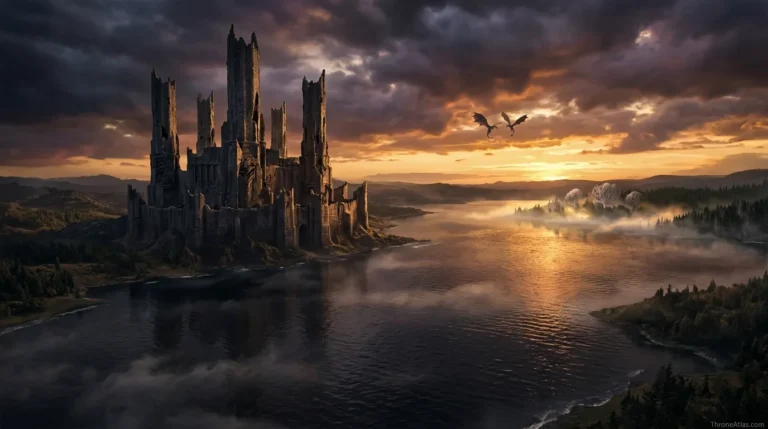
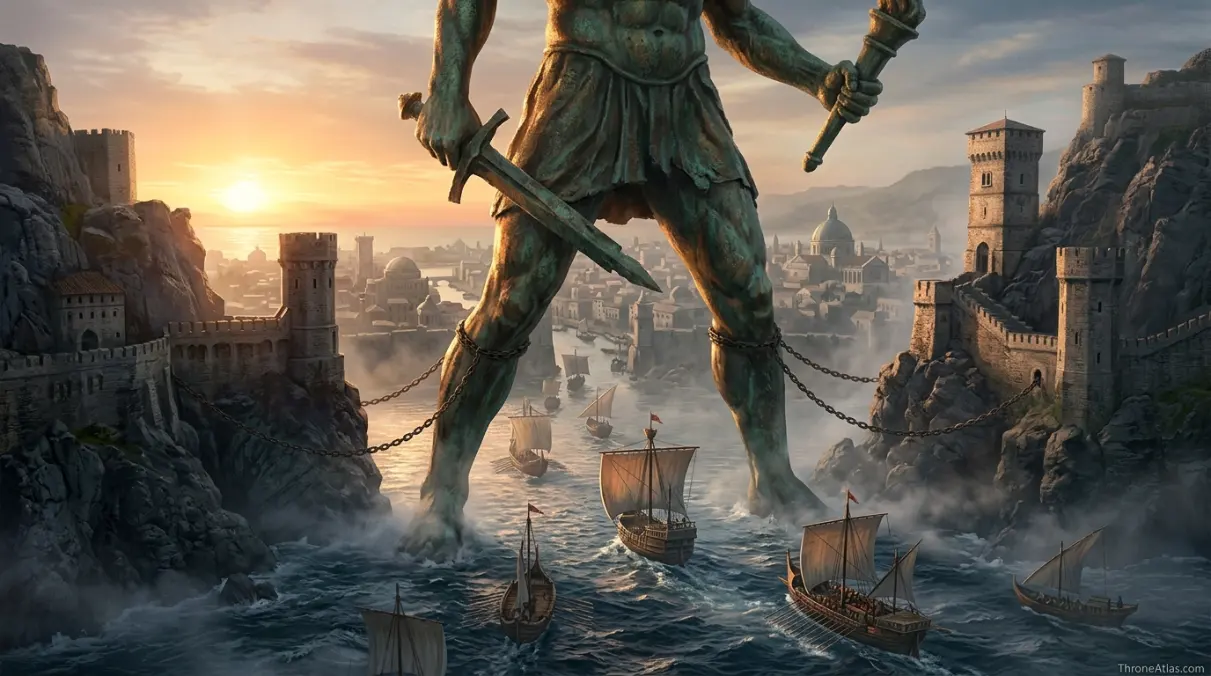
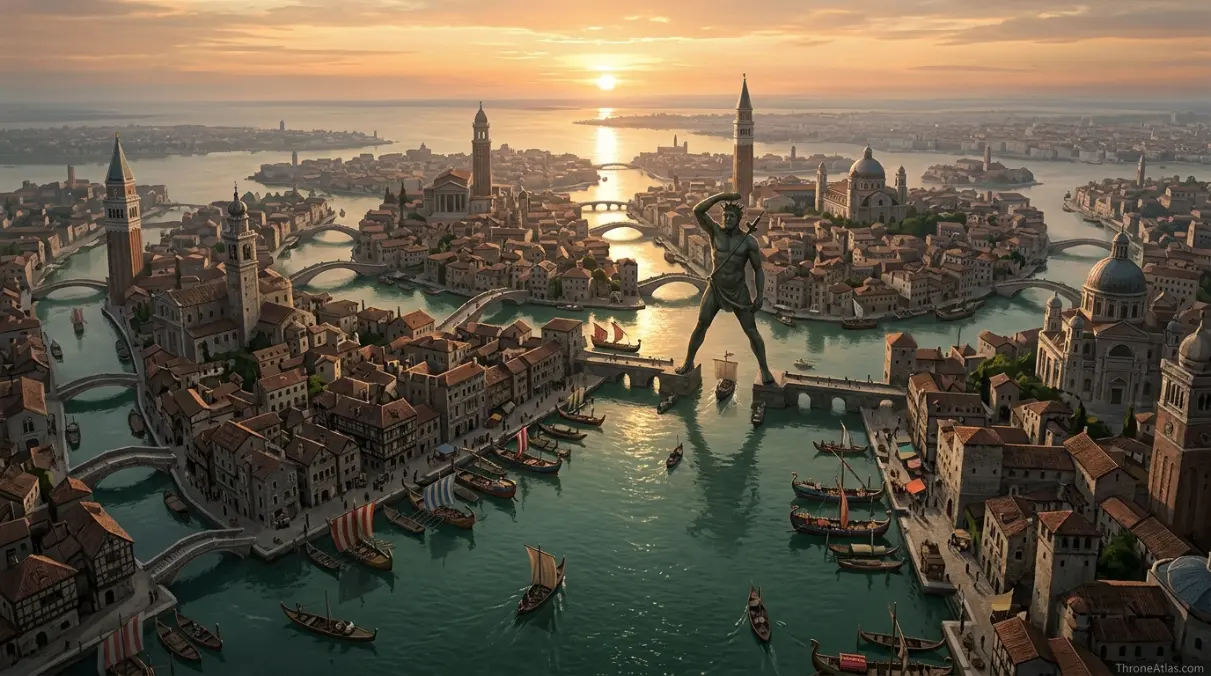
The Titan of Braavos is the city’s visual promise: anyone entering the harbor must pass under a symbol larger than ordinary politics. It marks Braavos as a city that protects itself by sea power, wealth, secrecy, and reputation. The harbor is therefore not just a dock. It is a threshold into a different political world.
Arya and the House of Black and White
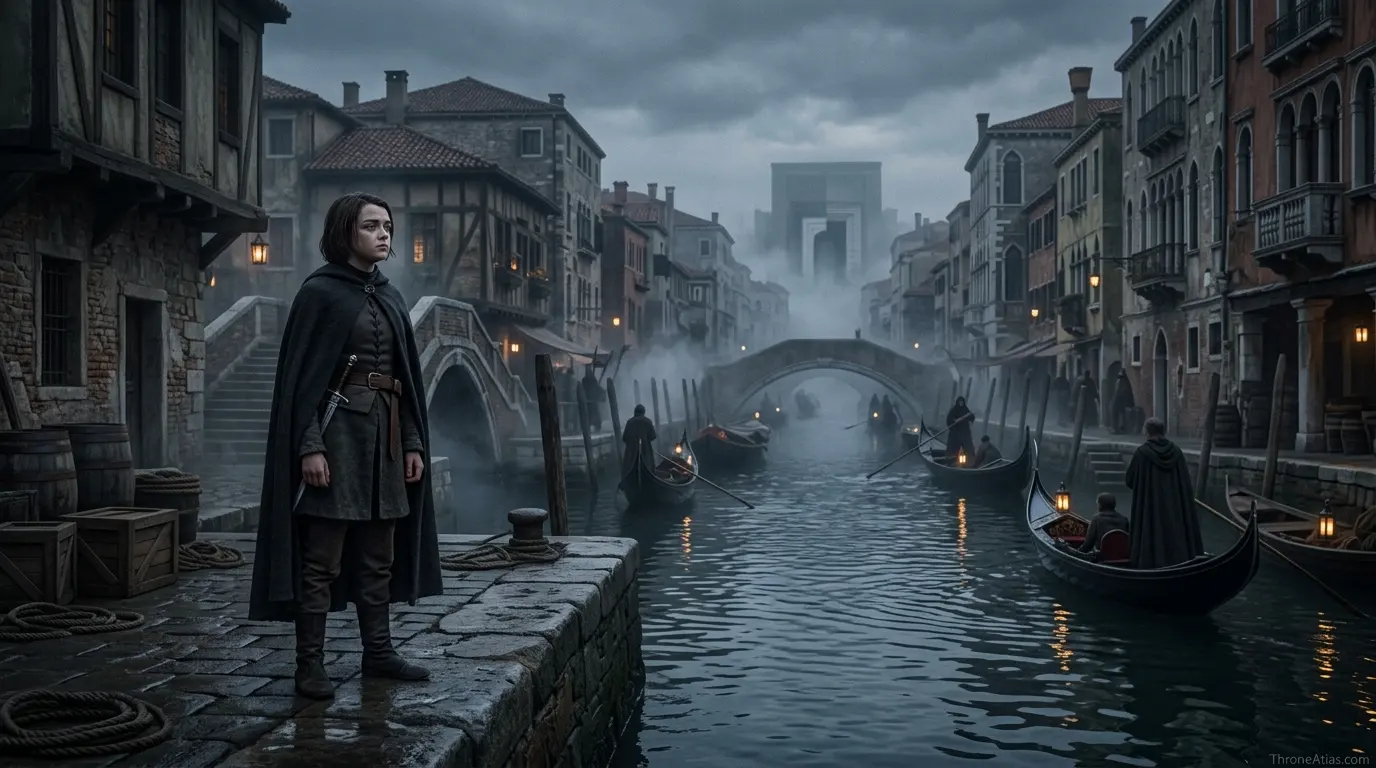
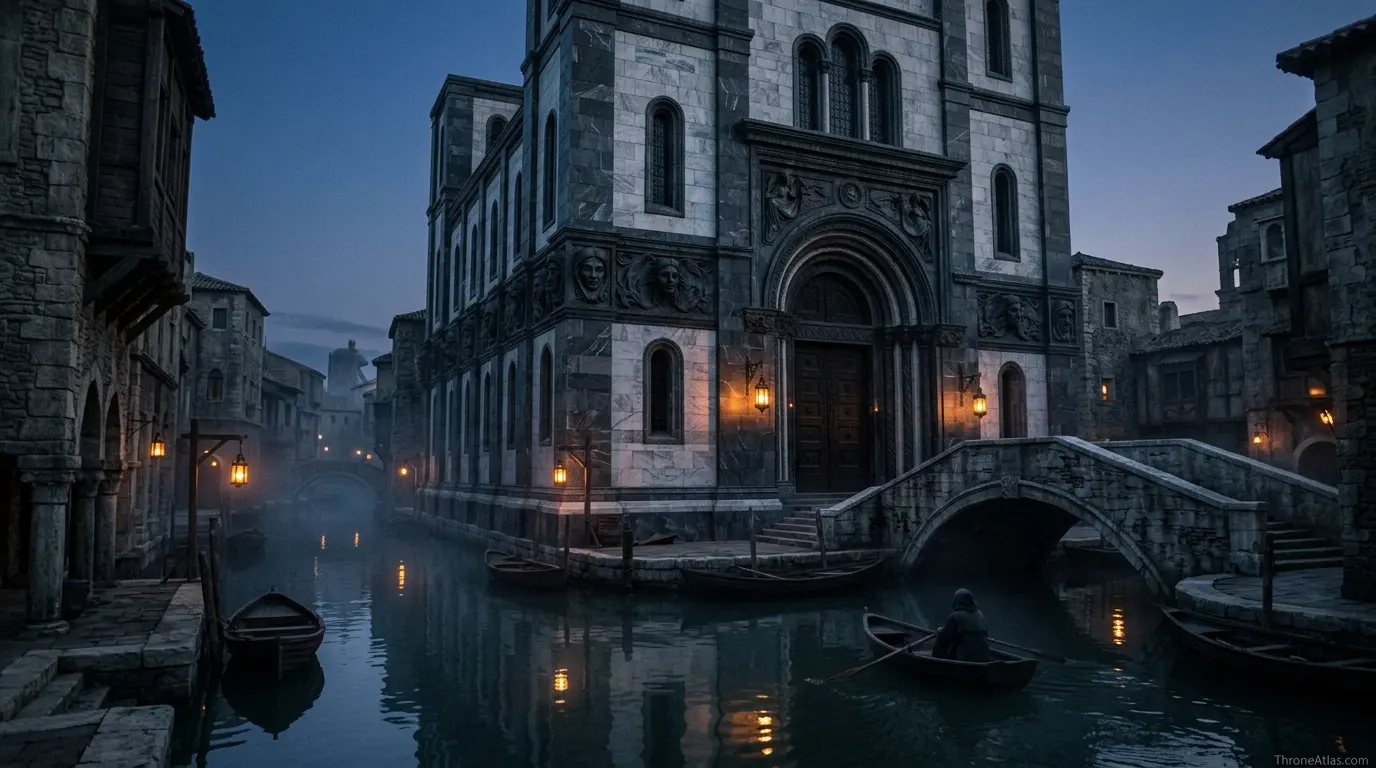
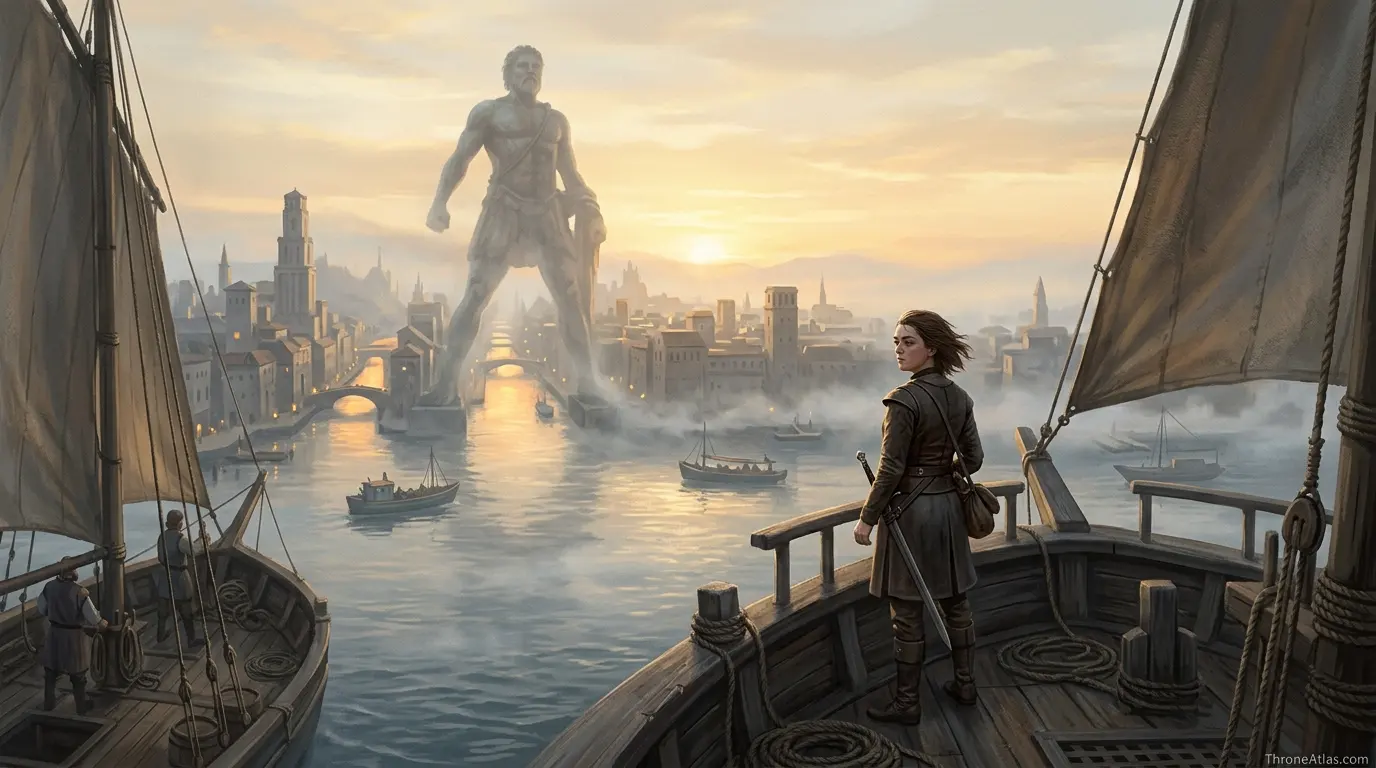
Arya’s Braavos route is built around repetition and disorientation. She moves through streets, canals, markets, temple interiors, blindness, names, and faces. The city tests whether she can disappear. The answer matters because her story is not about becoming nothing forever; it is about learning the tools of disappearance and then choosing to remain Arya Stark.
The Iron Bank’s Map Power
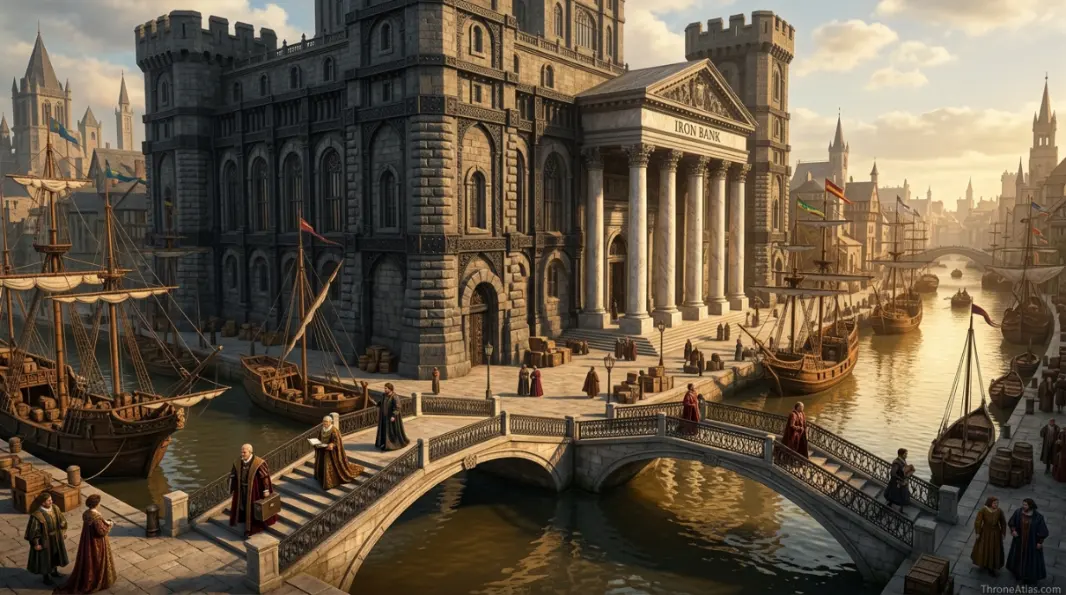
The Iron Bank makes Braavos one of the most powerful places on the map without needing dragons or a vast army. Money becomes geography. Debt can reach across the Narrow Sea, influence kings, and decide wars. When you understand Braavos as a financial capital, its distance from Westeros stops being weakness and becomes safety.
Location Logic: Access, Authority and Memory
A normal wiki-style entry can tell you what Titan of Braavos is, who rules the area, or which episode made the location memorable. A proper atlas page has to do more. It must explain why the place sits where it sits, what kind of movement the terrain allows, and how the setting changes the behavior of characters who enter it. That is the reason this page separates the Braavos map into landmarks, route stages, political pressure, and reader-useful search answers.
The first layer is access. If a character or army cannot easily reach a place, the location gains power even before any dialogue begins. On this page, the access story starts with Harbor approach and continues through Canal network. Those points explain the difference between a location that can be visited casually and a location that must be earned, negotiated, crossed, or survived.
The second layer is authority. Every major place in the world of ice and fire has a public face: a throne room, a court, a gate, a harbor, a temple, a market, a tower, or a symbolic road. For the Braavos map, that authority becomes visible through landmarks such as Titan of Braavos, House of Black and White, Iron Bank. These places tell the reader who controls the setting and what kind of control they prefer: military control, social control, financial control, religious control, or emotional control.
The third layer is memory. Locations survive because stories attach themselves to them. A reader may search for a map because they forgot where something happened, but they stay because the map reminds them why it mattered. That is why the content here does not treat Free Cities as a blank backdrop. It treats the region as a living archive of decisions, routes, losses, bargains, and inherited identity.
Step-by-Step Reading Path for This Map
Start with Harbor approach, because this is the first practical point in the route logic. It tells you how a traveler enters the setting and what kind of danger or permission defines the beginning of the journey. In a strong map page, the first point is rarely random. It sets the tone for the whole location.
Move next to Canal network. This is the place where the map begins to narrow or reveal power. Sometimes it is a gate; sometimes it is a harbor, road, court, or political threshold. The important thing is that the route no longer feels abstract. The reader can now see who is being filtered, tested, watched, welcomed, or trapped.
The middle of the map runs through House of Black and White and Iron Bank. These points usually hold the core story tension. They explain where characters make decisions, where rulers display authority, where hidden danger appears, or where the setting shifts from safe to unsafe. When you rewatch a scene, these middle points are the ones that make blocking, dialogue, and political pressure easier to understand.
Finally, end at Return choice. The last point shows what the location changes. A good atlas route should not finish with the same emotional state it began with. Someone has gained leverage, lost safety, accepted identity, rejected a claim, survived a trial, or carried new knowledge toward the next map page.
Scale, Sequence and Comparison
The most important missing piece is often scale. A place can look small on a continent map and still control a huge amount of narrative meaning. Another missing piece is sequence. Readers do not only need a dot; they need the order of movement. The route from Harbor approach to Return choice gives that order and makes the location easier to remember.
The final missing piece is comparison. The Braavos map becomes clearer when compared with other ThroneAtlas pages. If another location rules by walls, this one may rule by distance. If another region is wealthy, this one may be dangerous because it is poor but mobile. If another city is open and public, this one may be powerful because it hides its true decisions behind doors, canals, courts, or cliffs.
Key Landmarks to Mark on the Braavos Map
The most useful version of a Braavos map does not overload the reader with every minor room, road, alley, or coastal bend. It highlights the locations that explain the story: Titan of Braavos, House of Black and White, Iron Bank, Canals, and the routes that connect them. These are the points that change who has leverage, who is trapped, who can escape, and who can turn distance into authority.
- Titan of Braavos
- House of Black and White
- Iron Bank
- Canals
- Sealord’s Palace
- Ragman’s Harbor
- Temple district
When these points are read together, the page becomes more than a glossary. It becomes an atlas of pressure. A castle can protect a family, but it can also isolate them. A harbor can bring trade, but it can also bring invasion. A gate can defend a realm, but it can also decide who is allowed into the story at all.
How Movement Works on the Braavos Map
The route sequence below turns the location into a readable story path.
Why This Place Matters
Three ways this place shapes the story.
Political leverage
Free Cities geography decides who can negotiate from safety, who must travel, and who can threaten the wider map.
Character pressure
The Braavos map is useful because it turns movement into emotion: exile, return, refuge, ambition, or entrapment.
Route clarity
Each route point makes the location readable as a sequence instead of a flat label.
| Reader Question | Best Answer on This Page |
|---|---|
| Where is it? | Free Cities, connected through the route points listed above. |
| Why does it matter? | It changes power, movement, safety, identity, or political leverage in the story. |
| What should I remember? | The main landmarks are Titan of Braavos, House of Black and White, Iron Bank, Canals, Sealord’s Palace. |
| What should I read next? | Continue into the linked region, house, and journey maps for the full atlas cluster. |
Braavos Map Questions
Quick answers to the most common questions.
Braavos is one of the Free Cities in Essos, located near the northwestern coast across the Narrow Sea.
The Titan is the famous giant statue and harbor landmark guarding the entrance to Braavos.
It is the temple associated with the Faceless Men, where Arya trains.
The Iron Bank gives Braavos immense influence because rulers across the world depend on its loans and credit.
ThroneAtlas is an independent fan-made atlas and lore reference. It is not affiliated with HBO, Warner Bros., George R. R. Martin, or the official publishers. Images are used as atmospheric, non-official visual references with descriptive alt text for map-style educational context.