Children of the Forest Map Weirwoods, Isle of Faces, First Men War, Far North Cave & Ancient Magic Map
A map-first guide to the old race, weirwood memory, pact geography and the origins of ice magic
The Children of the Forest map works through sacred trees, hidden caves, old battle zones and memory networks rather than castles. It explains how the oldest geography in Westeros sits underneath later kingdoms.
The Children of the Forest map focuses on ancient forests, weirwood groves, the Isle of Faces, the lands of the First Men, caves beyond the Wall, and the old magic routes that connect greenseers, the Three-Eyed Raven and the origin of the White Walker threat. This is an ancient-lore map rather than a political map: the important locations are sacred, hidden, remembered or half-lost beneath the later kingdoms of Westeros.
What this Children of the Forest Map explains
The fast cards below give the two-minute answer before the deeper route, table and FAQ sections.
Main stops on the Children of the Forest Map
This simplified route graphic is designed for reading flow, not exact geographic scale. Use it to understand order, pressure and consequence.
The Children belong to a pre-feudal forest world before castles and great houses dominate the map.
Weirwoods create a spiritual and informational map that later kingdoms never fully erase.
The arrival of the First Men begins the war that changes the Children’s map forever.
The island represents the truce and old-god center of shared memory.
Marshes and deep woods preserve traces of older geography.
The cave shows the last visible Children protecting Bran and ancient memory.
The origin scene ties Children’s survival to the later ice threat.
The heart tree at Winterfell shows how old magic persists inside later noble seats.
Complete Children of the Forest Map Guide
A thin map page only lists names. A strong ThroneAtlas page explains how places create pressure, change decisions and connect to the wider atlas. This guide is built to help readers follow the route, understand the stakes at each stop, and continue into connected maps without losing context.
How to read the Children of the Forest map
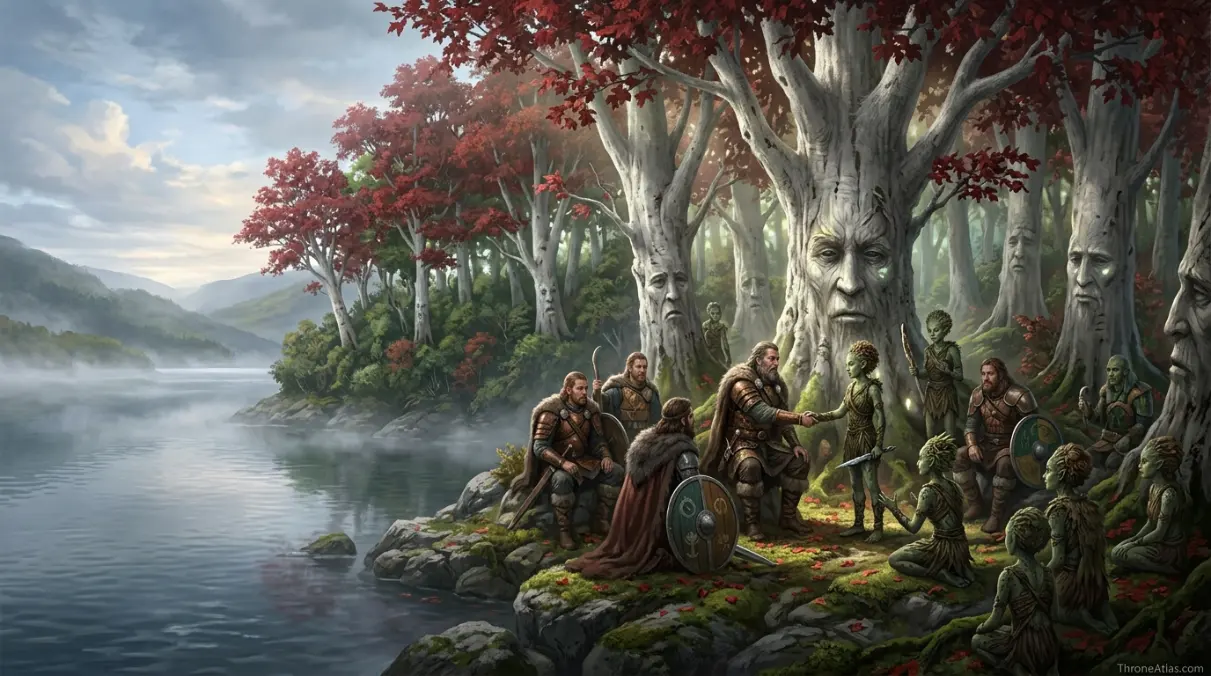
The Children of the Forest map must be read below the political map. Before Starks, Lannisters, Targaryens or Baratheons, Westeros has forests, rivers, caves, sacred trees and old-god places. The Children belong to that older layer.
This makes the page valuable because it explains why locations like the Isle of Faces, weirwoods and the Three-Eyed Raven cave matter even when they are not normal seats of power. They are memory locations. They store continuity differently from castles or chronicles.
For search intent, readers usually want the connection between Children, weirwoods, First Men, the Long Night and White Walkers. This page should answer those links without becoming a scattered encyclopedia entry.
Weirwoods as the old map network
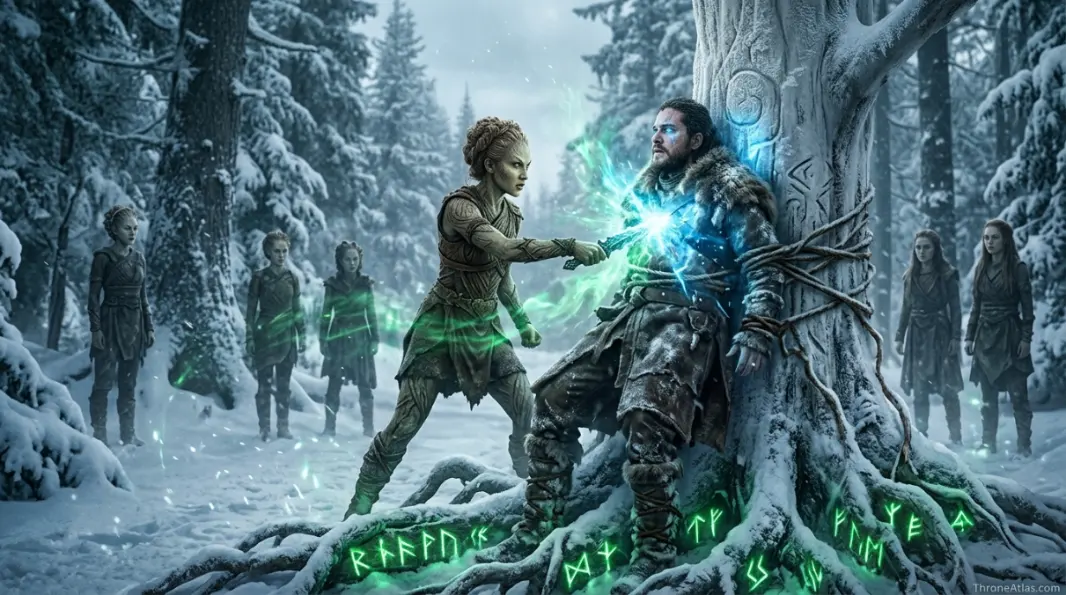
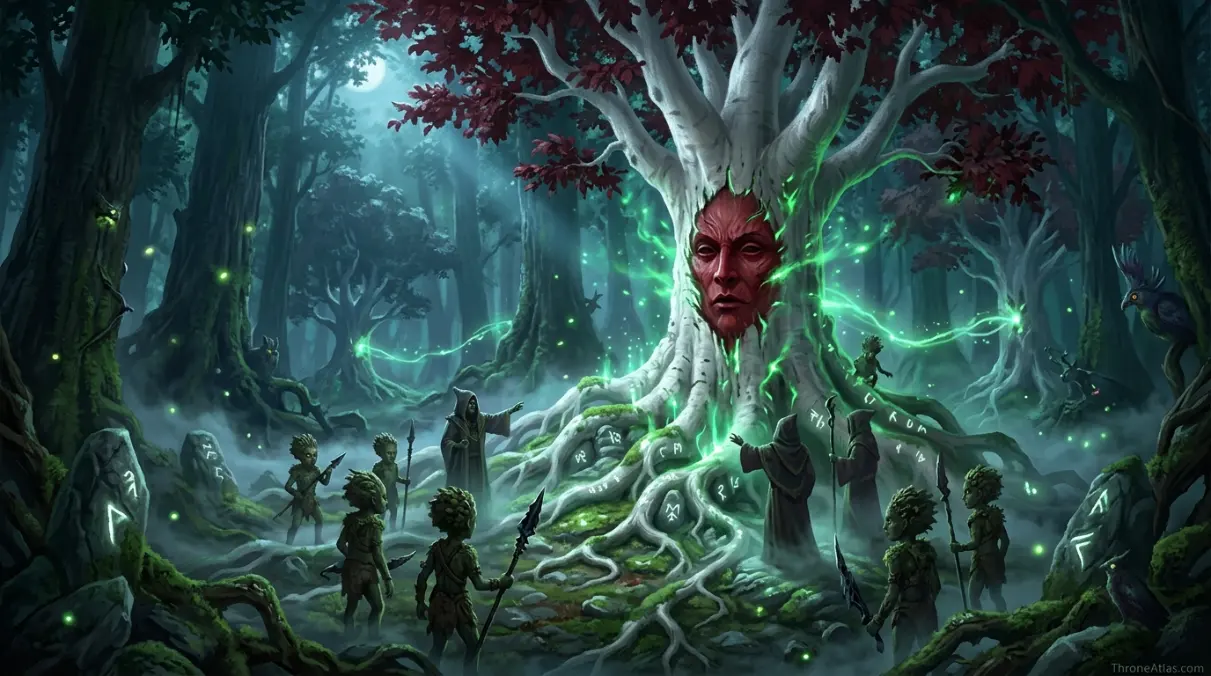
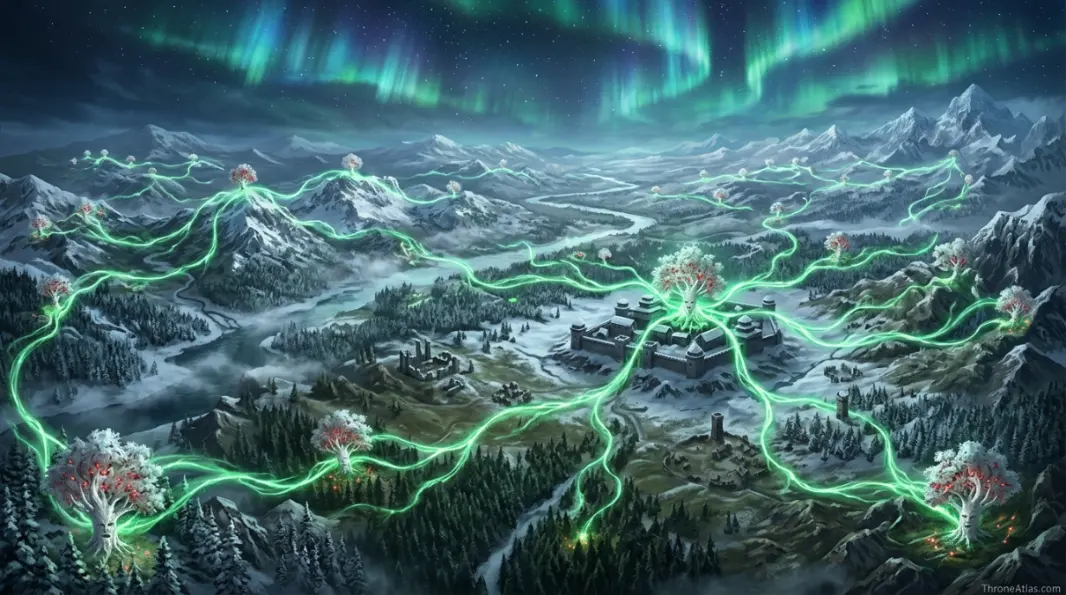
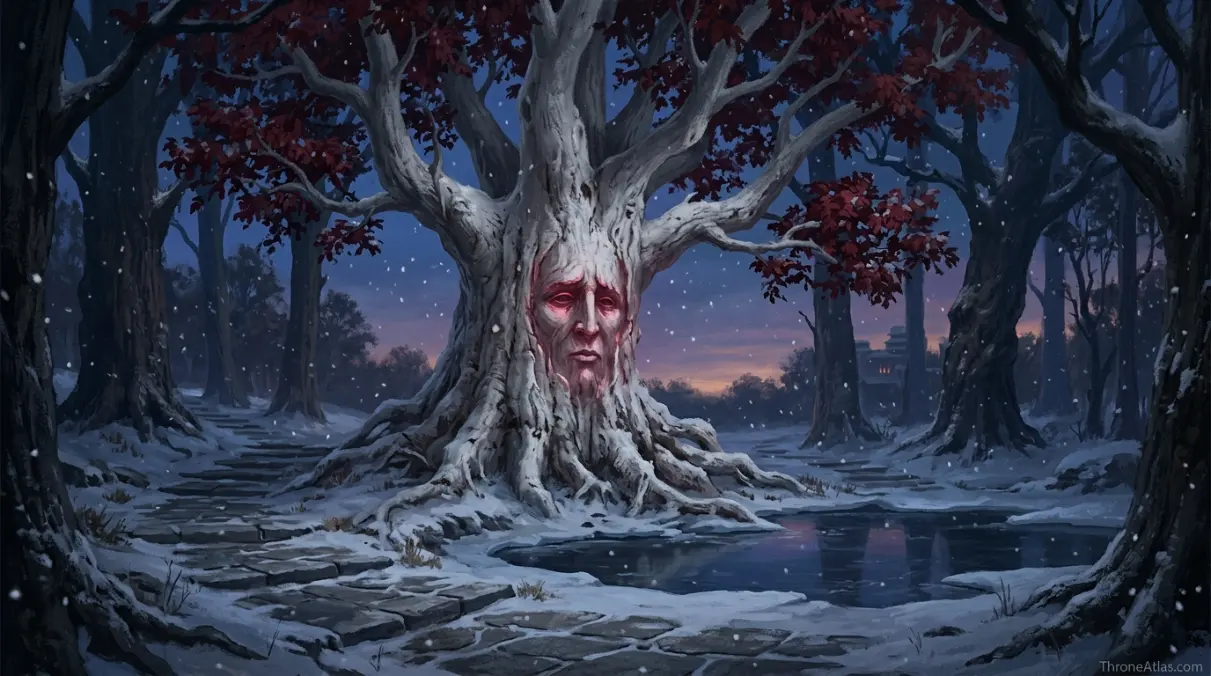
Weirwoods are the most important visual and symbolic map system connected to the Children. A heart tree is not just a religious object. It is a point in a memory network that outlasts dynasties and political borders.
This is why Winterfell’s Godswood, the Isle of Faces and the Three-Eyed Raven cave belong in the same map cluster. They look far apart politically, but in old-god geography they are connected by belief, memory and greenseer power.
For internal linking, use anchors like “weirwood map,” “old gods geography,” “Winterfell Godswood,” and “Isle of Faces.” These make the page stronger than a thin lore summary.
The Pact, the Isle of Faces and old border logic
The Isle of Faces is the symbolic center of Children and First Men history because it represents the attempt to stop a war over land, trees and survival. Its location on the Gods Eye makes it feel set apart from normal power geography.
A good Children of the Forest map should explain the Pact as a geographic settlement, not just a lore event. The First Men take much of the open land. The Children preserve forests and old-god spaces. Later kingdoms inherit the result without always understanding it.
That is why old magic appears hidden rather than absent. It has been pushed into sacred pockets, northern spaces and memory networks.
Far north cave and the White Walker origin link
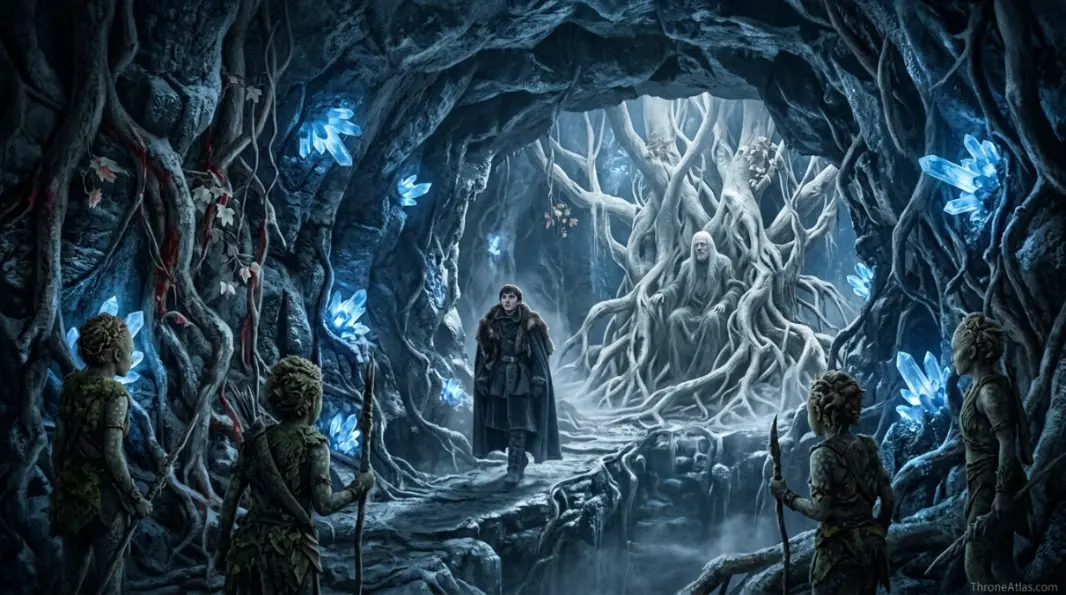
The far north cave is the clearest show-era Children location. It links Bran, the Three-Eyed Raven, Leaf, the weirwood network and the White Walker origin memory. The cave is not only a refuge. It is a last archive.
The White Walker creation scene complicates the Children’s map. It shows that a defensive act of magic can become a threat that outlives its original war. That makes the Children essential to both Long Night and Night King pages.
This page should therefore link strongly to the Long Night Map, Night King Route Map, White Walker Map, Bran Stark, Three-Eyed Raven and Winterfell Godswood content.
Detailed map reading for Children of the Forest Map
The quick route above gives the order, but the deeper value of this ancient lore map is in the transition between points. A thin page says what happened; a true ThroneAtlas page explains why a location changes the next decision, danger, alliance, or battlefield condition.
For Children of the Forest Map, each stop should be read as a pressure point. The map does not exist only to decorate the story. It reveals distance, leverage, timing, memory, fear, terrain and political consequence. That is what makes the page useful for readers who want more than a recap.
1. Ancient Forests — Original homeland
The Children belong to a pre-feudal forest world before castles and great houses dominate the map. On the atlas, this point belongs to Westeros before kingdoms. Its job is to change what can happen next: movement becomes harder, trust becomes weaker, defense becomes narrower, or a hidden truth becomes impossible to contain. From this stop, the page naturally moves toward Weirwood Groves, carrying the consequence forward instead of treating the event as isolated.
2. Weirwood Groves — Memory network
Weirwoods create a spiritual and informational map that later kingdoms never fully erase. On the atlas, this point belongs to Old gods geography. Its job is to change what can happen next: movement becomes harder, trust becomes weaker, defense becomes narrower, or a hidden truth becomes impossible to contain. From this stop, the page naturally moves toward First Men Landing Zones, carrying the consequence forward instead of treating the event as isolated.
3. First Men Landing Zones — Conflict front
The arrival of the First Men begins the war that changes the Children’s map forever. On the atlas, this point belongs to Southern / eastern coasts. Its job is to change what can happen next: movement becomes harder, trust becomes weaker, defense becomes narrower, or a hidden truth becomes impossible to contain. From this stop, the page naturally moves toward Isle of Faces, carrying the consequence forward instead of treating the event as isolated.
4. Isle of Faces — Pact symbol
The island represents the truce and old-god center of shared memory. On the atlas, this point belongs to Gods Eye. Its job is to change what can happen next: movement becomes harder, trust becomes weaker, defense becomes narrower, or a hidden truth becomes impossible to contain. From this stop, the page naturally moves toward Neck and Deep Wilds, carrying the consequence forward instead of treating the event as isolated.
5. Neck and Deep Wilds — Retreat zones
Marshes and deep woods preserve traces of older geography. On the atlas, this point belongs to North / Riverlands edge. Its job is to change what can happen next: movement becomes harder, trust becomes weaker, defense becomes narrower, or a hidden truth becomes impossible to contain. From this stop, the page naturally moves toward Far North Cave, carrying the consequence forward instead of treating the event as isolated.
6. Far North Cave — Survival refuge
The cave shows the last visible Children protecting Bran and ancient memory. On the atlas, this point belongs to Beyond the Wall. Its job is to change what can happen next: movement becomes harder, trust becomes weaker, defense becomes narrower, or a hidden truth becomes impossible to contain. From this stop, the page naturally moves toward White Walker Creation Site, carrying the consequence forward instead of treating the event as isolated.
7. White Walker Creation Site — Desperate magic
The origin scene ties Children’s survival to the later ice threat. On the atlas, this point belongs to Far north memory. Its job is to change what can happen next: movement becomes harder, trust becomes weaker, defense becomes narrower, or a hidden truth becomes impossible to contain. From this stop, the page naturally moves toward Winterfell Godswood, carrying the consequence forward instead of treating the event as isolated.
8. Winterfell Godswood — Living echo
The heart tree at Winterfell shows how old magic persists inside later noble seats. On the atlas, this point belongs to The North. Its job is to change what can happen next: movement becomes harder, trust becomes weaker, defense becomes narrower, or a hidden truth becomes impossible to contain. From this stop, the page naturally moves toward Ancient Forests, carrying the consequence forward instead of treating the event as isolated.
How this page should win search intent
Visitors searching for Children of the Forest Map usually want fast orientation first: the main locations, the correct order, the central turning point, and the ending. After that, they want context that a normal wiki-style paragraph does not provide. This page is built with a quick answer, route schematic, map-point cards, deeper analysis, a scanner table and FAQs so both casual fans and lore readers can find the right level quickly.
The strongest SEO angle is not keyword stuffing. It is topical completeness. Each page should answer map order, character or lore function, region names, battle/lore connections, and follow-up links. That creates a useful internal hub that can support related pages across Winterfell, the Wall, Riverlands, Iron Islands, King’s Landing, White Walkers, Stark routes and battle maps.
For publishing, keep anchor text descriptive and natural. Use names like “Winterfell battlefield map,” “Night King route,” “Riverlands road,” “Pyke and Winterfell route,” “Long Night lore map,” and “Battle of the Bastards field layout.” These anchors tell users and search engines exactly why the next page matters.
10/10 publishing angle for Children of the Forest Map
The reason this page can compete as a stronger SERP result is that it does not treat the map as decoration. It answers the obvious query first, then gives the reader a framework for why the route matters. A visitor can scan the quick answer, jump to the schematic, check the route cards, read the deeper analysis, or use the FAQ without needing another tab open.
The unique angle is the relationship between Ancient Forests, Neck and Deep Wilds, and Winterfell Godswood. The first point gives the map its original identity. The middle point creates pressure and changes the stakes. The endpoint shows what the route has finally become. This beginning-middle-ending structure is what turns a list of places into a memorable atlas page.
For topical authority, this page should be internally linked from every related character, house, location, battle and lore article. It should also link outward with exact context rather than generic read-more anchors. Strong examples include the specific location name, the regional map, the battle title, the connected house, and the nearest lore page. That makes the page useful to readers and also helps search engines understand where it sits inside the ThroneAtlas knowledge graph.
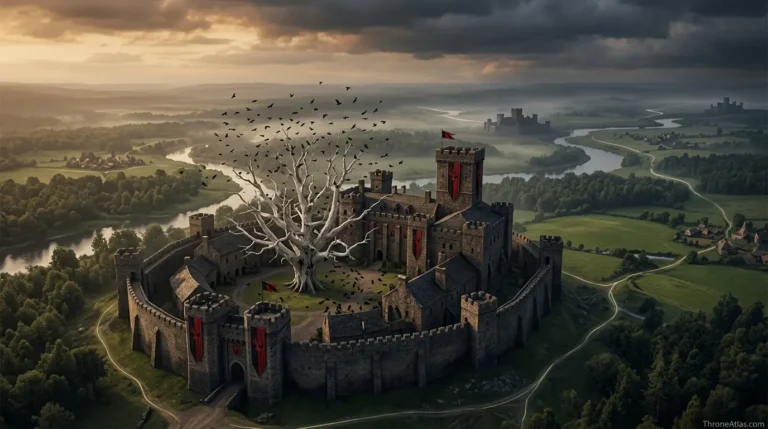
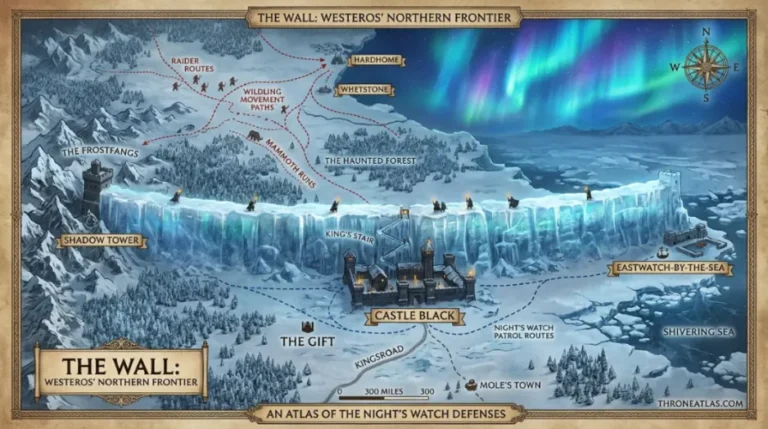
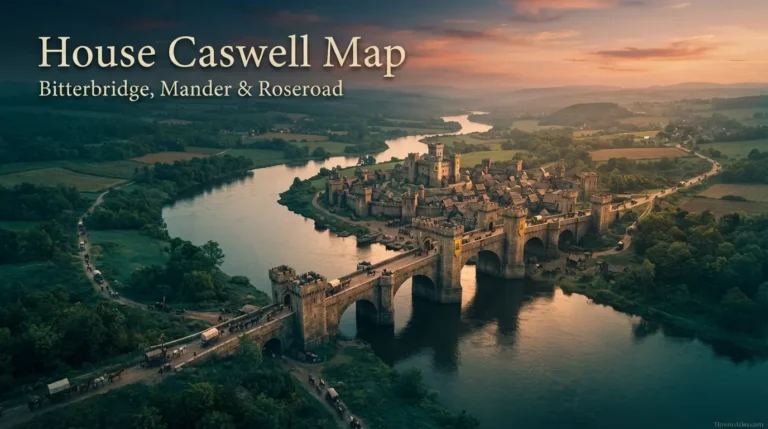
For image SEO, the WebP images are placed as real <img> elements with descriptive alt text instead of CSS-only backgrounds. That means the visuals support accessibility, image indexing and page experience at the same time. The hero establishes mood, the compass preserves the locked ThroneAtlas brand system, and the in-body images divide the article into readable map stages.
For human readability, the page balances quick answers with deeper interpretation. Short sections help mobile users, while the longer analysis gives serious fans enough context to stay, click related maps and understand how this page belongs inside the wider ThroneAtlas atlas rather than standing alone as a thin article.
The final result is designed for publication as a complete map hub: readable, visually branded, internally connected, accessible through alt text, and strong enough to support future clusters around houses, routes, battles and ancient lore.
Location order and story function
The table below condenses the map into a scanner-friendly format for readers who want quick orientation before moving into related maps.
| Location | Map role | Region / route | Story function |
|---|---|---|---|
| Ancient Forests | Original homeland | Westeros before kingdoms | The Children belong to a pre-feudal forest world before castles and great houses dominate the map. |
| Weirwood Groves | Memory network | Old gods geography | Weirwoods create a spiritual and informational map that later kingdoms never fully erase. |
| First Men Landing Zones | Conflict front | Southern / eastern coasts | The arrival of the First Men begins the war that changes the Children’s map forever. |
| Isle of Faces | Pact symbol | Gods Eye | The island represents the truce and old-god center of shared memory. |
| Neck and Deep Wilds | Retreat zones | North / Riverlands edge | Marshes and deep woods preserve traces of older geography. |
| Far North Cave | Survival refuge | Beyond the Wall | The cave shows the last visible Children protecting Bran and ancient memory. |
| White Walker Creation Site | Desperate magic | Far north memory | The origin scene ties Children’s survival to the later ice threat. |
| Winterfell Godswood | Living echo | The North | The heart tree at Winterfell shows how old magic persists inside later noble seats. |
Children of the Forest Map Questions
They lived across ancient Westeros before later kingdoms, especially in forests, sacred groves and hidden places.
Weirwoods connect the Children to old-god religion, memory and greenseer power.
The Isle of Faces is a sacred island on the Gods Eye associated with the Pact between the Children and the First Men.
In the show, the Children create the first White Walker as a desperate weapon against human invaders.
They are most clearly seen in the far north cave protecting the Three-Eyed Raven and Bran.
Related maps, houses, battles and lore routes
ThroneAtlas is an independent fan-made atlas. Game of Thrones, House of the Dragon and related names belong to their respective rights holders. This page is for educational, lore-navigation and fan-reference purposes.